

Firecrawl pricing has one big thing going for it that most web scraping APIs do not: you can find out if it fits your workflow without spending a single dollar.
Every account gets 1,000 free credits per month, no credit card required, and those credits renew every single month.
But once you move past the free tier, the credit system takes a little decoding. What does a credit actually buy? Why do some scrapes cost 5 credits instead of 1? And which plan gives you the lowest real cost per page?
We run Firecrawl inside our own agency stack at AFFiNCO. It powers scraping pipelines for client research, pricing intelligence, and the AI workflows we build for customers, so we pay this bill every month and know exactly where the money goes.

This guide breaks down every plan, every credit rule, and the real math, using current pricing pulled directly from firecrawl.dev.
One more thing before the numbers: through our partner link, new users get 10% off their first purchase on any plan. It applies automatically at checkout, no coupon code needed. We will show you exactly what that saves further down.
🔥 Firecrawl Deal: 1,000 Free Credits Monthly + 10% Off Your First Purchase
Sign up through our exclusive link and get 1,000 free credits every month on the free plan, plus an automatic 10% discount on your first purchase when you upgrade.
💡 What Is Firecrawl?
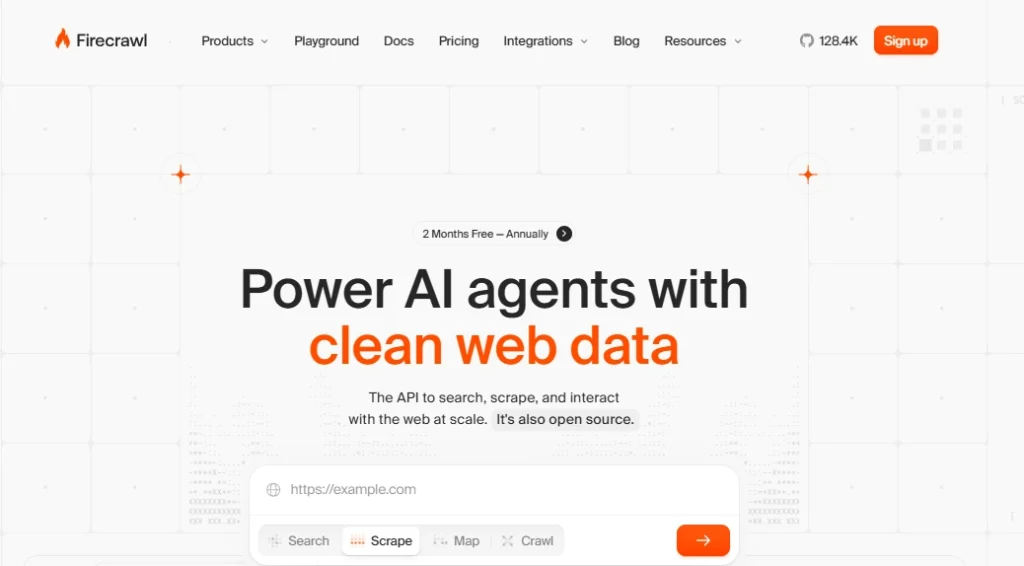
Firecrawl is an API that turns any website into clean, structured, AI-ready data. Give it a URL and it returns the page as markdown or JSON with all the navigation menus, scripts, and cookie banners stripped out. That output drops straight into LLMs, RAG pipelines, AI agents, and automation tools without any cleanup.
It is one of the most widely adopted developer tools of the past two years. The open source project has crossed 149,000 GitHub stars, over 1.25 million developers use the platform, and it has served more than 5 billion requests for 150,000+ companies including Apple, Shopify, and Canva. If you have read our guide to the best MCP servers for web scraping, you already know Firecrawl's MCP server sits at the top of that category too.
The platform covers six core jobs: Scrape (single pages), Crawl (entire sites), Search (web search with full page content), Map (instant site structure), Extract (schema-based structured data), and Monitor (change tracking). All of them draw from the same credit pool, which is where pricing gets interesting.
💰 Firecrawl Pricing Plans in 2026
Firecrawl runs six plans, from free to enterprise. Here is the complete lineup at current rates:
| Plan | Monthly Billing | Annual Billing (approx.) | Credits per Month | Concurrent Requests |
|---|---|---|---|---|
| Free | $0 | $0 | 1,000 | 2 |
| Hobby | $16/mo | ~$13.50/mo | 5,000 | 5 |
| Standard | $83/mo | ~$70/mo | 100,000 | 50 |
| Growth | $333/mo | ~$281/mo | 500,000 | 100 |
| Scale | $599/mo | ~$466/mo | 1,000,000 | 150 |
| Enterprise | Custom | Custom | Custom | Custom, plus SLA, SSO, zero data retention |
Annual billing saves between 15% and 22% depending on the tier, which works out to roughly 2 months free per year.
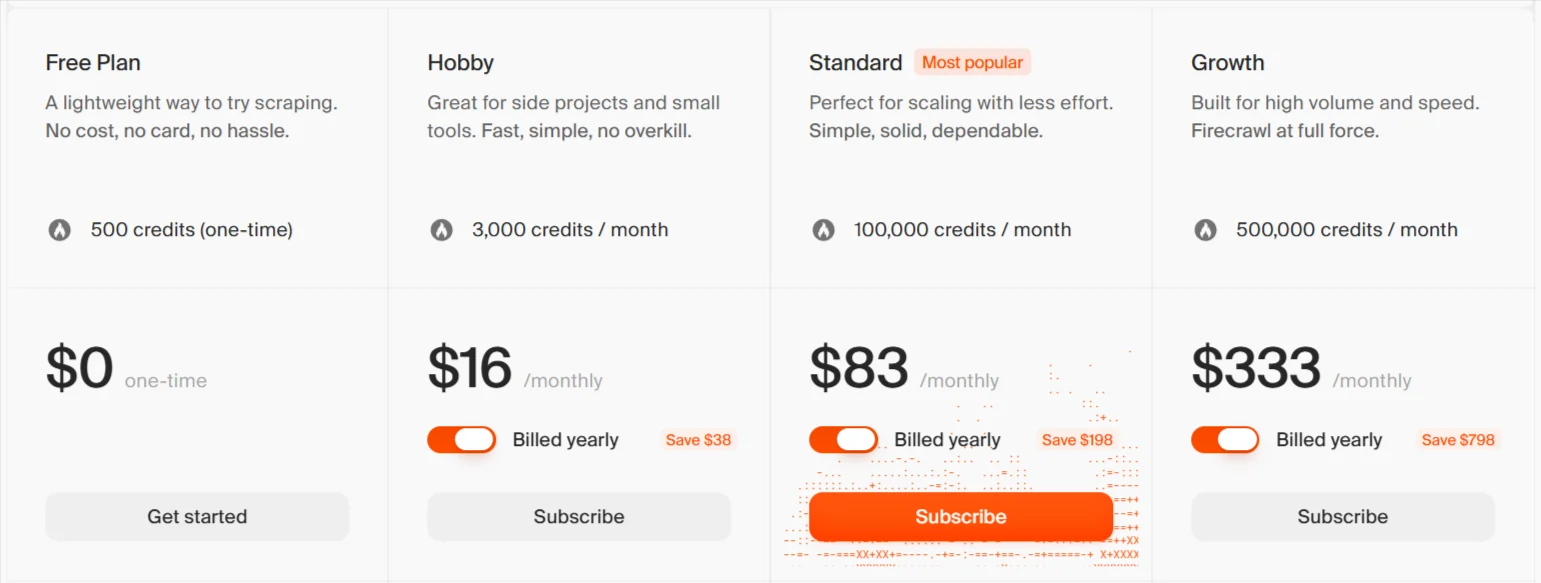
Free Plan: The Real Starting Point
This is the part of Firecrawl pricing we recommend to every client before anything else. The free plan includes 1,000 credits per month, enough to scrape 1,000 pages, with 2 concurrent requests. No card, no trial countdown, and the credits renew monthly instead of being a one-time allowance.
For testing an integration, running a small automation, or evaluating output quality on your target sites, 1,000 monthly pages is genuinely enough. Plenty of light users never upgrade at all.
Hobby: For Side Projects
At $16 per month you get 5,000 credits and 5 concurrent requests. This suits personal projects, small monitoring jobs, and low-volume automations. The per-page cost is the highest of any paid tier though, so if you are running anything commercial, keep reading.
Standard: The Plan Most Teams Should Buy
Standard is where Firecrawl pricing becomes hard to argue with. For $83 per month (around $70 on annual billing) you get 100,000 credits and 50 concurrent requests. That is a 20x jump in credits for roughly 5x the price of Hobby.
This is the plan we run at AFFiNCO. Between client research pipelines, pricing intelligence scrapes, and the AI agent workflows we build, 100,000 pages per month covers a full agency workload with room to spare.
Growth and Scale: Volume Tiers
Growth ($333/mo, 500,000 credits, 100 concurrent) and Scale ($599/mo, 1 million credits, 150 concurrent) serve data-heavy products: programmatic sites, large directories, and SaaS platforms with scraping baked into the product. Enterprise adds custom volume, SLAs, SSO, and zero data retention for compliance-sensitive teams.
🔢 How Firecrawl Credits Actually Work
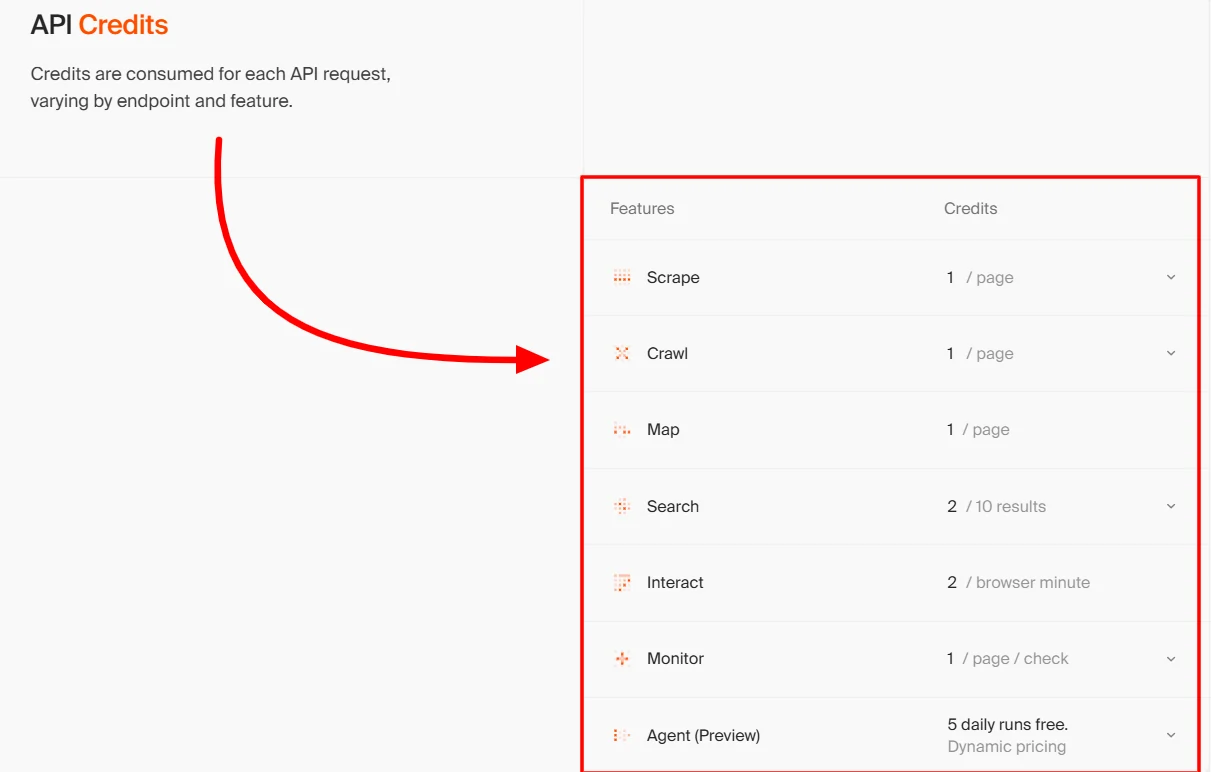
Every Firecrawl plan runs on one credit pool, but different actions burn credits at different rates. This table is the single most important thing to understand before choosing a plan:
| Action | Credit Cost |
|---|---|
| Scrape, Crawl, Map, or Monitor | 1 credit per page |
| Search | 2 credits per 10 results |
| Interact (browser actions) | 2 credits per minute |
| Stealth mode (protected sites) | 5 credits per page |
| FIRE-1 Agent | 5 free runs daily, dynamic pricing after |
The baseline is simple: one page, one credit. Where budgets go sideways is stealth mode. Sites behind aggressive anti-bot protection need Firecrawl's stealth proxies, and those pages cost 5 credits each. If half your target list sits behind heavy Cloudflare protection, your effective capacity is much lower than the headline credit count.
Our advice from running this in production: use your free plan month to test your actual target sites. You will learn very quickly what percentage of your workload scrapes at 1 credit versus 5, and that number tells you which plan you really need.
📊 Real Cost Per Page: The Math
Headline plan prices matter less than what you actually pay per scraped page. Here is the math at standard 1-credit scraping:
| Plan | Monthly Price | Credits | Cost per Page |
|---|---|---|---|
| Hobby | $16 | 5,000 | $0.0032 |
| Standard | $83 | 100,000 | $0.00083 |
| Growth | $333 | 500,000 | $0.00067 |
| Scale | $599 | 1,000,000 | $0.0006 |
Two things stand out. First, the jump from Hobby to Standard cuts your per-page cost by almost 4x, which is why we call Standard the value plan. Second, even at Hobby rates, Firecrawl undercuts most alternatives once you factor in what its output saves you.
That last point deserves a number. If you build AI apps, web search is usually a premium add-on: LLM providers bill web search on top of token costs, and dedicated answer APIs get expensive fast at app scale.
The pattern we use instead, in our own tools and in client builds, is Firecrawl for fetching plus an inexpensive model for reasoning. Firecrawl pulls the live pages for a fraction of a cent each, then a cheap LLM without web access does the summarizing and writing. Same result, and the web data line item on the invoice drops to a rounding error.
For comparison shopping: Apify starts around $39/mo with pay-per-event pricing that varies by actor, ScrapingBee starts at $49/mo for 150,000 API credits (where a JavaScript-rendered page costs 5 credits), and enterprise unblockers like Bright Data or Zyte price per successful request at rates several times higher. For clean LLM-ready output at volume, Firecrawl's cost per page is the lowest we have measured for the workloads we run.
⚠️ Hidden Costs and Gotchas
Firecrawl pricing is transparent by industry standards, but there are four things the pricing page will not put in bold for you:
None of these are dealbreakers. They are the difference between choosing a plan on marketing numbers and choosing one on your actual workload.
💸 How to Pay Less for Firecrawl
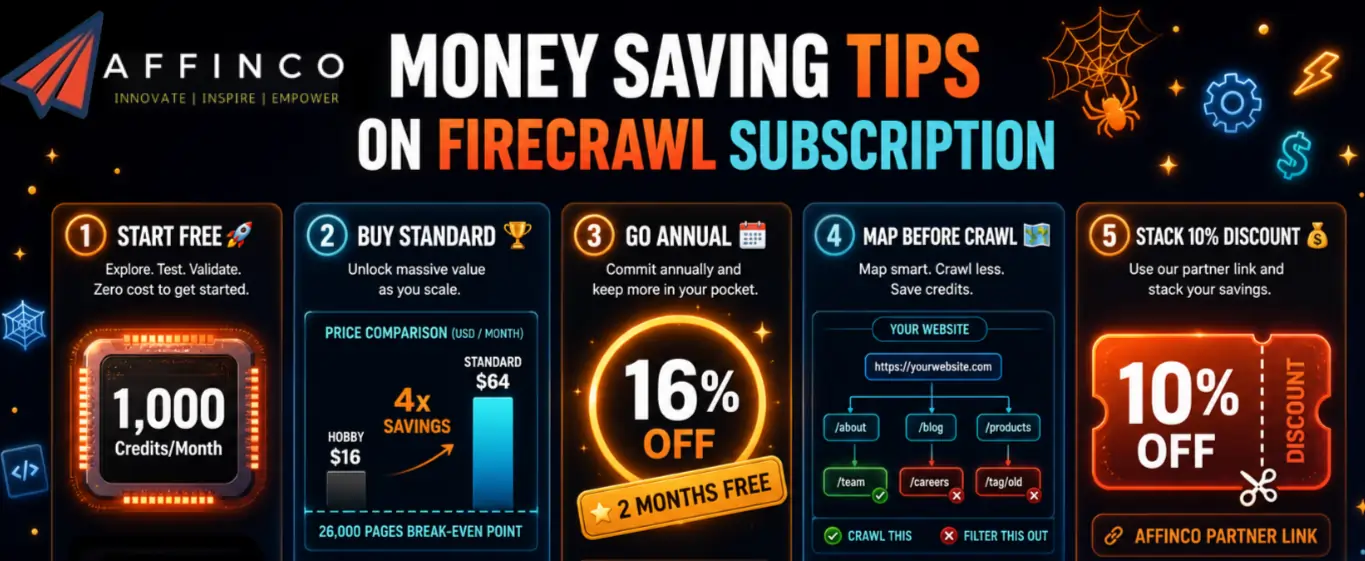
After several months of paying this bill ourselves, this is the playbook we give clients:
Here is what that 10% looks like in real dollars:
| Plan | Normal First Bill | With Our 10% Deal | You Save |
|---|---|---|---|
| Hobby (monthly) | $16.00 | $14.40 | $1.60 |
| Standard (monthly) | $83.00 | $74.70 | $8.30 |
| Standard (annual) | ~$840.00 | ~$756.00 | ~$84.00 |
| Growth (annual) | ~$3,372.00 | ~$3,035.00 | ~$337.00 |
| Scale (annual) | ~$5,592.00 | ~$5,033.00 | ~$559.00 |
The discount and the annual savings stack. On Standard annual, you are effectively getting 12 months of 100,000 credits for about $63 per month in year one.
🎁 Claim the Firecrawl Deal
- 1,000 free credits every month, no card required
- 10% off your first purchase, applied automatically at checkout
- Roughly 2 months free on any annual plan
Valid for new Firecrawl accounts created through our link.
Conclusion: Is Firecrawl Worth the Cost?
For teams that need web data feeding AI systems, automations, or research pipelines, yes, and it is not close. At $0.0006 to $0.0032 per page depending on tier, Firecrawl delivers clean, LLM-ready output at a price point that used to require building and babysitting your own scraping infrastructure. We use it in our own agency operations daily, which is the strongest endorsement we can give any tool we review.
The honest caveats: credits expire monthly, protected sites cost 5x, and heavy use of browser actions changes the math. Size your plan on your real workload, not the headline numbers, and Firecrawl pricing works firmly in your favor.
The risk-free path is sitting right there. Take the 1,000 free monthly credits, run your actual use case for a few weeks, and upgrade only when the numbers prove out. When you do, our link knocks 10% off that first bill.


Ali
Ali is a digital marketing expert with 7+ years of experience in SEO-optimized blogging. Skilled in reviewing SaaS tools, social media marketing, and email campaigns, we craft content that ranks well and engages audiences. Known for providing genuine information, Ali is a reliable source for businesses seeking to boost their online presence effectively.