
We have been in the trenches of affiliate marketing and digital traffic for over 10 years. At AFFiNCO, we have watched hundreds of ad networks rise and fall. We have seen algorithms panic entire industries overnight.
Ten years ago, you could stuff keywords into a page and rank. Five years ago, you could buy links and rank. Today, B2B SEO trends demand something different. The game is harder. But it is also more profitable for those who adapt.
The “SEO is dead” rumors are back. They are wrong. SEO is not dead. It just stopped being easy.
The global SEO market is projected to hit $143.9 billion by 2030. Why? Because organic search is still the primary revenue driver for B2B companies. It beats social media. It beats paid ads. But the rules have changed.
If you want traffic in 2026, you cannot use a 2023 playbook.
Is SEO Still Valid in 2026?
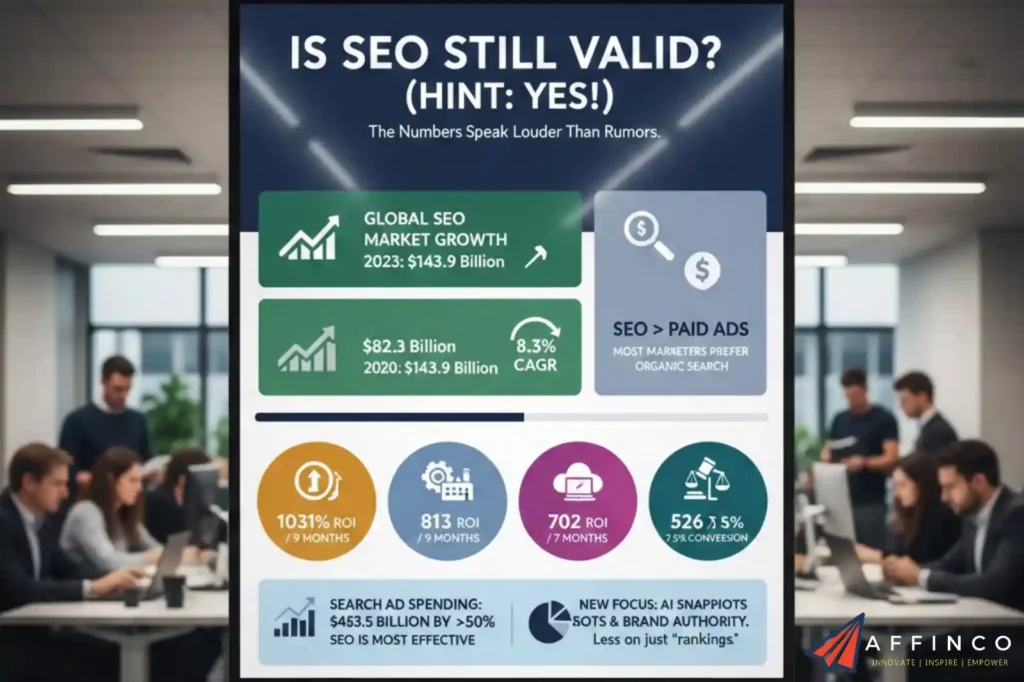
Rumors of SEO’s death circulate every year, yet the numbers tell a different story. The sector shows no signs of slowing down.
The global SEO market is projected to grow from $82.3 billion in 2023 to $143.9 billion by 2030, expanding at a CAGR of 8.3%.
Most marketers still view organic search as a superior sales tool compared to paid channels.
Here are the critical statistics defining the market right now:
Search advertising spending will likely hit $483.5 billion by 2029. More than half of B2B marketers rank SEO as their most effective channel, and organic search continues to drive more revenue than any other source.
Consequently, SEO in 2026 focuses less on raw rankings and more on visibility within AI snapshots and brand authority.
The AI Overview (AIO) Effect: The New Rank Zero
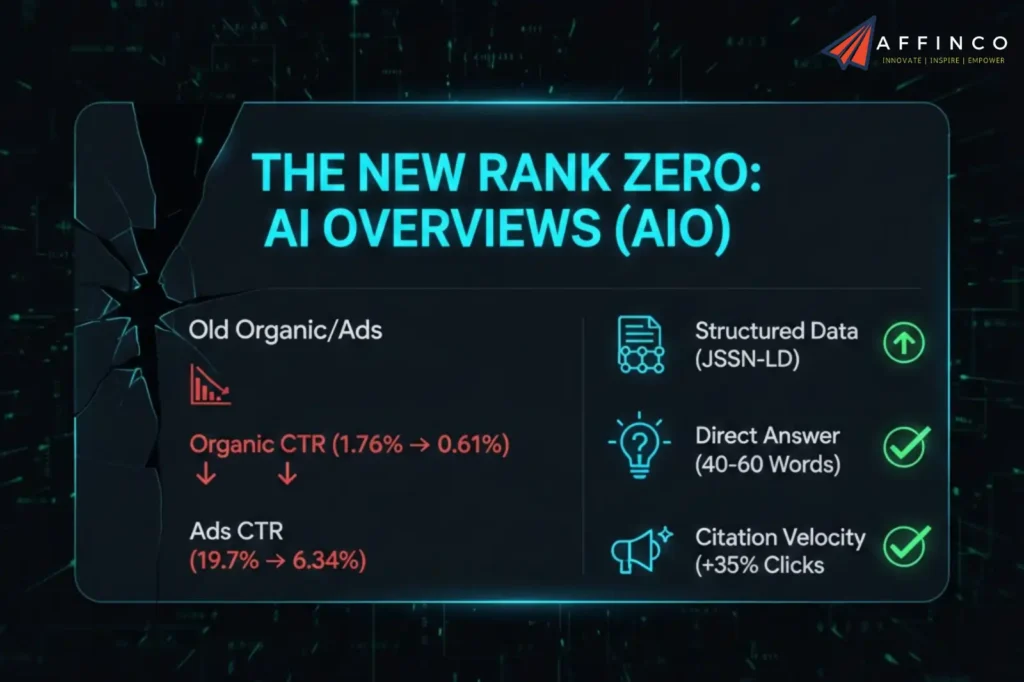
The most disruptive change in 2025 and 2026 is the dominance of Google’s AI Overviews (AIO). These snapshots now appear for approximately 13% of all queries, a figure that doubled in early 2025.
This shift has consequences for click-through rates (CTR). Data from late 2025 indicates that organic CTR drops from 1.76% to just 0.61% when an AI Overview is present. Even paid ads suffer, with CTRs crashing from 19.7% to 6.34% in these scenarios.
How to Optimize for AIO
Since 88.1% of queries triggering AIO are informational, you must structure content to feed these AI models directly:
Zero-Click Search and Brand Equity
A staggering 60% of Google searches now end without a click to a website. On mobile devices, this figure climbs to 77%.
For B2B companies, this means your brand must communicate value on the search results page itself. Users get the information they need directly from the snippet or AI summary.
Strategies for a Zero-Click World
The “Rep-Free” B2B Buyer Journey
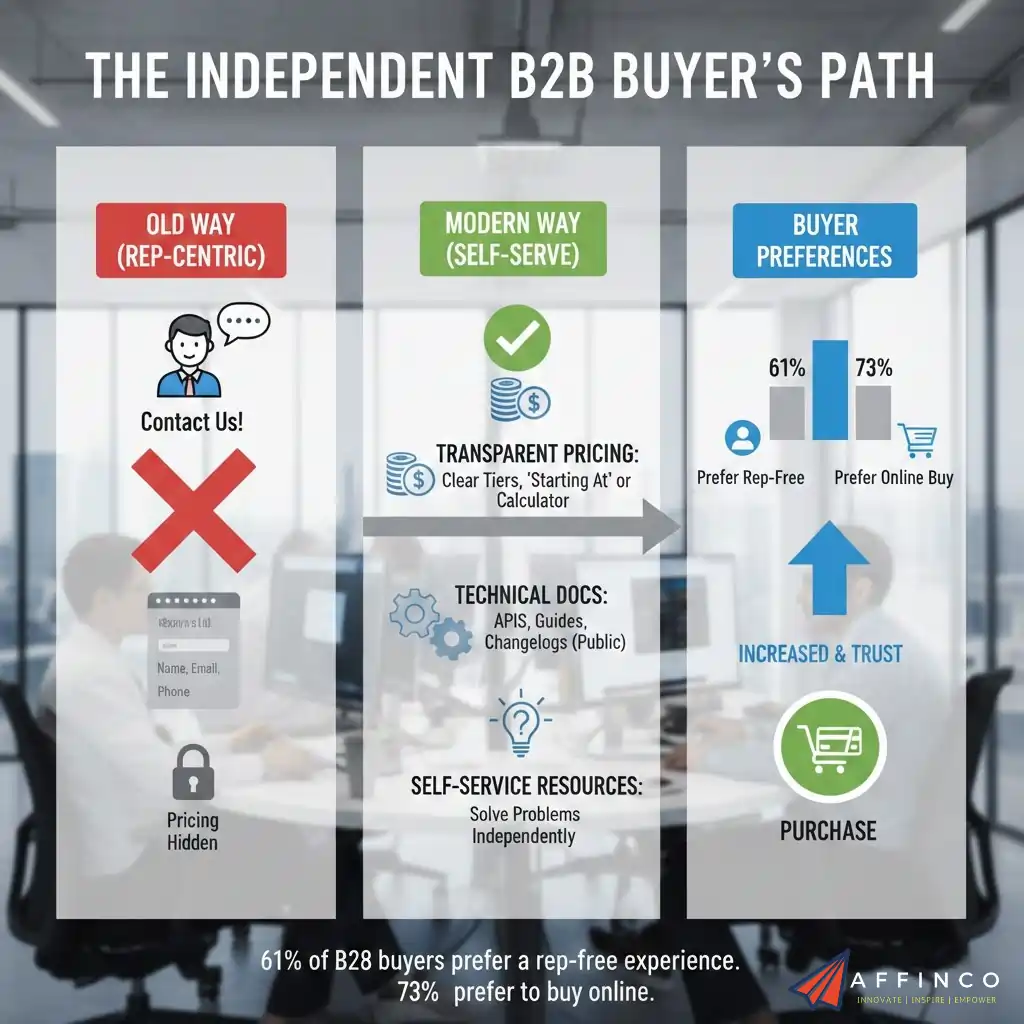
The modern B2B buyer wants autonomy. 61% of B2B buyers prefer a rep-free buying experience, and 73% prefer to buy online. They do not want to fill out a “Contact Us” form to get pricing.
If your SEO strategy hides pricing or technical details behind a gate, you will lose traffic to competitors who publish this data openly.
Content Requirements for 2026
E-E-A-T: Why It Dominates B2B SEO Trends
As AI content floods the web, Google places a higher premium on Experience, Expertise, Authoritativeness, and Trustworthiness (E-E-A-T). In the B2B sector, where a bad vendor choice can cost millions, these signals are non-negotiable.
Building Digital Trust
Link Building in 2026: Digital PR
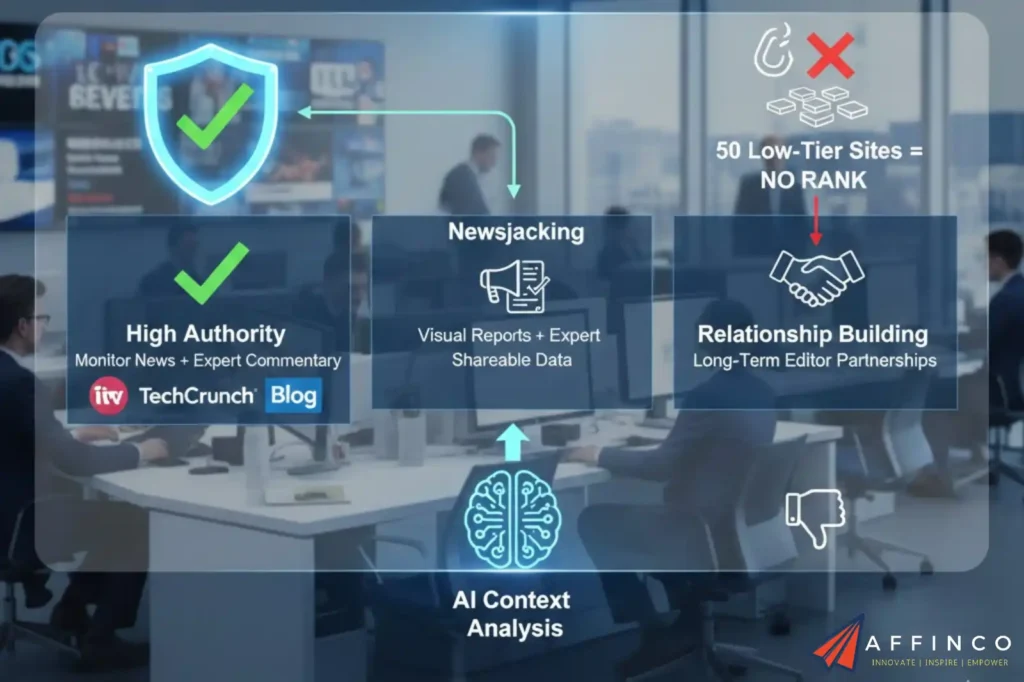
The era of buying cheap guest posts is over. Mechanical link accumulation no longer guarantees rankings. Instead, the focus has shifted to Digital PR and editorial placements.
With AI models analyzing the context of a link, a mention in a high-authority industry publication (like TechCrunch or a major niche blog) carries more weight than 50 links from low-tier sites.
Key Focus Areas:
B2B SEO Strategy Plan: A Step-by-Step Guide
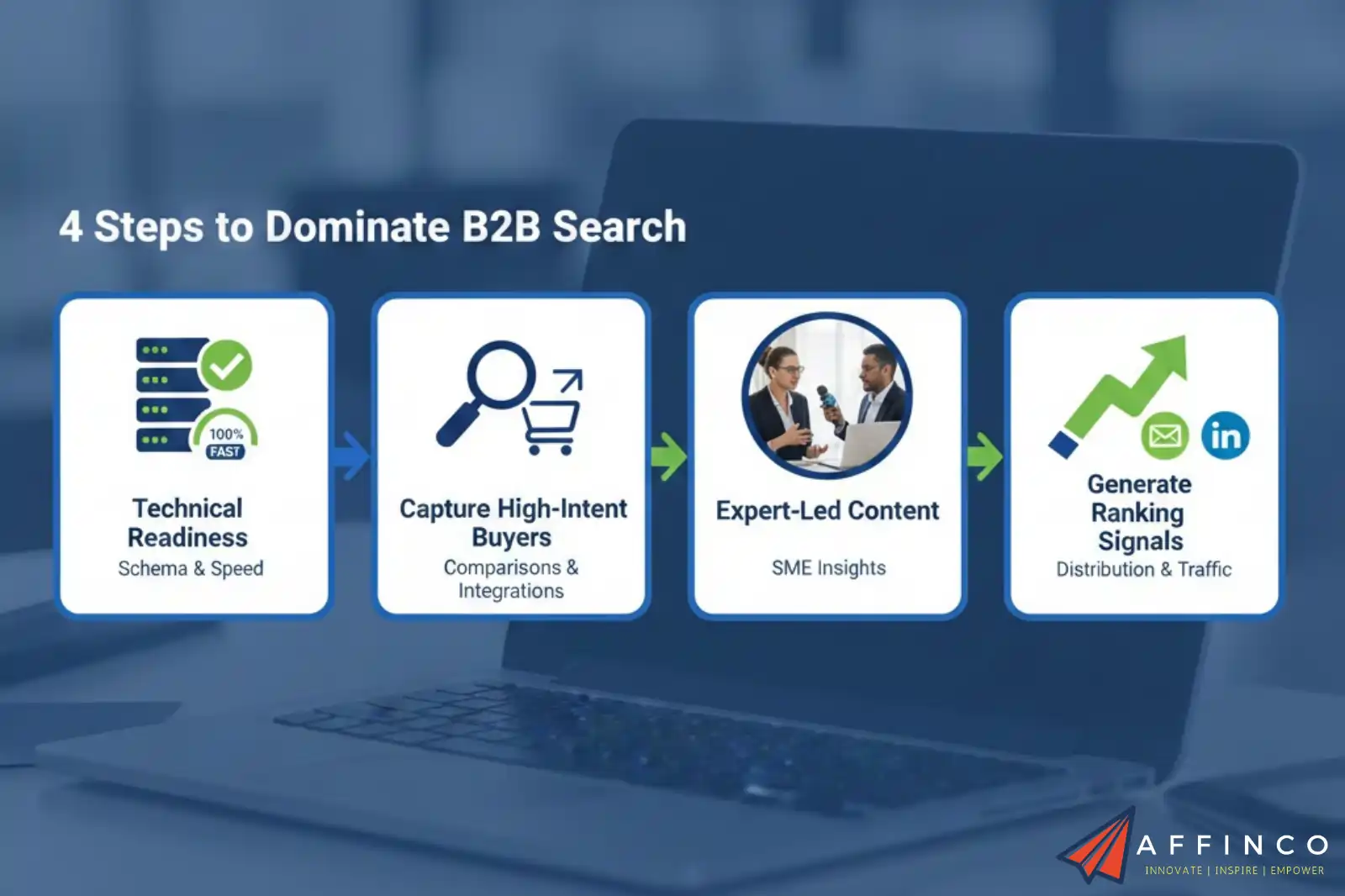
Step 1: Technical Foundation and Schema
Before creating new content, ensure your site speaks Google's language. Implement aggressive schema markup. Ensure your Core Web Vitals are green, as user experience signals are a tie-breaker for rankings.
Step 2: The “Bottom-Up” Content Strategy
Start with high-intent, low-volume keywords. Address specific integration problems, comparison queries (e.g., “YourBrand vs. Competitor”), and migration guides. These users are ready to buy.
Step 3: Scaling with Authority
Once you capture the high-intent traffic, expand to broader industry topics. Use your subject matter experts (SMEs) to interview for these pieces. Record the interviews and use transcripts as the base for your content to ensure unique, expert insights.
Step 4: Distribution and Signals
SEO does not exist in a vacuum. Distribute your content via email newsletters and LinkedIn. Social signals and direct traffic correlate strongly with improved rankings because they validate the content's utility to the search engine.
AFFiNCO’s Verdict
B2B SEO in 2026 is about survival of the most helpful. The companies that hide information, rely on generic AI content, or ignore the reality of Zero-Click searches will vanish from the SERPs.
To increase organic traffic, you must become the source of truth for your industry. Focus on original data, optimize for AI snapshots, and build a brand that users search for by name.
At AFFiNCO, we focus on results. We test, we tweak, and we improve. If you want to survive in this new environment, you must do the same.
Start today. Audit your content. Add your expertise. And stop writing for robots.

Ali
Ali is a digital marketing expert with 7+ years of experience in SEO-optimized blogging. Skilled in reviewing SaaS tools, social media marketing, and email campaigns, we craft content that ranks well and engages audiences. Known for providing genuine information, Ali is a reliable source for businesses seeking to boost their online presence effectively.