


Your fitness tracking goals are stuck because you don't know what actually works with smartwatches. The numbers reveal everything: 454.69 million people globally use smartwatches, generating $47.94 billion in market revenue for 2025.
Here's the reality – 92% of smartwatch users track their physical activity, while the average device costs just $149. Apple dominates with 21% market share, but the real story lies in how wearable technology completely changes daily habits.
We've gathered the latest Smartwatch Statistics that show exactly how this industry explodes in 2026. From health monitoring features to regional adoption rates, these numbers reveal what matters for your next purchase decision.
Key Smartwatch Statistics for 2026
Global Smartwatch Market Size and Revenue
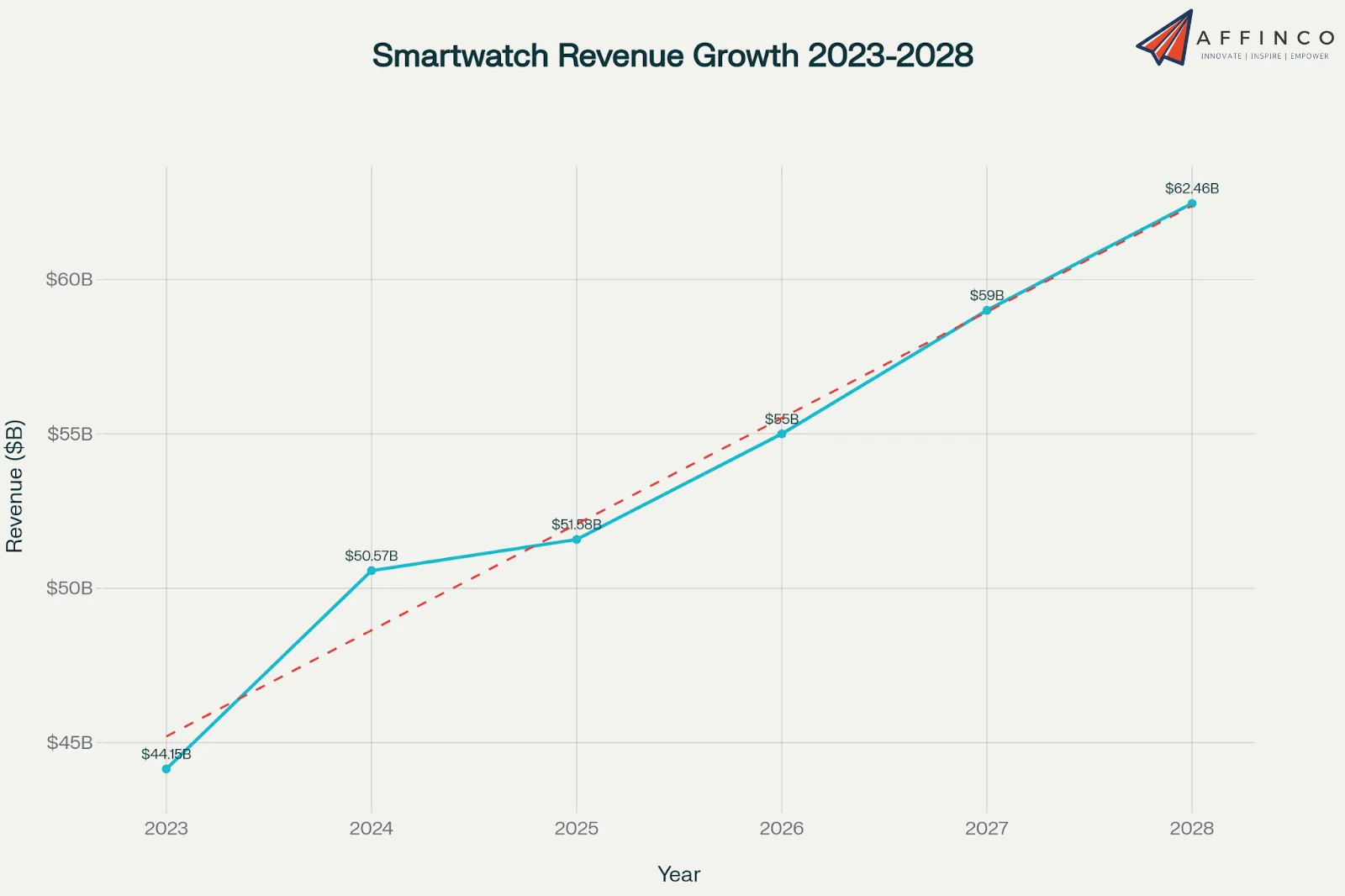
The financial scale of the smartwatch market highlights its importance within the consumer electronics sector. The industry's revenue is not just increasing; it is expanding at a significant rate.
| Year | Revenue (Billion USD) |
|---|---|
| 2023 | $44.15 |
| 2024 | $50.57 |
| 2025* | $51.58 |
| 2028* | $62.46 |
These figures underscore the strong consumer demand and monetary value associated with the smartwatch industry, pointing to a very positive financial future.
Smartwatch Unit Shipments Worldwide
The number of smartwatches being produced and sold is a direct indicator of consumer demand. Shipment volumes have been rising steadily, although recent market corrections have been observed.

- In 2022, approximately 173 million smartwatches were shipped across the globe.
- This figure saw an increase in 2023, with around 184 million units shipped.
- Despite overall growth, the global market experienced a slight decline for five consecutive quarters leading into early 2025, though a recovery is anticipated.
- The demand increase is particularly strong in certain regions, with India expected to see a 75% rise in demand.
The continuous rise in unit shipments reflects the technology's growing integration into daily life and its expanding availability to a wider audience.
Global Smartwatch User Growth
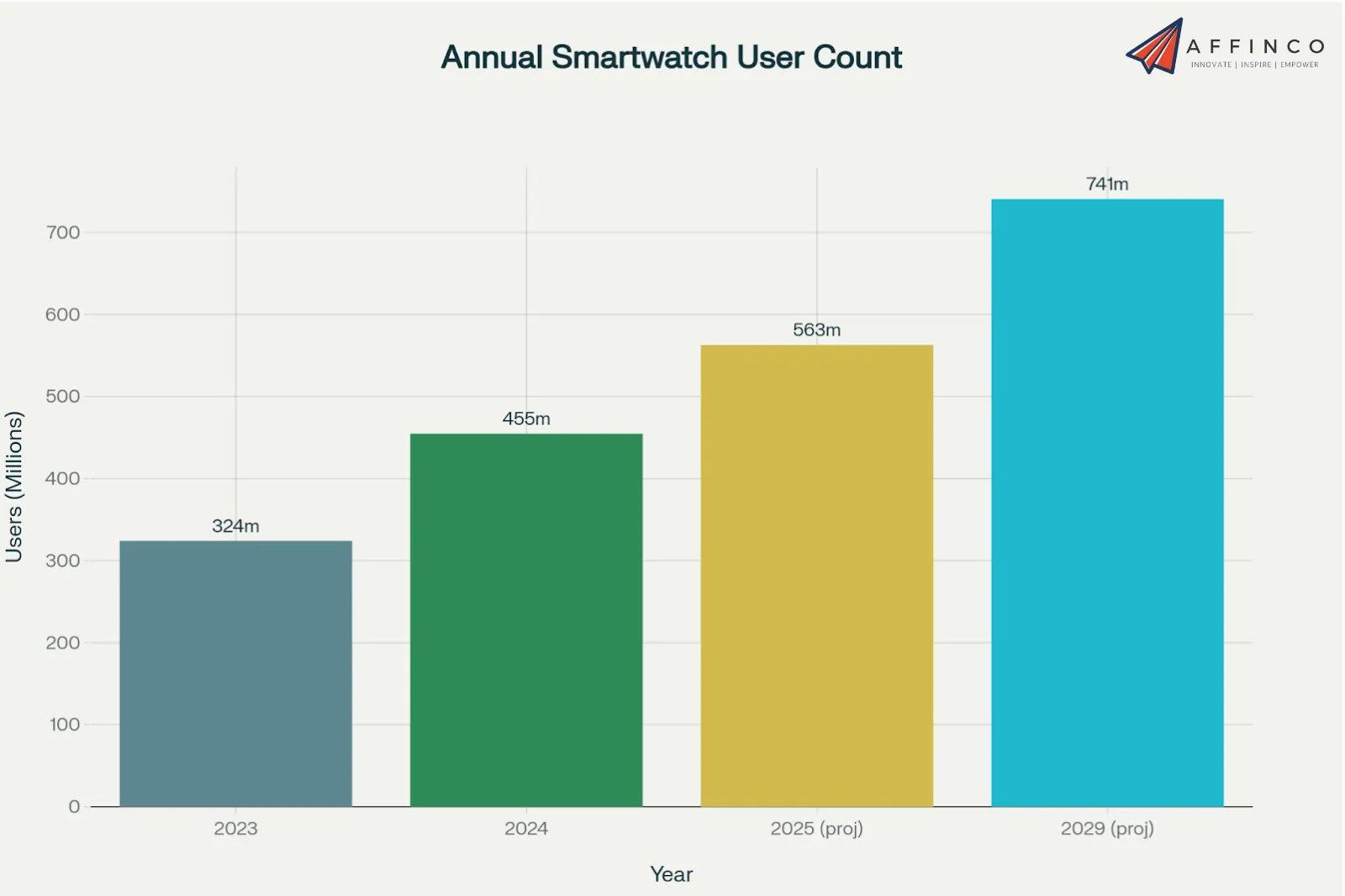
The number of people adopting smartwatch technology has been climbing rapidly. This user growth is a primary factor behind the market's expansion.
| Year | Number of Smartwatch Users (in millions) |
|---|---|
| 2023 | 323.99 |
| 2024 | 454.69 |
| 2025 | 562.86 |
| 2029* | 740.53 |
This sharp increase in users highlights the transition of smartwatches from a niche gadget to a mainstream consumer electronic device.
Smartwatch User Penetration Rate
The user penetration rate measures the percentage of the population using a technology. For smartwatches, this rate is steadily climbing, indicating wider acceptance.
While the percentage may seem small, it represents hundreds of millions of users, and the steady increase points to the technology becoming a more common household item.
Smartwatch Market Share by Vendor
The smartwatch market is competitive, but a few major brands capture the majority of sales. Apple continues to lead, with other technology giants vying for position.
| Smartwatch Brand | Market Share (%) |
|---|---|
| Apple | 21% |
| Huawei | 14% |
| Samsung | 11% |
| Others | 54% |
This distribution shows a market led by established tech companies, but with significant room for other brands to compete and innovate.
Regional Smartwatch Market Analysis
The popularity and adoption of smartwatches differ significantly across the globe. The Asia-Pacific region has emerged as the leader, while North America remains a highly profitable market.
Asia-Pacific: The Largest Market
The Asia-Pacific (APAC) region has become the most significant area for the smartwatch industry in terms of volume and growth.
This regional dominance is fueled by a large population, increasing disposable income, and a strong consumer interest in new technology.
India: A Market of High Volume and Change

India's smartwatch market is known for its rapid growth, particularly in the budget segment, but it is currently experiencing a market correction.
The Indian market is now seeing a shift in consumer preference from low-cost devices to more premium models with advanced features.
North America: A Mature and Profitable Market

North America continues to be a key region for the smartwatch industry, characterized by high consumer spending and strong brand loyalty.
High disposable incomes and a culture that values health and technology keep North America at the forefront of the premium smartwatch segment.
Countries with High Smartwatch Usage
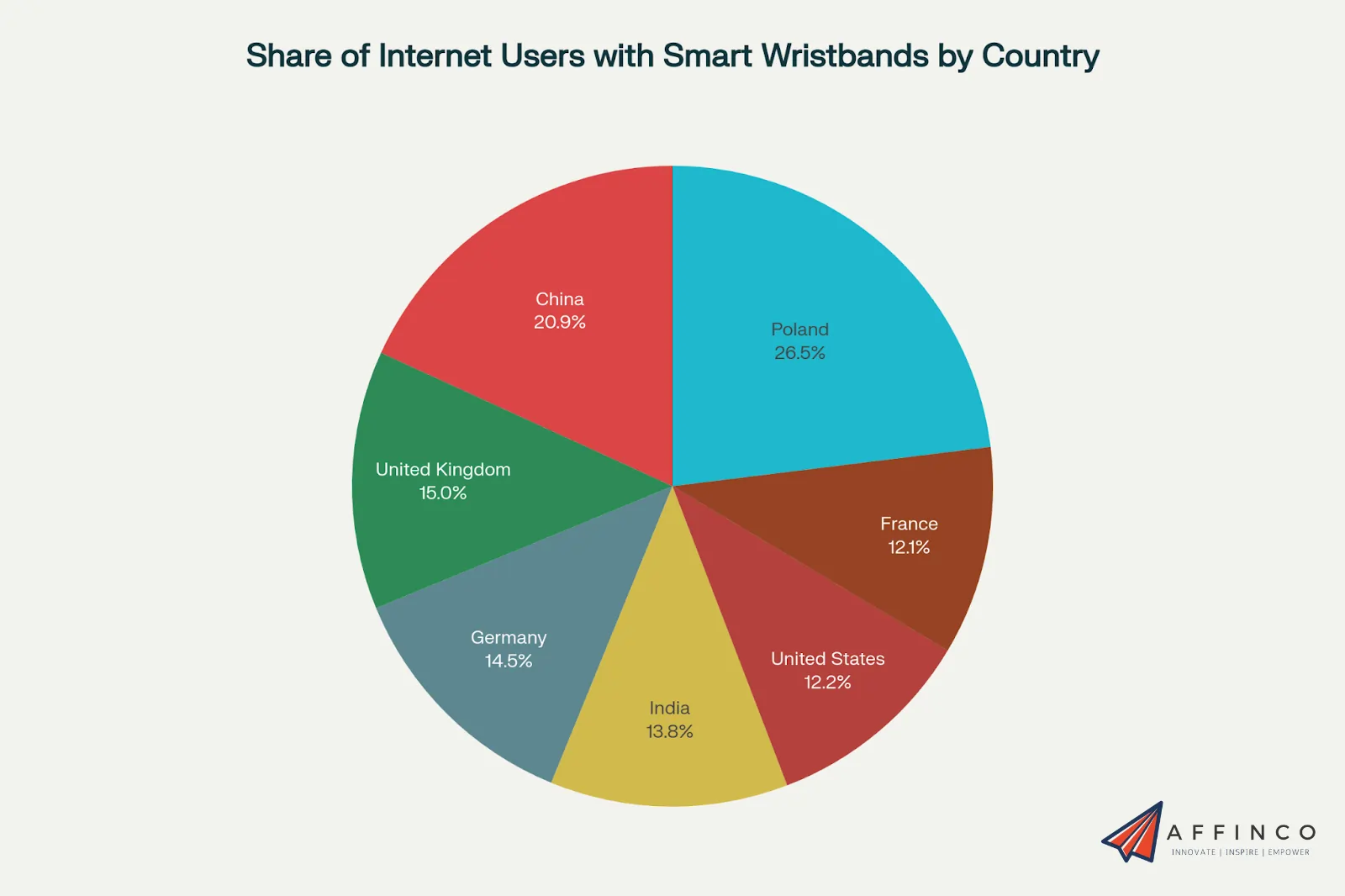
The adoption of smartwatches among internet users varies by country, reflecting different market dynamics and consumer interests.
| Country | Share of Internet Users with Smart Wristbands |
|---|---|
| Poland | 26.5% |
| China | 20.9% |
| United Kingdom | 15.0% |
| Germany | 14.5% |
| India | 13.8% |
| United States | 12.2% |
| France | 12.1% |
These figures show how cultural and economic factors influence the adoption of wearable technology in different parts of the world.
Smartwatch User Demographics
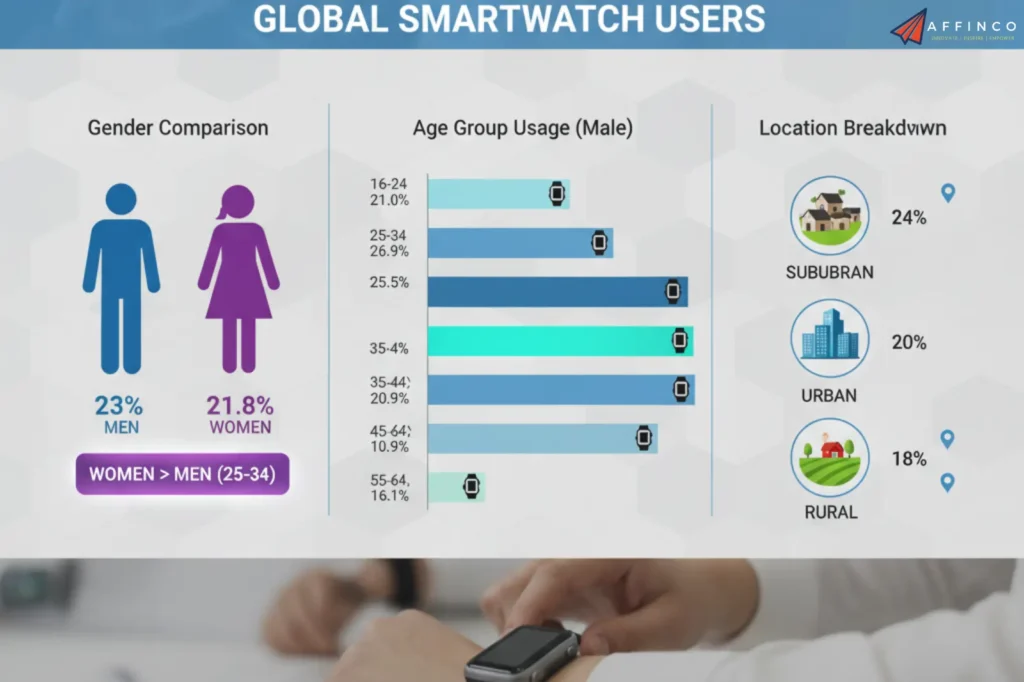
Understanding who uses smartwatches provides insight into the target audience. The data reveals patterns related to age, gender, and location.
| Age Group | Male Users (%) |
|---|---|
| Age Group | Male Users (%) |
| 16-24 years | 21.0% |
| 25-34 years | 26.9% |
| 35-44 years | 25.5% |
| 45-54 years | 20.9% |
| 55-64 years | 16.1% |
This demographic data is useful for brands to tailor their marketing and product designs to specific consumer segments.
Why People Use Smartwatches
The reasons people purchase and use smartwatches are primarily centered on health and personal convenience. Fitness tracking remains the number one motivator.
These usage statistics confirm that the core value proposition of a smartwatch for most consumers is its ability to function as a personal health and wellness companion.
The Role of Smartwatches in Health Monitoring
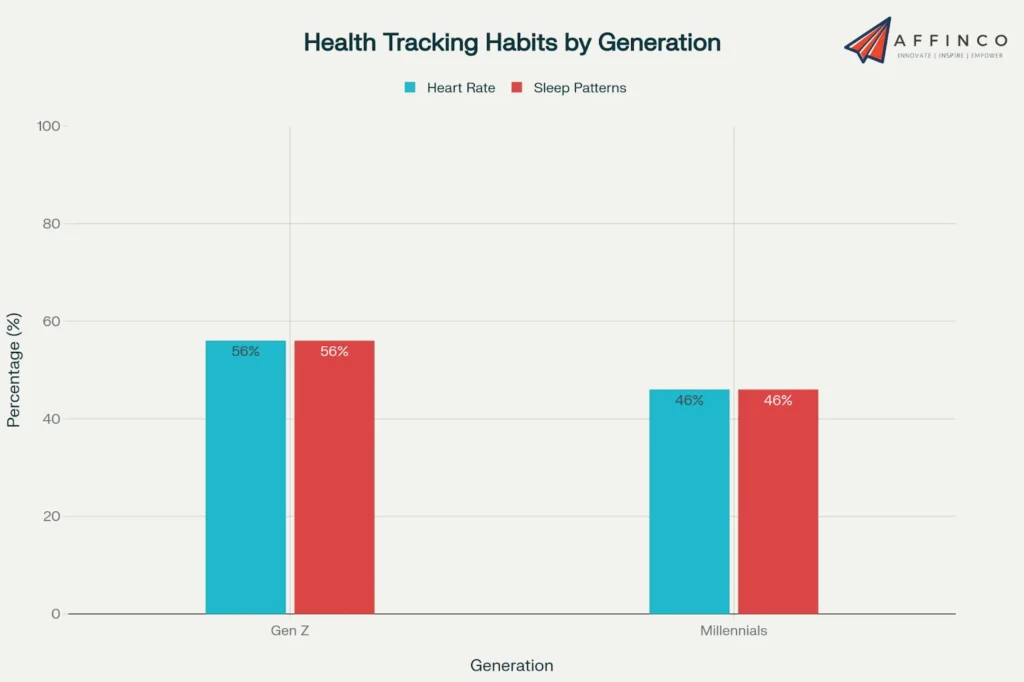
Smartwatches have become sophisticated health-tracking tools. Their ability to monitor vital signs and share data with medical professionals is a significant feature.
The integration of these health features has made smartwatches a valuable tool for preventative health and wellness management.
Technology and Innovation in Smartwatches
Advancements in technology are what keep the smartwatch market fresh and exciting. In 2026, artificial intelligence and improved sensors are the main areas of innovation.
These technological improvements are making smartwatches smarter, more personal, and more useful in a variety of daily situations.
Smartwatch Pricing and Market Segments
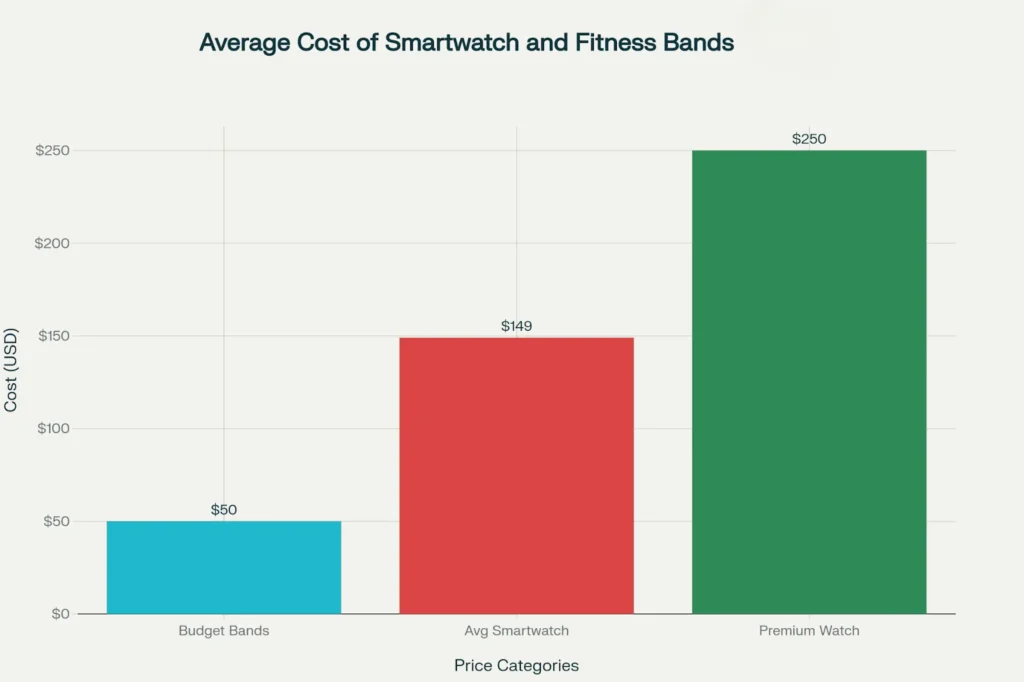
Smartwatches are available at a wide range of price points, which has helped broaden their appeal to different types of consumers.
- The average cost of a smartwatch in 2026 is approximately $149.
- For those on a budget, more basic fitness bands can be purchased for around $50.
- There is a clear trend of consumers moving towards more expensive devices. The $100–$200 price segment saw a 21% increase in shipments.
- In contrast, the sub-$100 category of devices experienced a 17% decline in shipments.
| Price Category | Estimated Cost (USD) | Market Trend |
|---|---|---|
| Budget Fitness Bands | $50 | Stable demand |
| Average Smartwatch | $149 | Growing segment |
| Premium Smartwatch | $250+ | Increasing demand |
This pricing structure allows the market to cater to both first-time buyers and those looking to upgrade to more advanced models.
Conclusion
Smartwatch adoption shows no signs of slowing down. By 2032, market value will hit $143.19 billion and the user numbers will climb to 740.53 million by 2029. Poland leads global adoption at 26.5%, and 88% of current users successfully achieve fitness goals with help from wearable devices.
Health tracking remains king, but AI-powered features and voice assistants are changing how people interact with wrist-worn technology. Asia-Pacific now controls 43% of global shipments, proving consumer appetite spans continents.
Which smartwatch feature matters most for your daily routine – fitness monitoring or smart connectivity?


Ali
Ali is a digital marketing expert with 7+ years of experience in SEO-optimized blogging. Skilled in reviewing SaaS tools, social media marketing, and email campaigns, we craft content that ranks well and engages audiences. Known for providing genuine information, Ali is a reliable source for businesses seeking to boost their online presence effectively.