

Over 3.8 billion people are now addicted to their smartphones, and Americans check their phones a staggering 352 times daily.
That's every 4 minutes you're awake. If you're wondering just how deep phone dependency runs in 2025, these Smartphone Addiction Statistics paint a startling picture.
We've compiled the latest behavioral addiction data covering screen time patterns, nomophobia rates, mental health impacts, and distracted driving deaths tied to mobile overuse.
Key Smartphone Addiction Statistics for 2025
Global Smartphone Addiction: A Worldwide Issue
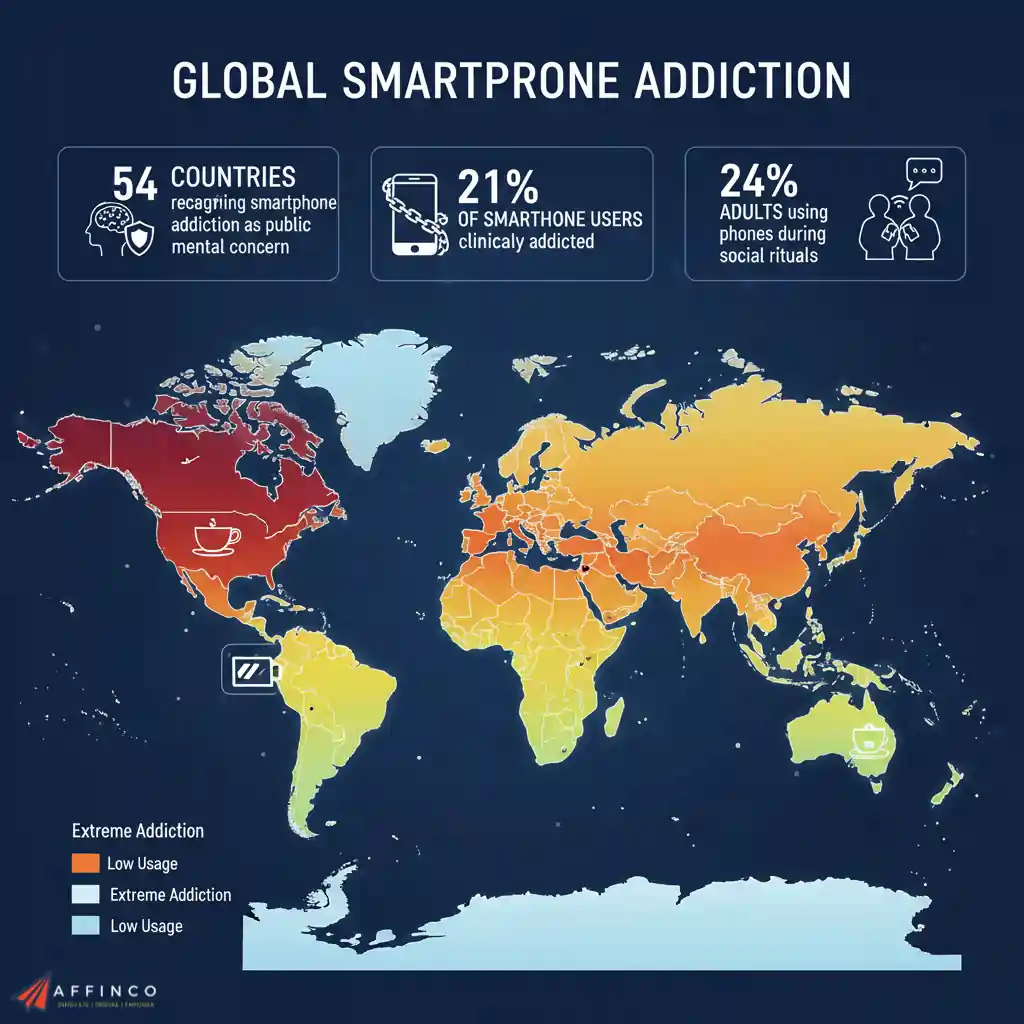
Problematic smartphone use is not confined to one region; it is a global issue with varying intensity. Cultural norms, technological access, and social behaviors all contribute to these international trends.
These findings confirm that smartphone dependency is a widespread concern. International health organizations are now addressing its impact on a global scale.
Smartphone Addiction Rates by Country
Different nations show different levels of smartphone dependency. A scoring system helps to quantify problematic usage, revealing which populations are most affected.
| Country | Problematic Use Score/Addiction Rate |
|---|---|
| China | 36.18 (Highest Score) |
| Saudi Arabia | 35.73 |
| Malaysia | 35.43 |
| India | 32% (Addiction Rate) |
| Brazil | 28% (Addiction Rate) |
| United States | 25% (Addiction Rate) |
| South Korea | 29% (High School Students) |
| European Union | 17% (Prevalence Rate) |
The data indicates that both developed and developing nations are experiencing high levels of smartphone overuse. This highlights the need for country-specific awareness campaigns and support systems.
Average Daily Screen Time in 2025

The amount of time spent on smartphones is a key indicator of potential addiction. Several countries now have populations that spend a significant portion of their waking hours on their devices.
| Country | Average Daily Smartphone Use (Hours:Minutes) | Year-over-Year Change |
|---|---|---|
| Ghana | 5:43 | +45 min |
| Philippines | 5:21 | +1 min |
| Brazil | 5:12 | -7 min |
| South Africa | 5:11 | -4 min |
| Thailand | 5:00 | -2 min |
| Chile | 4:58 | +10 min |
| Kenya | 4:57 | +21 min |
| Colombia | 4:47 | 0 min |
| Malaysia | 4:42 | +5 min |
| Argentina | 4:40 | +3 min |
With the global average at 3 hours and 46 minutes, these figures show that many users far exceed that amount. Such extended periods of screen time are a major factor in the development of addictive behaviors.
The Generational Divide in Smartphone Use
Digital wellness concerns are present across all age groups, but data consistently shows younger generations have a stronger attachment to their devices. Their habits and self-perception reveal a deep-seated dependency.
| Generation | Average Daily Screen Time | Percentage Feeling Addicted |
|---|---|---|
| Gen Z | 6 hours and 5 minutes | 56% |
| Millennials | 4 hours and 36 minutes | 48% |
| Gen X | 4 hours and 9 minutes | 44% |
| Baby Boomers | 3 hours and 31 minutes | 29% |
The high screen time and addiction rates among Gen Z and Millennials are particularly notable. These generations, having grown up with digital technology, are at the forefront of this modern-day dependency.
Smartphone Addiction Among Teenagers and Youth

The age at which children receive their first smartphone continues to drop, leading to earlier and more prolonged exposure. This trend has measurable effects on their development and well-being.
These numbers point to serious risks for young people. The link between excessive phone use and mental health issues is a growing area of concern for parents and health professionals.
The Rise of Nomophobia: Fear of No Mobile Phone
The anxiety associated with being without a phone has become so common that it has its own name: nomophobia. This condition highlights the psychological attachment people have to their devices.
Nomophobia serves as a clear indicator of psychological dependence. Its symptoms are a warning sign that a user's relationship with their device has become unhealthy.
“Phubbing”: How Phones Affect Relationships
The term “phubbing” (a portmanteau of “phone” and “snubbing”) describes the act of ignoring someone in favor of a mobile phone. This behavior is increasingly common and is creating friction in personal relationships.
This behavior undermines face-to-face communication and can lead to feelings of neglect and frustration. It shows how device attachment can take priority over human connection.
The Impact on Mental and Physical Health

Excessive smartphone use is linked to a range of negative health outcomes. The constant notifications and blue light exposure disrupt natural patterns and contribute to both mental and physical strain.
Addressing these health impacts requires a conscious effort to reduce screen time and improve posture. The effects of phone addiction go far beyond the psychological.
The Dangers of Distracted Driving
The compulsion to check a phone does not stop when a person gets behind the wheel. Distracted driving due to smartphone use is a leading cause of accidents, injuries, and fatalities.
These statistics underscore a critical public safety issue. The brief distraction of a notification can have life-altering consequences on the road.
Productivity in the Workplace and at School

Constant smartphone notifications and the temptation to check social media create significant distractions. This has a measurable impact on productivity for both students and employees.
The constant context-switching between work and phone notifications is known to decrease focus and efficiency.
Employers and educational institutions are increasingly aware of this issue. Many are implementing policies or offering tools to help individuals manage their digital distractions.
Social Media's Role in Driving Addiction
Social media platforms are designed to capture and hold user attention, making them a primary driver of smartphone addiction. The endless scrolling and notification-based reward systems create a powerful feedback loop.
The design of these platforms is a major factor in problematic smartphone use. Understanding this allows users to be more mindful of how and why they engage with such apps.
Digital Detox: The Pushback Against Addiction
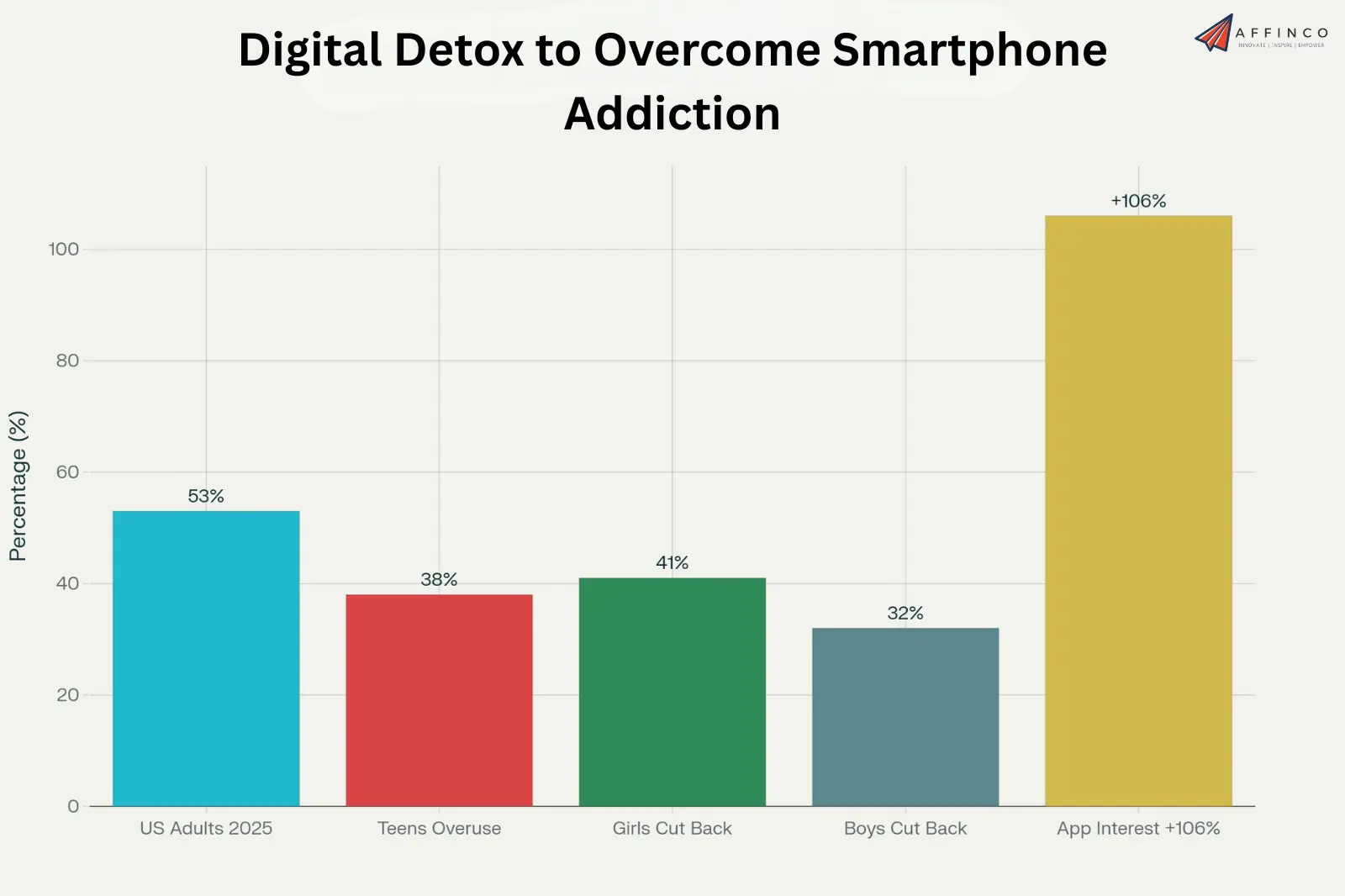
In response to growing dependency, a counter-movement focused on digital wellness is gaining traction. More people are becoming aware of their usage and are actively trying to reduce their screen time.
- In early 2025, over half of Americans (53%) expressed a desire to cut down on their phone usage, a 33% increase from 2023.
- Awareness is growing among younger users, with 38% of all teenagers acknowledging that they spend too much time on their smartphones.
- Among teens who recognize their overuse, a significant number are taking action. 41% of girls and 32% of boys have attempted to reduce their smartphone usage.
- The top reasons for wanting to cut down include a desire to be more present in the moment, improve sleep, and boost productivity.
- Productivity apps designed to combat phone addiction, such as Forest, have seen a 106% increase in search interest over the past decade, showing a clear demand for solutions.
A Concluding Look at Smartphone Addiction Figures
Over 56% of Americans now admit to phone addiction, spending nearly 70 days each year glued to screens.
With 71% of teens losing sleep and 20% of car accidents linked to phones, numbers paint a stark picture. Awareness is step one.
Setting boundaries like phone-free meals or tracking daily usage can help regain control. Building healthier habits starts with small changes today. When was your last full hour without checking notifications?


Ali
Ali is a digital marketing expert with 7+ years of experience in SEO-optimized blogging. Skilled in reviewing SaaS tools, social media marketing, and email campaigns, we craft content that ranks well and engages audiences. Known for providing genuine information, Ali is a reliable source for businesses seeking to boost their online presence effectively.