
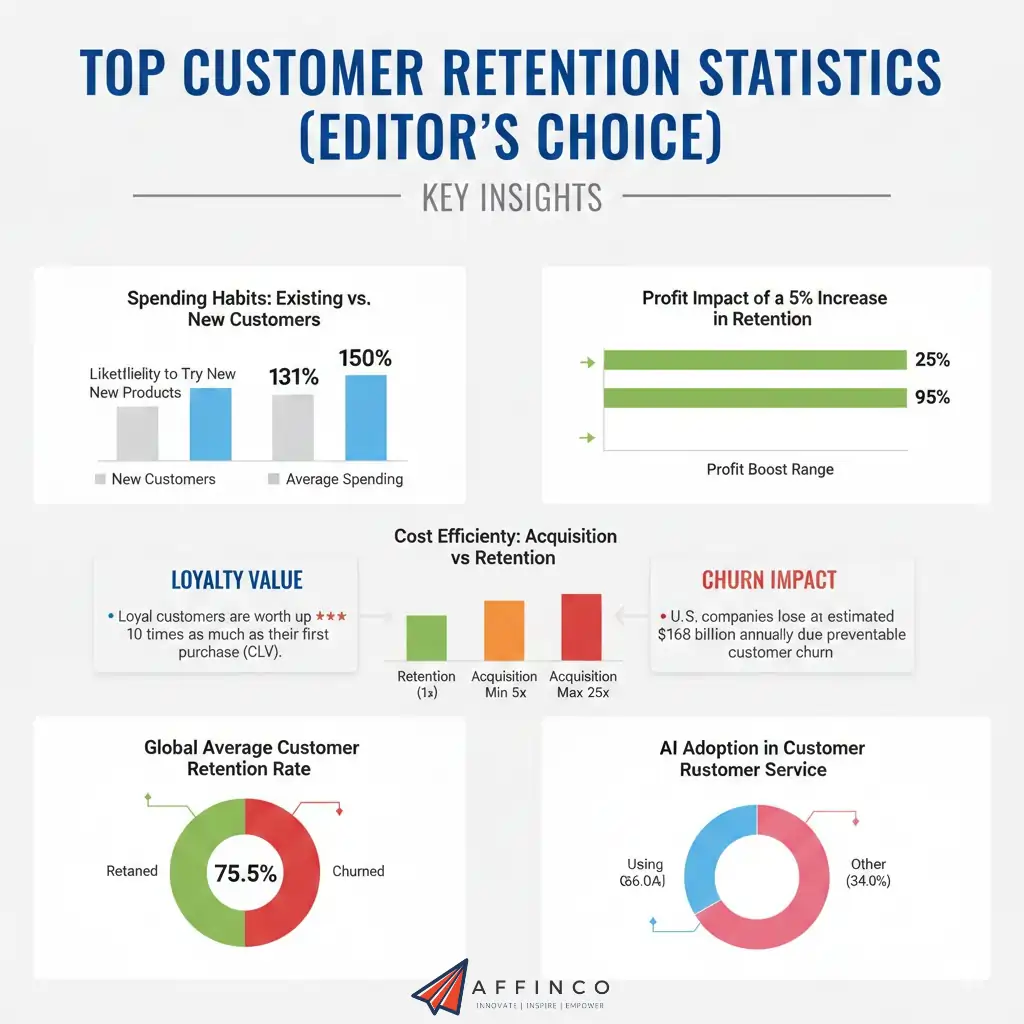
Customer retention is now cheaper and more profitable than chasing new buyers. Keeping just one customer costs 5 to 25 times less than acquiring a fresh one.
The average retention rate across industries sits at 75.5% in 2026, but a mere 5% boost can skyrocket your profits by 25% to 95%.
We've gathered the latest Customer Retention Statistics covering churn rates, loyalty programs, AI adoption, and omnichannel performance to help you build a bulletproof retention strategy that actually works.
Top 2026 Customer Retention Statistics
Global Customer Retention vs. Acquisition Costs
Understanding the financial efficiency of keeping customers versus finding new ones is fundamental for 2026 budget planning. Data consistently proves that retention offers superior ROI compared to acquisition campaigns.
Prioritizing Customer Lifetime Value (CLV) over short-term acquisition volume ensures long-term financial stability and higher profitability ratios.
Average Customer Retention Rates by Industry (2026)
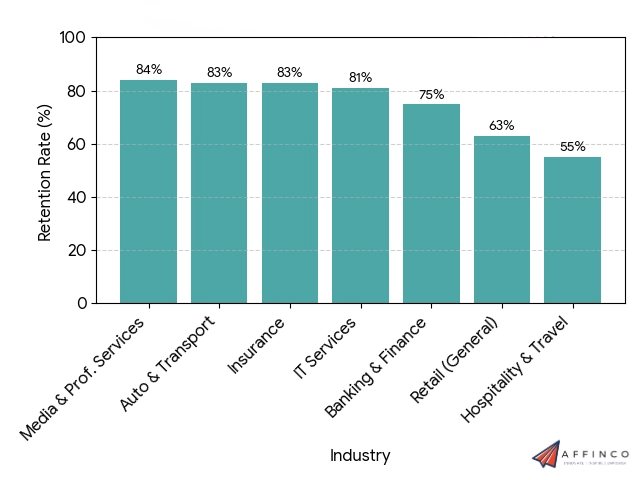
Retention benchmarks vary wildly across different sectors, influenced by contract lengths and competition levels. Professional services and media continue to lead the pack due to high switching costs and subscription models.
| Industry | Retention Rate (Est.) | Churn Rate (Est.) |
|---|---|---|
| Media & Professional Services | 84% | 16% |
| Automotive & Transportation | 83% | 17% |
| Insurance | 83% | 17% |
| IT Services | 81% | 19% |
| Banking & Finance | 75% | 25% |
| Retail (General) | 63% | 37% |
| Hospitality & Travel | 55% | 45% |
Banking and Insurance sectors maintain high stability, while Retail and Hospitality face constant pressure from aggressive competitor pricing.
SaaS Customer Retention & Churn Benchmarks
Software-as-a-Service (SaaS) relies heavily on recurring revenue, making Net Revenue Retention (NRR) a primary health metric. 2026 data shows a widening gap between top performers and average companies.
Successful SaaS platforms now focus on customer success teams to drive adoption and reduce voluntary churn rates effectively.
Mobile App Retention Statistics 2025-2026
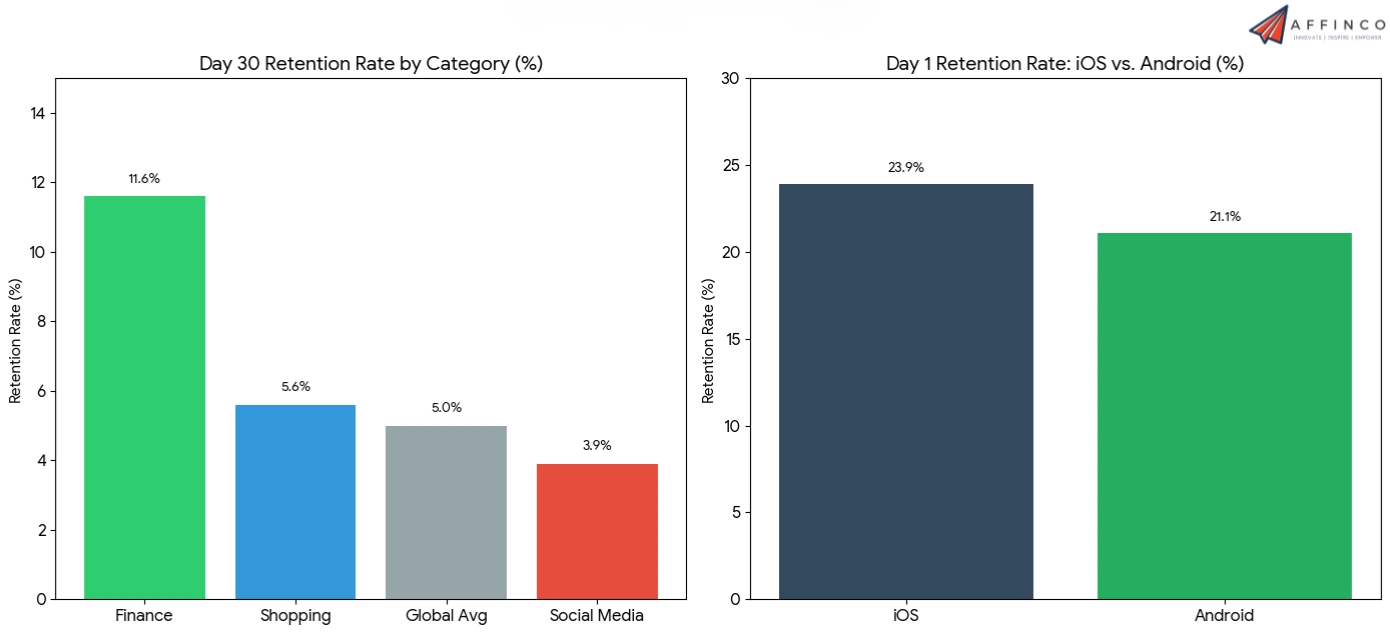
Mobile app retention is notoriously difficult, with steep drop-offs occurring within the first week of installation. Finance and shopping apps currently outperform gaming and entertainment categories in long-term stickiness.
Developers must focus on push notification strategies and immediate value delivery to combat the harsh Day 1 to Day 30 drop-off curve.
AI in Customer Retention & Support
Artificial Intelligence is reshaping how companies predict churn and serve customers in 2026. Automated solutions are no longer just for efficiency; they are central to maintaining satisfaction at scale.
Integrating Conversational AI allows brands to offer 24/7 support, directly impacting Customer Satisfaction (CSAT) scores and loyalty.
Personalization and Hyper-Targeting Impact
Generic marketing messages are a primary driver of disengagement in 2026. Consumers now expect brands to use data to tailor every interaction, from emails to product recommendations.
- 80% of businesses report higher spending when the customer experience is personalized.
- 76% of consumers get frustrated when brands fail to deliver personalized interactions.
- Personalized loyalty rewards drive members to spend 4.3x more than non-personalized offers.
- Companies leveraging zero-party data for personalization see a 1.5x increase in cost savings.
- Segmented campaigns can lead to a 121% increase in click-through rates.
Hyper-personalization ensures that customers feel valued, which is the strongest psychological driver of brand affinity and long-term retention.
Omnichannel Retention Performance
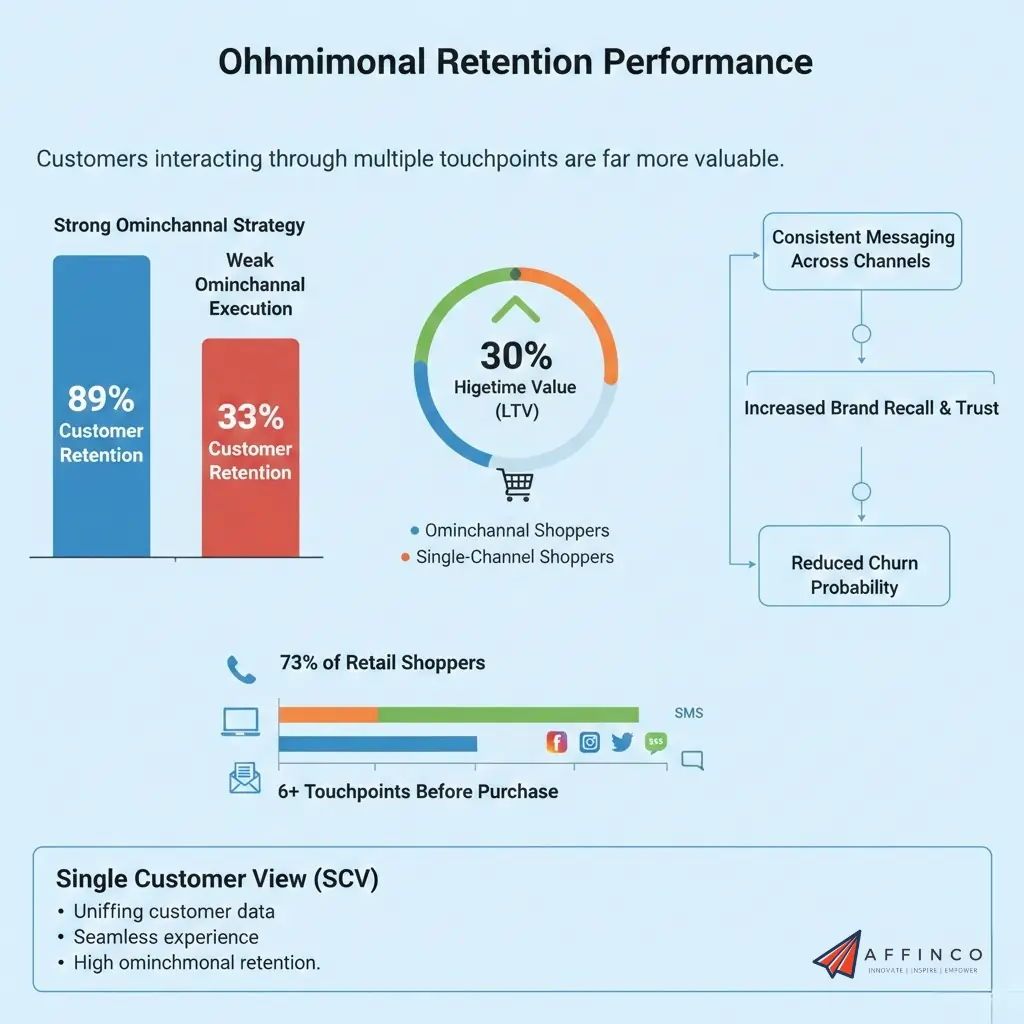
Customers interacting through multiple touchpoints are far more valuable than single-channel users. A cohesive strategy across email, SMS, and social media is vital for maximizing retention.
Unifying customer data into a Single Customer View (SCV) is essential for delivering the seamless experience that drives high omnichannel retention.
Loyalty Program ROI and Effectiveness
Structured loyalty programs continue to be a dominant force in retaining high-value customers. The modern program goes beyond points, offering experiential rewards and exclusive access.
Investing in a tiered reward system encourages customers to climb the value ladder, increasing their emotional and financial investment in the brand.
Impact of Customer Service on Churn
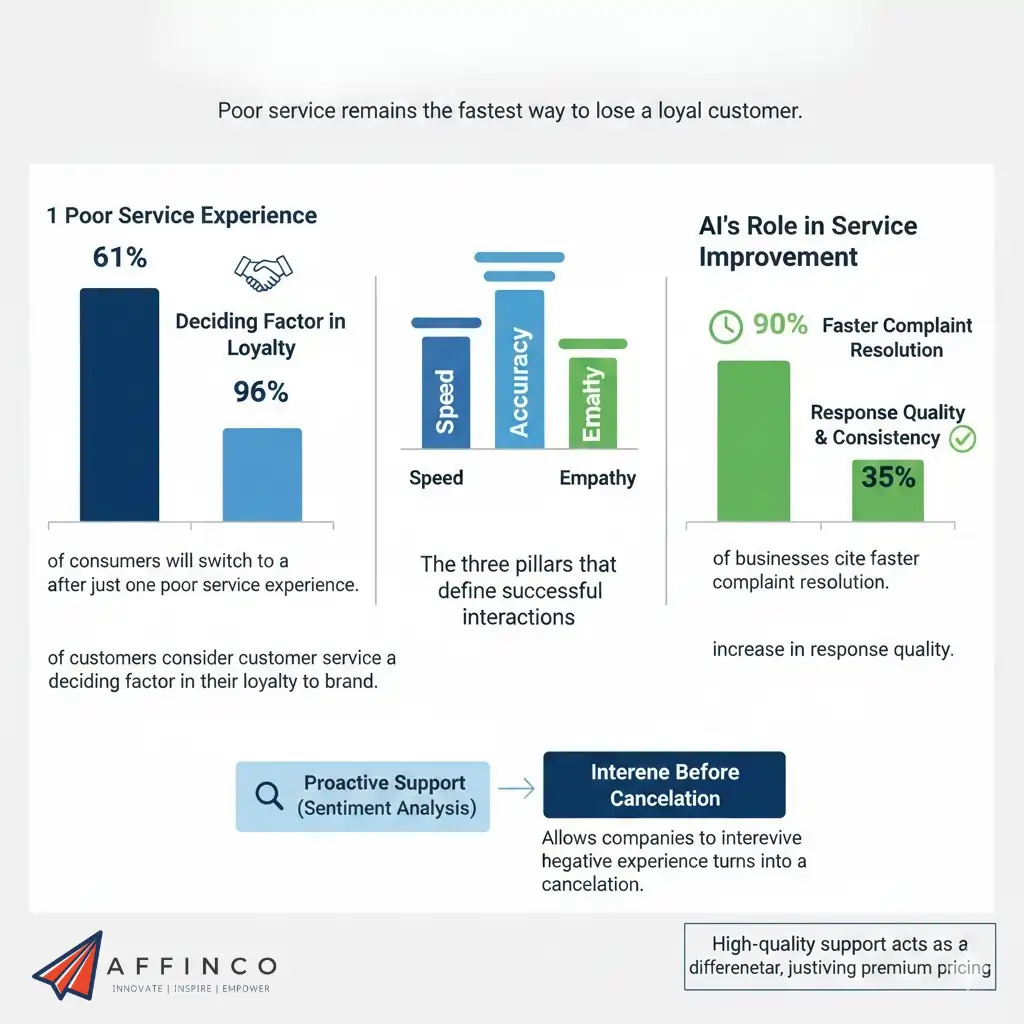
Poor service remains the fastest way to lose a loyal customer in 2026. Speed, accuracy, and empathy are the three pillars that define successful support interactions.
Proactive support, enabled by sentiment analysis, allows companies to intervene before a negative experience turns into a cancellation.
B2B Retention vs. B2C Retention Trends
B2B retention relies on relationship management and proven ROI, while B2C is often driven by emotional connection and convenience. Both sectors, however, are seeing a convergence in expectations for speed and personalization.
| Feature | B2B Retention Focus | B2C Retention Focus |
|---|---|---|
| Primary Driver | ROI & Business Outcomes | Emotion & Convenience |
| Key Metric | Net Revenue Retention (NRR) | Repeat Purchase Rate (RPR) |
| Contract Style | Long-term Contracts | Transactional / Subscription |
| Decision Maker | Buying Committees | Individuals |
| Avg. Churn | ~3-5% Annually | ~20-30% Annually |
B2B strategies must focus on Quarterly Business Reviews (QBRs) and demonstrating continuous value, whereas B2C strategies thrive on instant gratification and ease of use.
Financial Implications of Churn
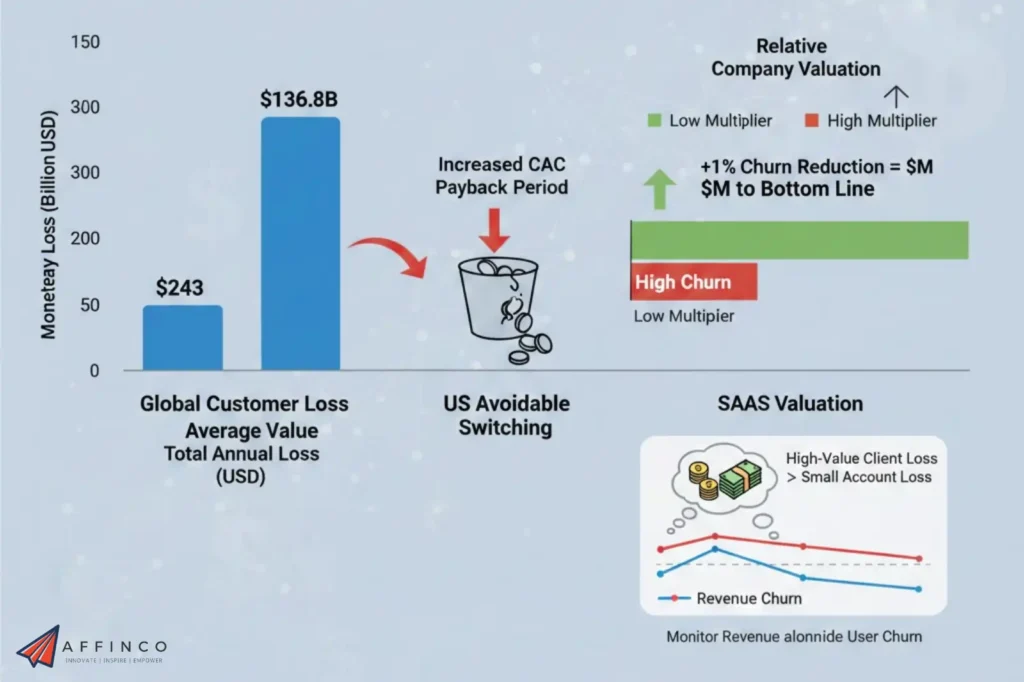
The silent killer of growth is churn, which drains revenue buckets faster than sales teams can fill them. Reducing churn is often the quickest path to improving company valuation.
Monitoring revenue churn alongside user churn is critical, as losing a high-value enterprise client hurts more than losing a small account.
2026 Customer Retention Forecasts
Looking ahead, technology will further automate retention, making it a background process rather than a manual campaign. The integration of predictive AI will make churn prevention proactive rather than reactive.
The future of retention lies in anticipatory service—solving problems and offering value before the customer even realizes they need it.
Customer Feedback and NPS Statistics
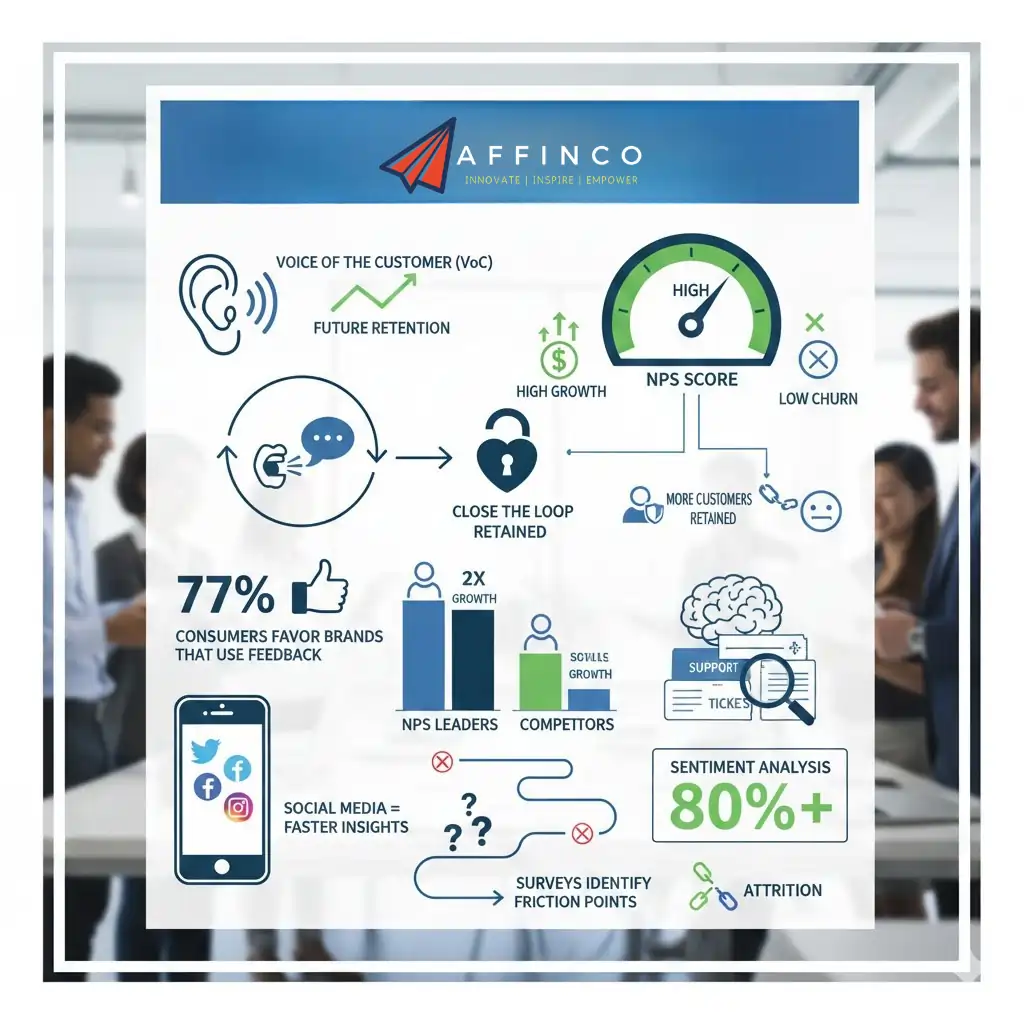
Listening to the “Voice of the Customer” (VoC) is the most accurate way to gauge future retention rates. High NPS scores correlate strongly with high growth rates and low churn.
- Companies that actively close the loop on feedback retain more customers than those that don't.
- Net Promoter Score (NPS) leaders outgrow their competitors by 2x on average.
- 77% of consumers view brands more favorably if they seek out and apply customer feedback.
- Unsolicited feedback on social media provides faster insights than traditional surveys.
- Sentiment analysis tools can now predict NPS scores from support tickets with 80%+ accuracy.
Regularly surveying customers helps identify friction points in the user journey that may be silently causing attrition.
Email Marketing for Retention
Despite the rise of social media, email remains the workhorse of retention marketing. It provides a direct line to the customer that is owned, not rented.
Combining email with SMS notifications creates a powerful “one-two punch” for time-sensitive offers and renewal reminders.
Social Proof and Community Impact
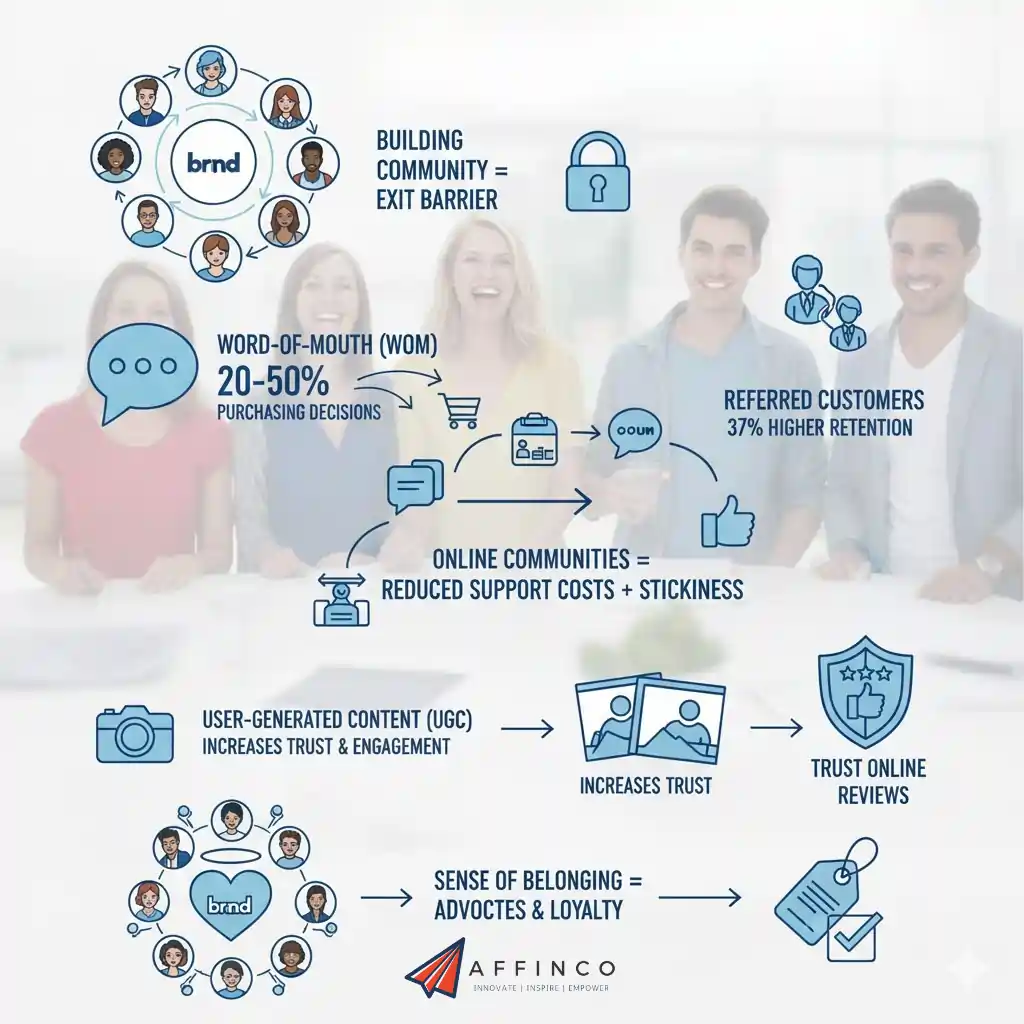
Building a community around a brand creates an “exit barrier” where leaving the product means leaving a social group. Peer influence is a powerful retention mechanic.
- Word-of-mouth (WOM) is the primary factor behind 20-50% of all purchasing decisions.
- Customers referred by others have a 37% higher retention rate.
- Online communities can reduce support costs while increasing engagement and stickiness.
- User-Generated Content (UGC) increases trust and keeps existing customers engaged with the brand.
- 88% of consumers trust online reviews as much as personal recommendations.
Fostering a sense of belonging transforms customers into advocates who defend the brand and stay loyal during price increases.
Conclusion: The 2026 Retention Strategy
The statistics for 2026 are clear: Retention is the new growth. With acquisition costs skyrocketing and AI offering affordable ways to scale personalization, there is no excuse for high churn.
- Predictive AI: Use data to identify at-risk customers before they leave.
- Omnichannel Flow: Ensure your mobile, web, and support experiences are unified.
- Service Speed: Use automation to drop response times to under 2 hours.
By prioritizing these metrics, you turn your customer base into a sustainable revenue engine that grows efficiently, even in a volatile market.


Ali
Ali is a digital marketing expert with 7+ years of experience in SEO-optimized blogging. Skilled in reviewing SaaS tools, social media marketing, and email campaigns, we craft content that ranks well and engages audiences. Known for providing genuine information, Ali is a reliable source for businesses seeking to boost their online presence effectively.