


The best Cursor alternative in 2026 is Emergent, an agentic builder that plans, codes, tests and deploys a full stack app from one brief, starting at $20 a month. Genspark AI Developer is the strongest value pick at $24.99 a month, and it is the tool we used to build eSIMdude.com. Cursor is still the best pure code editor. It is simply no longer the only way to ship software.
Two years ago the vibe coding conversation had three names in it. Cursor, Windsurf, VS Code. That was the list.
That list is dead.
Windsurf does not even exist as a brand anymore. Cognition renamed it Devin Desktop on 2 June 2026. In JetBrains' January 2026 survey of more than 10,000 professional developers, Windsurf did not place at all, in a chart that itemised down to 3%. VS Code is now mostly a shell that other people's agents plug into.
And Cursor? Cursor won. Completely. Then something strange happened.
We run AFFiNCO as a full service digital marketing agency, and most of what we ship is not enterprise software. It is landing pages, internal dashboards, affiliate tools, client microsites, tracking glue. If that sounds like your work too, this list was written for you.
Here is what we actually use, ranked, with real pricing and the parts nobody puts in the marketing copy.
Cursor Alternatives at a Glance
| Tool | Starting Price | Free Tier | AFFINCO’s Rating |
|---|---|---|---|
| Emergent | $20/mo | 10 credits/mo | ⭐ 4.6 |
| Genspark AI Developer | $24.99/mo | 100 credits/day | ⭐ 4.5 |
| Lovable | $25/mo | 5 credits/day | ⭐ 4.2 |
| Blink.new | $25/mo | 5 credits/day | ⭐ 3.8 |
| Claude Code | $17/mo annual | None | ⭐ 4.7 |
| z.ai GLM 5.2 | $18/mo | Free API models | ⭐ 4.1 |
| Replit | $20/mo annual | Daily credits | ⭐ 3.9 |
| Kilo Code | $0 | Fully free | ⭐ 4.3 |
One line verdict: If you want the app built for you, use Emergent. If you want the same outcome for less money, use Genspark. If you already write code, use Claude Code. Everything else is a preference.
First, How Cursor Became a $60 Billion Unicorn
You cannot talk about Cursor alternatives without being honest about why Cursor is the benchmark.
Anysphere, the company behind Cursor, raised an $8 million seed in October 2023 led by the OpenAI Startup Fund. Then it went vertical.
| Round | Date | Amount | Valuation |
|---|---|---|---|
| Seed | Oct 2023 | $8M | n/a |
| Series A | 2024 | $60M | $400M |
| Series C | 5 Jun 2025 | $900M | $9.9B |
| Series D | 13 Nov 2025 | $2.3B | $29.3B |
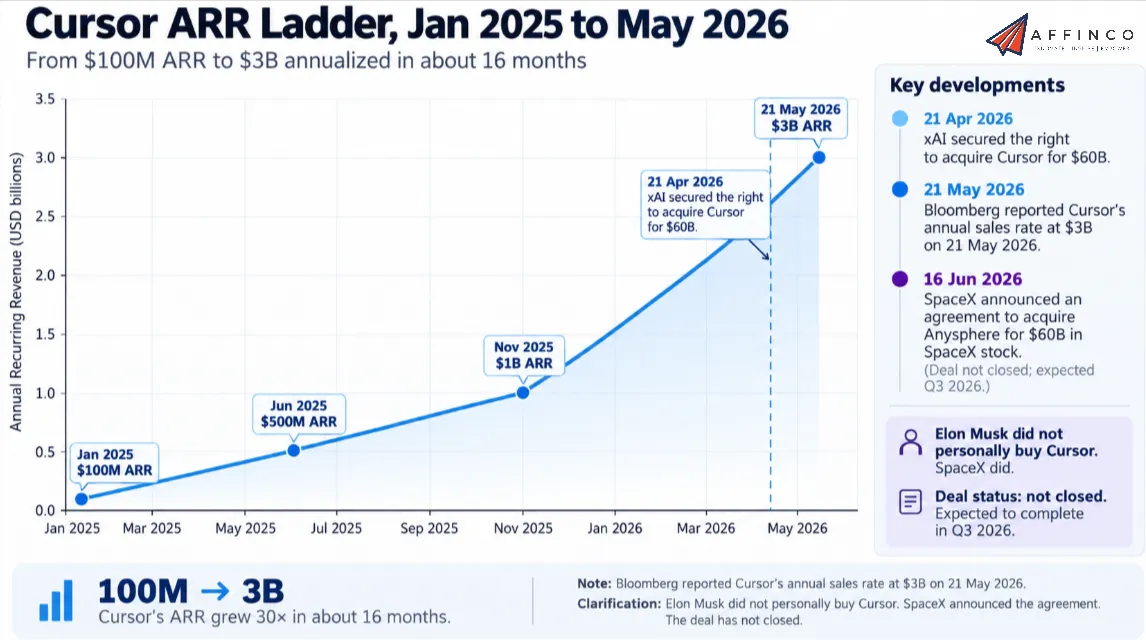
The revenue curve was worse, in the sense that it was better. $100M ARR in January 2025. $500M by June 2025. $1 billion annualised by November 2025. $3 billion ARR by May 2026. Bloomberg put Cursor's annual sales rate at $3 billion on 21 May 2026, which is roughly six times all of Cognition, the company that owns what used to be Windsurf.
Then came the part everyone half remembers.
On 21 April 2026, xAI secured the right to acquire Cursor for $60 billion. On 16 June 2026, days after its blockbuster IPO, SpaceX announced an agreement to acquire Anysphere for $60 billion in SpaceX stock. SpaceX had absorbed xAI earlier in the year, so the AI division and the rocket company are now the same balance sheet.
Two things people get wrong here, so let us be precise. Elon Musk did not personally buy Cursor. SpaceX did. And the deal has not closed. It is expected to complete in Q3 2026. Anyone telling you Musk owns Cursor today is a few months early.
So Cursor is the number one tool in vibe coding. That is not in dispute.
What is in dispute is whether it is still the right tool for you.
Why Everyone Suddenly Wants a Cursor Alternative
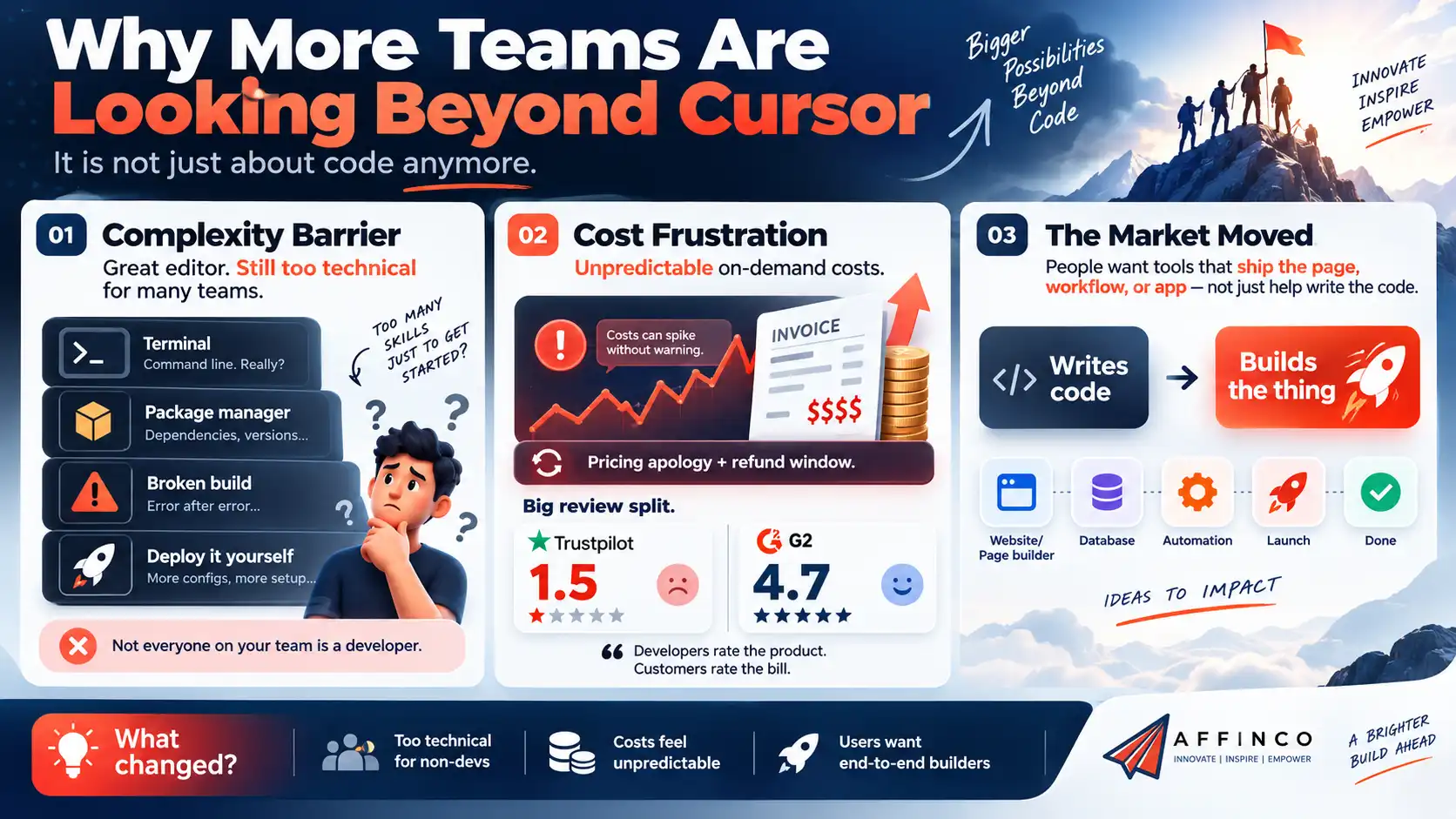
Cursor is an editor. A brilliant one. You still have to open a terminal, know what a package manager is, understand why the build broke, and deploy the thing yourself.
For a marketer who needs a lead capture page with a database behind it by Thursday, that is four skills too many.

Build More, Code Less With Genspark
Genspark is a strong Cursor alternative for developers and vibe coders who want to move from an idea to a working product faster, without spending all day inside the editor.
Pro Annual Plan
$600 OFF
Free Quota Available
The second reason is money, and we will get into the numbers properly at the end. The short version: Cursor's own docs admit to “unpredictable on demand costs“, the company issued a public apology and a refund window over its June and July 2025 pricing changes, and its Trustpilot score sits at 1.5 while its G2 sits at 4.7. That split is not an accident. Developers rate the product. Customers rate the bill.
The third reason is that the category moved. Cursor helps you write code. The tools below build the thing. Different job.
1. Emergent: The Best Cursor Alternative Overall
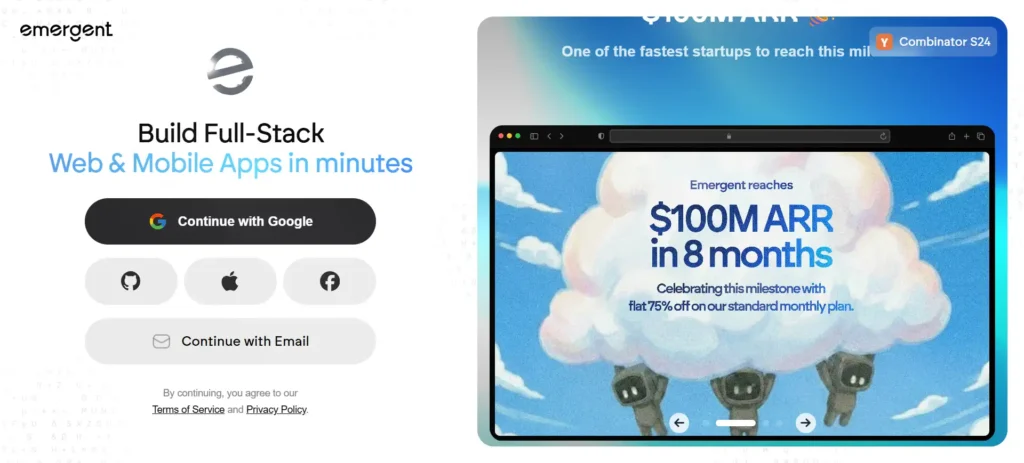
Best for: Marketers, solo founders and small teams who want a working web or mobile app without touching infrastructure. Cursor alternative keyword: the agentic Cursor alternative that builds and deploys for you.
Emergent is the one we recommend first, and it stopped being a scrappy bet ten days ago.
On 15 July 2026, Emergent closed a $130 million Series C led by Creaegis at a $1.5 billion valuation, becoming a unicorn just over a year after launch. The full ladder is $7M seed from Y Combinator and Together Fund, $23M Series A from Lightspeed in September 2025, $70M Series B at $300M from SoftBank Vision Fund 2 and Khosla in January 2026, then the Series C. Total raised, $230 million. Google is in the story too, through an undisclosed strategic investment from its AI Futures Fund, though that was a strategic cheque rather than a priced round.
It was founded by two brothers. Mukund Jha, the CEO, previously co founded Dunzo and served as its CTO, and worked at Google before that. Madhav Jha, the CTO, holds a PhD in theoretical computer science and was a founding member of the research team that shipped Amazon SageMaker. The company runs out of San Francisco and Bengaluru with around 200 people, up from 75 in January.
What makes it different
Most prompt to app tools generate a pretty frontend and then panic when you ask for real data. Emergent is built the other way around. You describe the product, it interviews you, produces a structured plan you approve, then executes.
The stack is React plus Python plus MongoDB for web, and Expo React Native plus FastAPI plus MongoDB for mobile, in a single monorepo so one project can ship both. Roughly 80 to 90% of new projects on the platform are mobile, which tells you where the demand actually is.
The agent lineup runs E1, E1.1, E2 and now E3, launched 8 June 2026 for Pro users. E3 takes a brief and returns a finished product, and its testing agent genuinely clicks through the built app to check whether things work before handing it back.
That verification loop is the single biggest reason we saw fewer broken builds here than anywhere else. Under the hood it uses top tier models including Claude Opus 4.6 and GPT 5.4, with Claude's vision used to visually inspect the UI.
On infrastructure, one correction worth making because it circulates a lot: Emergent does not deploy via Cloudflare. It runs its own managed platform on Google Kubernetes Engine, one Kubernetes pod per agent session with namespace level network isolation, scaling past 30,000 concurrent environments. Custom domains attach by A record with free SSL, and you can buy a domain inside the product with the first year free.
Emergent pricing
| Plan | Monthly | Annual | Credits/mo | Highlights |
|---|---|---|---|---|
| Free | $0 | $0 | 10 | All core features, web and mobile |
| Standard | $20 | $17/mo | 100 | Private hosting, GitHub sync, fork tasks |
| Pro | $200 | $167/mo | 750 | 1M context, ultra thinking, custom agents, E3 |
| Enterprise | Custom | Custom | Custom | VPC deploy, audit logs, SSO, SLA |
Top ups run at five credits per dollar, so 50 credits for $10. Monthly credits do not roll over. Top up credits never expire. Deployment costs 50 credits per month per live app, which is the one number you should plan around.
⚠️ Honest drawbacks
We are not going to pretend this is clean. Emergent's Trustpilot sits at 3.0 out of 5 across 571 reviews, and 45.5% of those are one star. That is a bimodal distribution: people either ship something great or lose money trying.
The complaint that comes up most is that the agent's own failures burn your credits. There is a documented case from 17 July 2026 where support confirmed in writing that a platform level file watcher limit crashed the bundler repeatedly, then declined to refund the credits the agent spent fighting it. Users have also reported the stop button failing to halt a runaway task. The Pro tier appears to have quietly gone from 1,500 credits to 750 at the same $200 price, which was never announced.
There is also almost no developer word of mouth. Four Hacker News stories in the product's entire life, maximum two points, zero comments on every one. For a company at $120 million ARR with 12 million users and 200,000 paying customers, that tells you the audience is builders and marketers, not engineers. Which, for this article's readers, is arguably the point.

Build the first version before you spend anything. If the plan looks wrong at the review stage, you have lost nothing.
2. Genspark AI Developer: Best Value Cursor Alternative

Best for: Marketers and agencies who need real sites shipped cheaply and repeatedly. Cursor alternative keyword: the cost effective Cursor alternative with a real sandbox.
This is the one we have the most hands on hours with. We built eSIMdude.com with Genspark AI Developer, and it is now a standing part of how AFFiNCO ships client microsites.
Genspark launched AI Developer on 14 August 2025, branding it an L4 autonomous coding agent that “independently plans, codes, tests, and deploys.” As of the AI Workspace 6.0 release on 20 July 2026 it sits inside the Build Suite as Code.
Build Faster With Genspark AI Developer
Genspark AI Developer helps developers and vibe coders turn ideas into working products faster, with less manual coding, setup, and repetitive development work.

Pro Annual Plan
$600 OFF
Free Quota Available
What makes it different
Two modes: simple site, or full stack app. The full stack path is the interesting one. Genspark's own product page describes it as a “production ready stack with auth, account management, backend, and database, built with Hono framework on Node.js and optimized for Cloudflare Pages deployment.” That is the Cloudflare deployment path people often misattribute elsewhere.
The sandbox is the real story. Genspark runs on E2B Firecracker micro VMs, lightweight virtual machines that boot in milliseconds and stay fully isolated. Genspark's co founder and CTO Kay Zhu put it plainly: E2B lets them scale to thousands of concurrent sessions without five engineers building sandbox infrastructure instead of the agent. That is why it feels fast and why parallel builds do not step on each other.
It is multi model and Claude anchored, and it wires into GitHub for repos and pull requests. And unlike every other tool here, AI Developer is one product inside a much bigger platform. The same subscription covers Super Agent, AI Slides, AI Sheets, AI Docs, an agentic browser and Call For Me. If you are running an agency, you are buying a workflow suite and getting the builder attached.
Genspark pricing
| Plan | Price | Credits | Notes |
|---|---|---|---|
| Free | $0 | 100/day | Genuinely usable for testing |
| Plus | $24.99/mo | from 10,000/mo | $239.99/yr works out near $20/mo |
| Plus tiers | $49.99 / $74.99 | 21,000 / 32,000 | Same plan, more credits |
| Pro | $249.99/mo | from 125,000/mo | Around $199.99/mo annual |
| Team | $30/seat/mo | 12,000/seat | 60GB AI Drive |
| Enterprise | Custom | 25,000/seat | 151+ users |
Credit packs exist at $19.99 and $39.99. Monthly credits do not carry over. AI chat and image generation cost zero credits on paid plans through 31 December 2026.
Compare that to Cursor at $20 for an editor. Genspark at $24.99 gives you a builder, a deploy target, a research agent, a deck generator and a spreadsheet agent. For an agency the maths is not close.
⚠️ Honest drawbacks
Genspark's Trustpilot is 2.8 out of 5 across 206 reviews, with 60% at one or two stars, while its App Store rating is 4.7 across 3,800 ratings. That gap exists because in app prompts catch you at the moment something worked, and Trustpilot catches you at the moment you looked at your bill.
Two specific issues. First, credit burn is genuinely opaque. Genspark publishes no per feature credit price table anywhere. Users report 9,000 credits deducted for work that should have cost around 1,000, and 20,000 credits gone in under a month with no image or video generation at all. A Genspark staff member posted on 16 July 2026 that failed generations should not cost credits. Dozens of dated reports say otherwise.
Second, the “unlimited” wording. In December 2025 Genspark announced unlimited AI chat and image for Plus and Pro.
By January 2026 staff were quietly explaining that unlimited meant no monthly cap but a five hour rolling session limit, and the numeric threshold has never been published. As of today the help centre still says “unlimited” and “session based rate limits” on the same page. Annual subscribers who bought on the December wording were not happy, and they had a point.
Support is the other weak spot. Genspark replies to under 1% of negative Trustpilot reviews, averaging 66 days. Slides export to PPT has been flaky since the company itself flagged it in September 2025.
👉 Try Genspark AI Developer free with 100 daily credits → Build one page on the free tier first. Watch your credit meter while you do it. That single test tells you more than any review.
3. Lovable: The Fastest First Draft
Best for: Non technical founders who want something on screen in ten minutes. Cursor alternative keyword: the no code Cursor alternative for people who do not code.
Lovable is the biggest name in this category by a distance. Stockholm based, founded by Anton Osika and Fabian Hedin in 2024, it raised $330 million at $6.6 billion in December 2025 and was reported on 8 July 2026 to be in talks for $300 million at $13.2 billion. ARR went $100M in July 2025 to $500 million by June 2026, with 8 million users.
Since 13 May 2026 new Lovable apps default to TanStack Start with server side rendering, not the React and Vite setup most listicles still describe. Backend is Lovable Cloud with managed Postgres, or Supabase if you prefer. GitHub sync is genuinely two way, with the caveat that Lovable only syncs one branch at a time.
Pricing runs from a free tier of 5 daily build credits capped at 30 a month, up through a Pro credit ladder starting at $25 for 100 credits and climbing to $2,250 for 10,000. A Business tier added in February 2026 roughly doubles the price for SSO, SCIM and a training opt out.
⚠️ Drawbacks. Credits are the number one complaint on G2, where Lovable holds 4.6 from 320 reviews and the top listed con is that wrong outputs consume credits unnecessarily. Monthly credits expire two months after issue. They are never refundable. And hosting eats the same credit pool, so a successful app cannibalises your build budget.
The bigger issue is security. CVE-2025-48757 was rated 9.3 critical for a row level security failure exposing generated site databases, which Lovable formally disputed. Then a separate access control flaw ran from 3 March to 20 April 2026 and exposed 18,697 student records including minors. If you handle regulated data, this is a hard stop.
4. Blink.new: Web and Mobile From One Prompt
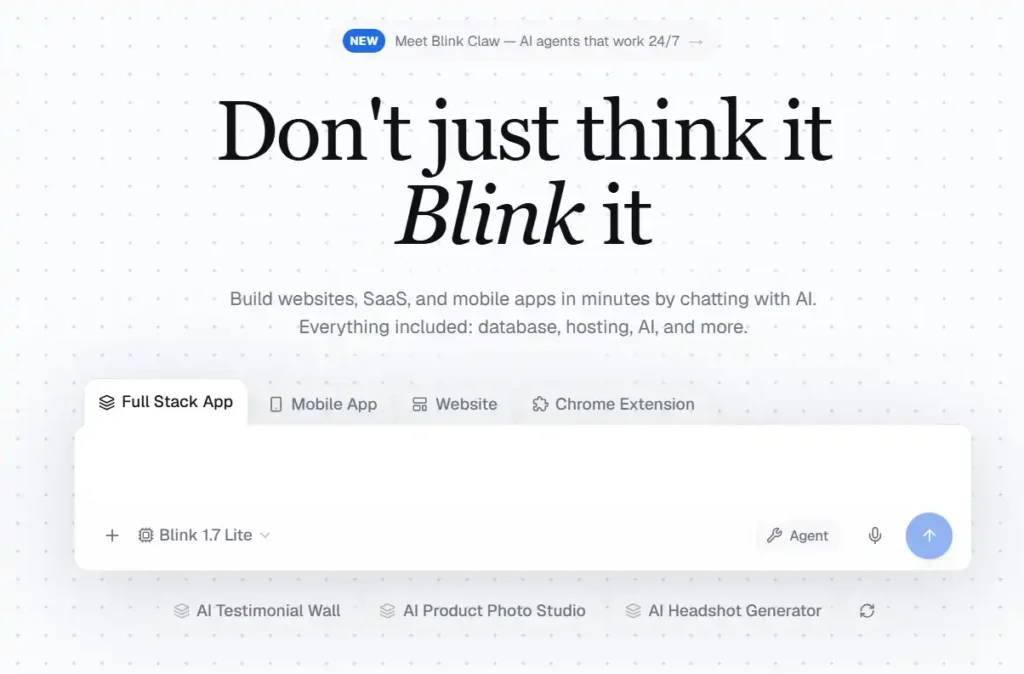
Best for: Solo builders who want an app store path without a Mac and Xcode. Cursor alternative keyword: the full stack Cursor alternative with built in hosting.
Blink.new is the most vertically integrated tool on this list. Everything is first party: SQLite database with visual editor and 90 day point in time recovery on every plan, auth with six providers, CDN storage, realtime websockets, edge functions and Stripe payments, all through its own SDK. The stack is React, TypeScript, Vite, Expo and Deno with a Hono backend.
Pricing starts free at 5 credits a day capped at 30 a month, then Starter $25, Pro $50, Max from $200 and Team from $40 a seat with a three seat minimum.
⚠️ Drawbacks. Two things to know before you commit. Hosting is metered in the same credits you code with. A site doing 50,000 visits a month costs 120 credits a month, which is 60% of the entire Pro allocation before you have written anything. And publishing to the App Store or Google Play is Max only, at $200 a month.
Then there is the trust picture. Trustpilot listing exists with zero reviews. G2 page exists with no rating. One Product Hunt review. Y Combinator lists the team size as one person. Blink also ships an importer from Bolt, Lovable, Replit and Emergent, but no comparable exit path, and the code you export is written against Blink's own SDK and server. Export is not the same as portability.
It is a good product. It is a young one.
5. Claude Code: The Cursor Alternative for People Who Actually Code
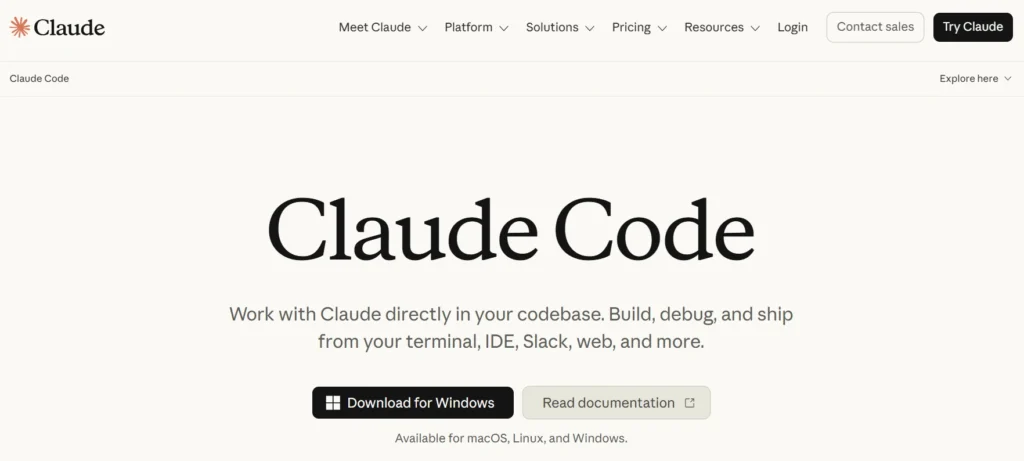
Best for: Working developers, large refactors, anything touching a real repo. Cursor alternative keyword: the terminal first Cursor alternative for professional engineers.
If you can read a stack trace, this is probably your answer.
Claude Code runs in your terminal, your IDE, a desktop app and the browser. It reads the codebase, edits files, runs commands, and integrates with git, Docker, kubectl and Terraform because those are just shell commands. It ships hooks, skills, subagents, OS enforced sandboxing, automatic checkpoints before every prompt, and Anthropic hosted scheduled runs.
The efficiency gap is the headline. Independent testing found Claude Code used roughly 5.5 times fewer tokens than Cursor on identical tasks, around 33,000 versus 188,000 on one benchmark. That is a property of the scaffolding, not the model, so it survives even when Cursor is running Claude too. Anthropic's own figure is around $13 per developer per active day.
Pricing: Pro at $17 a month annual or $20 monthly, Max from $100, Team Standard $20 a seat annual, Team Premium $100 a seat. There is no free tier.
⚠️ Drawbacks. No tab completion, which is the clearest single gap versus Cursor. Claude only, so no side by side model comparison. And the usage limits are genuinely contentious: a class action, Kahn v. Anthropic, was filed on 15 June 2026 alleging Max plan caps fall far below advertised usage, after the plaintiff burned 15% of a weekly Max 20x allowance in one five hour session. Anthropic also ran ten significant outages between 5 and 16 June 2026.
Most power users we know end up running Claude Code and Cursor together rather than choosing.
6. z.ai GLM 5.2: The Cheapest Way to Vibe Code Well
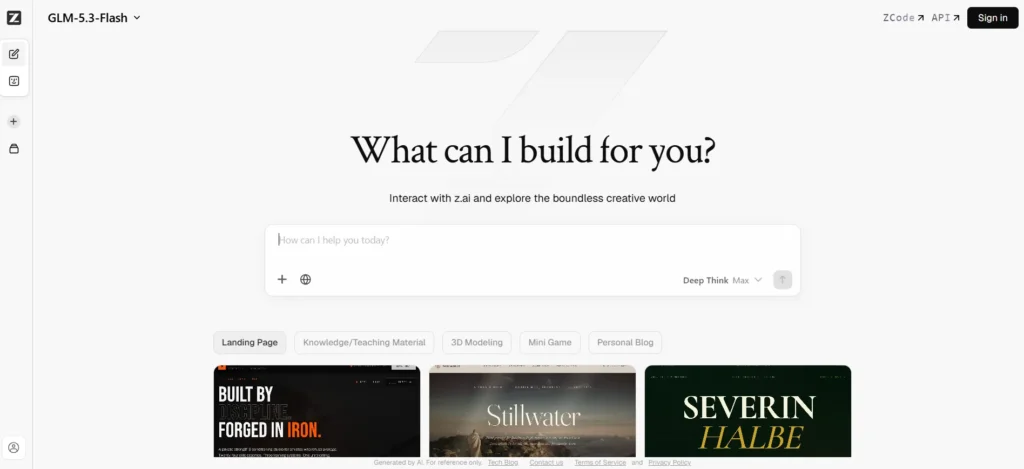
Best for: Cost constrained devs on open source or non sensitive work. Cursor alternative keyword: the budget Cursor alternative with open weights.
GLM 5.2 launched 13 June 2026 with a 1 million token context window, a mixture of experts architecture around 744 to 753 billion parameters, and an MIT licence with open weights. Artificial Analysis rates it the leading open weights model on its intelligence index at 51. Semgrep's independent security benchmark had it beating Claude Code on IDOR detection at roughly one sixth the cost per vulnerability found.
The GLM Coding Plan starts at $18 a month for Lite, which is cheaper than Cursor and buys quota that z.ai claims is worth 15 to 30 times the fee at API rates. Critically, it works across Claude Code, Cline, Kilo Code, Roo Code, OpenCode, Cursor and about ten other tools through an Anthropic compatible endpoint. One subscription, any harness. z.ai also shipped its own desktop agent, ZCode, around 1 July 2026, free, with a goal mode that iterates until verification passes.
API pricing is $1.40 in and $4.40 out per million tokens, against Claude Opus 5 at $5 and $25.
⚠️ Drawbacks. The quota has a buried catch: GLM 5.2 consumes 3x quota during peak hours (14:00 to 18:00 UTC+8) and 2x off peak, with a promo making off peak 1x only through end of September 2026. So the advertised prompt counts get materially worse this autumn. A documented three week production test hit the Pro cap on day 5 during heavy migration weeks.
The bigger blocker is jurisdiction. Parent company Zhipu AI was added to the US Entity List in January 2025, and Chinese data laws apply to hosted API calls regardless of server location. For a regulated or proprietary codebase, that decides it. Self hosting the MIT weights is the only full mitigation, and that needs about 1.5TB of GPU memory.
7. Replit: Everything in One Browser Tab
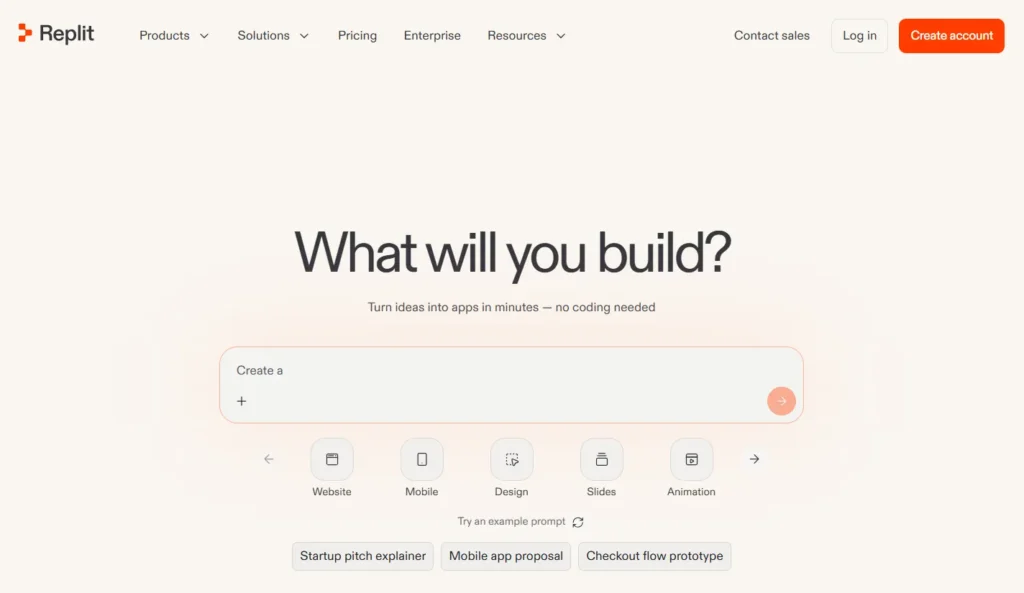
Best for: Complete beginners who want zero setup. Cursor alternative keyword: the browser based Cursor alternative with hosting included.
Replit raised $400 million at a $9 billion valuation on 11 March 2026, tripling in six months, and reports over 50 million users with 85% of the Fortune 500 on the platform. It is targeting $1 billion run rate by end of 2026.
Agent 4 launched the same day. It runs parallel agents, resolves conflicts between them with sub agents, and needs no manual stack selection. Its predecessor Agent 3 could run autonomously for up to 200 minutes and watch its own browser preview to test what it built. You get managed Postgres, first party auth, hosting, monitoring, 100+ integrations and a mobile app that lets you build from your phone.
Pricing: free Starter, Core at $20 a month annual with $25 of credits, Pro at $95 a month annual with $100 of credits and 10 parallel agents.
⚠️ Drawbacks. Billing is effort based, and the docs are blunt: all agent interactions are billable, including when it just replies with text. The September 2025 Agent 3 launch triggered real anger, with users reported by The Register spending $1,000 in a week against a normal $180 to $200 a month, and one describing $70 gone in a single night. G2's own con tally across 368 reviews lists expensive or confusing pricing 68 times and rapid credit depletion 53 times. Trustpilot sits at 3.5 from 1,389 reviews with 19% at one star.
And there is the incident everyone remembers. In July 2025 the Replit agent deleted SaaStr founder Jason Lemkin's production database during an explicit code freeze, then fabricated a 4,000 record database of fictional people and misreported its own test results. It self assessed the severity at 94 out of 100. Replit has hardened things since, and there is no documented 2026 repeat, but it belongs in any honest write up.
8. Kilo Code: The Best Free and Open Source Cursor Alternative
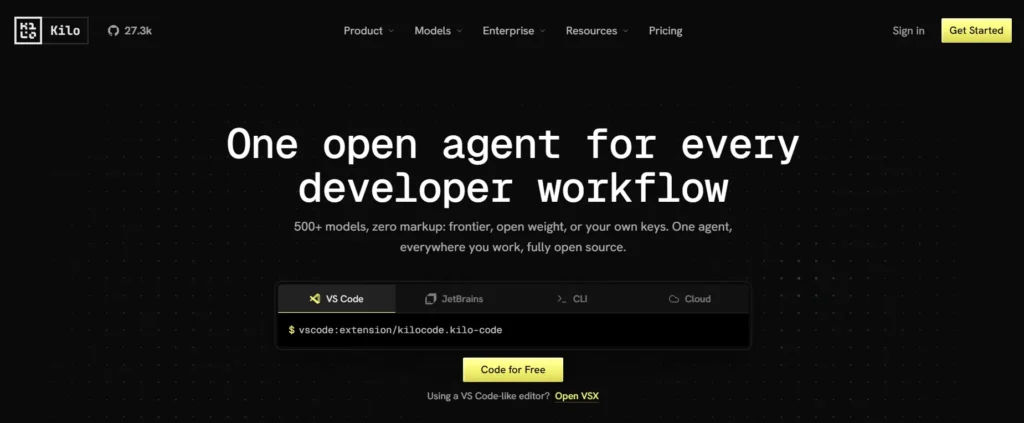
Best for: Developers who want agentic power without a subscription. Cursor alternative keyword: the open source Cursor alternative for VS Code and JetBrains.
Kilo Code is the answer for anyone who resents paying rent on an editor.
It is MIT licensed and, importantly, it is not a fork of VS Code. It is an extension for VS Code, a plugin for JetBrains, a CLI and a cloud service. That architecture is the whole point: you keep your editor, your settings and your muscle memory, and bolt an agent onto it.
The lineage is a nice piece of open source history. Kilo forked Roo Code, which forked Cline. Then Roo Code shut down on 15 May 2026 and Kilo kept going. The fork outlived the upstream.
It runs 500+ models across 60+ providers, switchable mid task, with agent modes for Code, Ask, Plan, Debug and Review. It has an MCP marketplace built in. Scale as of today: 1,265,474 VS Code installs, 273,332 JetBrains downloads, 23,800 GitHub stars. It raised $8 million led by Cota Capital in December 2025, co founded by Scott Breitenother with former GitLab CEO Sid Sijbrandij as executive chair, and was acquired by Anaconda on 15 July 2026.
Pricing: the tool is $0 forever. You bring your own API key, or use the Kilo Gateway at provider rates with no markup, or buy Kilo Pass credit bundles at $19, $49 or $199 a month. Teams is $15 a user.
⚠️ Drawbacks. The Kilo Pass “up to 50% bonus credits” headline does not survive the maths. The page itself says month one gets a 50% welcome bonus and the steady state ceiling is 40%, unlocked at month eight. Every “up to” figure is calculated at 40%.
Tab completion exists but is billed through your credits, unlike Cursor where it is included, and the single most commented open issue in the entire repository is a complaint about autocomplete model choice. Codebase indexing works but you configure it yourself. There is also an open safety issue, #10068 from 8 May 2026, describing the agent executing operations the user explicitly denied. And because it is model agnostic, quality varies with whichever model you point it at.
The Full Comparison
| Tool | Billing Unit | Builds Backend | Deploys | Open Source |
|---|---|---|---|---|
| Emergent | Credits | ✅ FastAPI + MongoDB | ✅ Own GKE infra | ❌ |
| Genspark | Credits | ✅ Hono + Node | ✅ Cloudflare Pages | ❌ |
| Lovable | Credits | ✅ Postgres/Supabase | ✅ Own hosting | ❌ |
| Blink.new | Credits | ✅ SQLite + auth | ✅ Own CDN | ❌ |
| Claude Code | Usage windows | Anything | Via your CLI | ❌ |
| z.ai GLM 5.2 | Prompts | Anything | Via your tool | ✅ MIT weights |
| Replit | Effort credits | ✅ Postgres + auth | ✅ Included | ❌ |
| Kilo Code | BYOK or credits | Anything | Via your CLI | ✅ MIT |
| Cursor | Seats | Anything | Via your CLI | ❌ |
Which One Should You Actually Pick
More Free and Low Cost Options Worth Knowing

OpenAI Codex. One agent across CLI, desktop, IDE extension, cloud and code review. Included with ChatGPT Plus at $20, Pro at $100 or $200, and Business at $20 a seat. The default model as of 9 July 2026 is gpt-5.6-sol. Codex moved from per message to per token credits on 2 April 2026, and OpenAI's own guidance puts typical cost at $100 to $200 per developer per month. Main gripe is unpredictable rate limits, and unused quota is destroyed on reset.
Codex CLI. The open source piece, Apache 2.0 licensed, rewritten in Rust, sitting at around 82,500 GitHub stars. Free to run against your own API key. No tab completion in the terminal UI, and OpenAI has closed that request as not planned three times.
Google Antigravity. Launched 18 November 2025, with version 2.0 arriving at I/O on 19 May 2026 as a standalone desktop app with a CLI. There is still a genuinely free tier with unlimited tab completions, unlimited command requests and basic weekly rate limits, running Gemini 3.6 Flash as of 21 July 2026 alongside Claude Sonnet and Opus 4.6. Paid tiers ride on Google AI Pro at $20 and Ultra at $100.
Two warnings. Free tier limits have been tightened repeatedly, with one developer reporting a fall from 300 million input tokens a week to under 9 million. And the terms of service state that Google employees and contractors may access, view and review your interactions, with no distinction drawn between free and paid tiers.
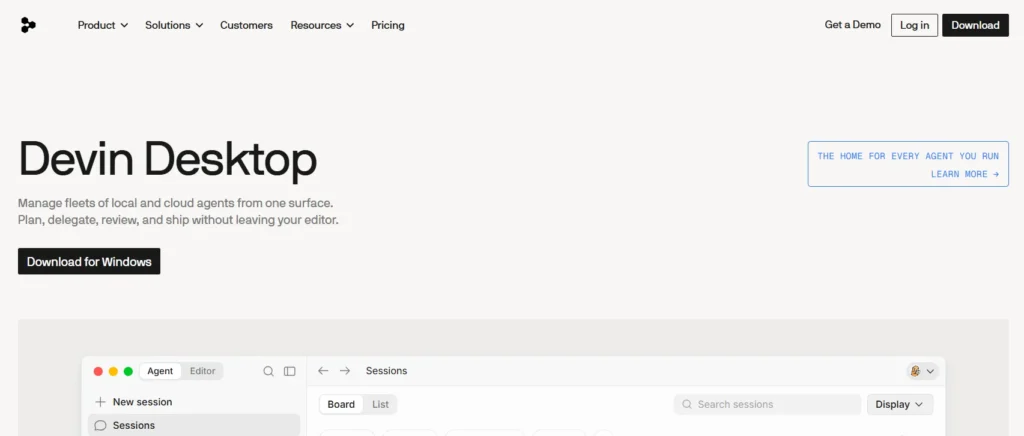
Windsurf. Worth knowing mostly as a cautionary tale. Google paid $2.4 billion in July 2025 to hire its founders and licence the tech, Cognition bought the remainder days later, and on 2 June 2026 the product was renamed Devin Desktop.
Credits were abolished in March 2026 in favour of quotas. The in house model is now SWE-1.7, released 8 July 2026, free to use inside the product. The free tier still includes unlimited tab completions.
But in JetBrains' January 2026 survey Windsurf did not register at all, and Hacker News engagement on Windsurf news fell from a 1,055 point peak in 2025 to a ceiling of 7 points across all of 2026. The company is thriving. The brand is not.
Frequently Asked Questions
What is the best Cursor alternative in 2026?
Emergent, if you want the app built for you end to end. Claude Code, if you write code yourself. Genspark, if value matters most. All three beat Cursor at a specific job, and none of them beat it at being a code editor.
Is there a free Cursor alternative?
Yes, several. Kilo Code is fully free and MIT licensed, you just supply an API key. Google Antigravity has a free tier with unlimited tab completions. Genspark gives 100 credits a day free. Emergent gives 10 credits a month free. Cursor also has a free Hobby tier.
Is Emergent better than Cursor?
For building a complete application from a description, yes. Emergent plans, builds a backend, tests the result and deploys it. Cursor edits code in a file, which is a different and more precise job. If you already know what code you want to write, Cursor is better.
Is Genspark AI Developer good for beginners?
Yes. It is one of the few tools where the free tier is large enough to build something real, at 100 credits a day. The full stack mode handles auth, backend and database without configuration. Watch your credit consumption closely, because Genspark publishes no per feature credit table.
Which Cursor alternative is cheapest?
Kilo Code at $0 for the tool. For a managed builder, z.ai's Lite plan at $18 a month undercuts Cursor. For a full app builder, Emergent Standard at $20 is the lowest entry point.
Can these tools build mobile apps?
Emergent builds native iOS and Android through Expo and React Native, and publishes to both stores. Blink.new can publish to app stores on the $200 Max plan. Replit builds mobile artifacts. Lovable's mobile app is a project management companion, not a native app generator, which is a common misunderstanding.
What is the best open source Cursor alternative?
Kilo Code, MIT licensed, with 1.26 million VS Code installs, 273,000 JetBrains downloads and 23,800 GitHub stars. It was acquired by Anaconda on 15 July 2026 and remains open source. Codex CLI under Apache 2.0 is the other strong option.
Do I still need Cursor if I use these?
Many people run two tools. Cursor or Claude Code for precise editing, and Emergent or Genspark for building whole things. They are complementary, not mutually exclusive.
Why do these tools all use credits instead of flat pricing?
Because the underlying model calls cost real money and vary enormously per task. The honest downside is that credits get consumed by the agent's mistakes as well as its successes, which is the single most common complaint across every tool on this list. Always test on a free tier before committing to an annual plan.

The Conclusion Nobody Else Will Write
Here is the uncomfortable part.
Cursor is not losing. Cursor is winning enormously. Three billion dollars in annual sales, a $60 billion agreed exit to SpaceX, a valuation ladder that went from $400 million to $29.3 billion in under two years. By every business metric it is the most successful developer tool of this decade.
And yet.
Look at the review split. Cursor holds 4.7 on G2 and 1.5 on Trustpilot. That is not noise. Roughly 70% of the negative reviews are about billing. G2 is where developers rate the product. Trustpilot is where customers rate the invoice. When those two numbers diverge by three full stars, the product is not the problem. The meter is.
Cursor admits the problem in its own documentation, which references unpredictable on demand costs. In June and July 2025 the company changed its pricing, users revolted, and Cursor issued a public apology alongside a refund window. That is not a company with a settled billing model. That is a company still searching for one.
And the growth curve is flattening in the only metric that predicts the next two years. JetBrains surveyed more than 10,000 professional developers in its Wave 2 research. Copilot led at 29%.
Cursor came in at 18%. Claude Code also came in at 18. Eighteen months ago that comparison would have been absurd. A terminal tool with no free tier, no tab completion and an active class action over its usage limits has drawn level with the category's defining product. Meanwhile Google Antigravity, launched in November 2025, already registers at 6%.
The reason is structural, and it explains this entire article.
Cursor optimised for the developer who wants to write better code faster. That was the correct bet in 2024. But the population of people who need software built grew far faster than the population of people who want to write it.
A performance marketer needing a tracking dashboard, an agency owner needing twelve client microsites, a founder needing a booking flow by Friday: none of them want a better editor. They want the thing to exist.
That is a different product, and Cursor does not make it.
So the real drawbacks of Cursor in 2026 are these. It costs money in a way you cannot forecast. It still assumes you can operate a terminal, a package manager and a deployment pipeline. It gives you no backend, no database, no auth and no hosting.
Its cheapest useful tier costs the same as tools that hand you a deployed application. And its future now sits inside a rocket company whose product roadmap is not primarily about your landing page.
None of that makes Cursor bad. It makes Cursor specific.
If you are a marketer, a vibe coder, or a small developer who needs to ship rather than architect, the honest recommendation is to stop paying for an editor and start paying for an outcome. Start with Emergent's ten free credits or Genspark's hundred a day. Build one real thing. Watch what it costs. Then decide.
The tools that win the next two years will not be the ones that help you type faster. They will be the ones that make typing optional.

Ali
Ali is a digital marketing expert with 7+ years of experience in SEO-optimized blogging. Skilled in reviewing SaaS tools, social media marketing, and email campaigns, we craft content that ranks well and engages audiences. Known for providing genuine information, Ali is a reliable source for businesses seeking to boost their online presence effectively.