
Digital PR is now the most effective link building tactic with a 48.6% effectiveness rate. Brands that use earned media strategies see up to 312% ROI on their campaigns. The global PR market is set to hit $129 billion by 2026 and is growing fast.
Brands now spend 32% to 36% of their SEO budgets on earning quality backlinks through media coverage and content marketing.
We researched and gathered the latest Digital PR Statistics to help you build better SEO campaigns, earn high quality backlinks, and boost your brand visibility.
These numbers cover influencer marketing, content marketing, media outreach, and budget trends for 2026.
Digital PR Market Growth: Key Numbers Revealed
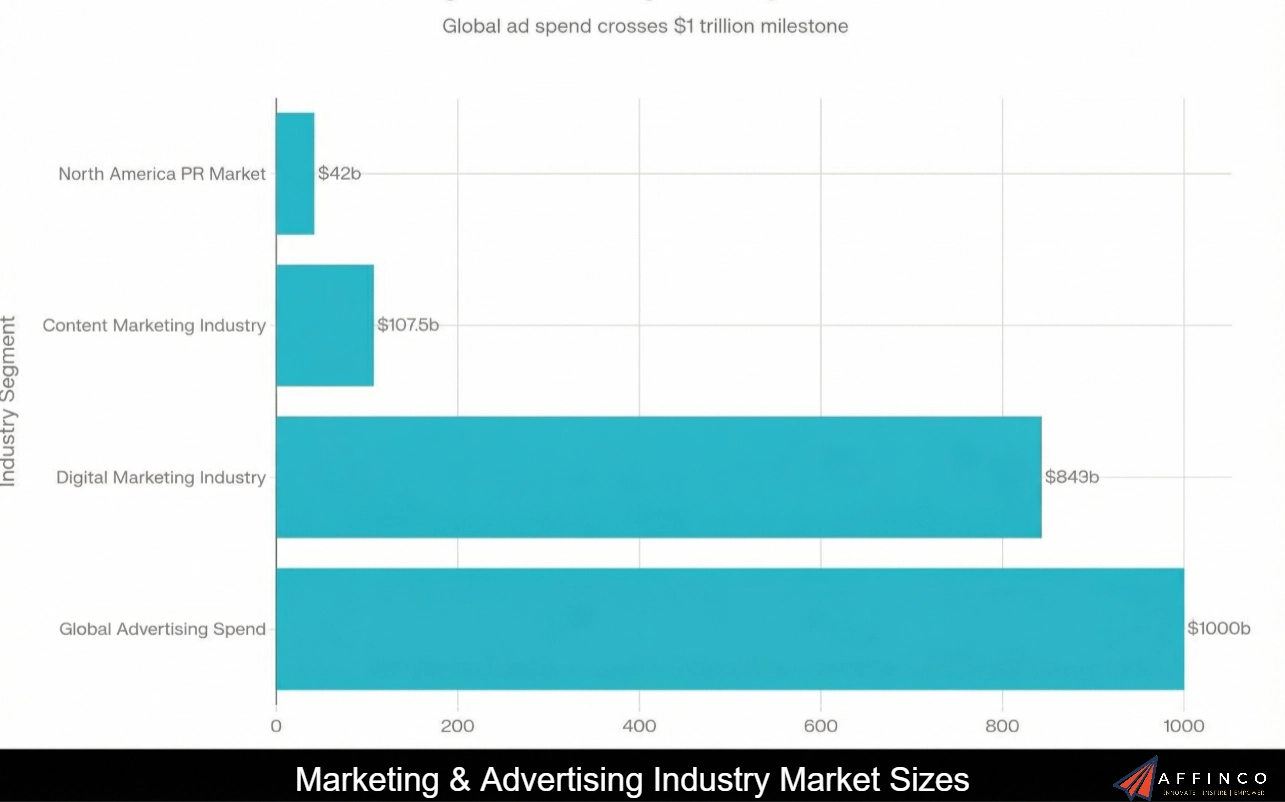
The PR market size continues to climb as brands shift budgets from traditional ads to earned media. This sector's growth is fueled by the $843 billion digital marketing industry.
Market analysts predict that this upward trend will continue as businesses integrate digital PR strategies with SEO and content marketing efforts.
High Quality Backlinks: Average Cost and Effectiveness Rates
Securing high-quality backlinks remains the primary objective for most digital PR campaigns in 2026. The data shows that while costs have risen, the return on investment for authority building outpaces other SEO tactics.
| Metric | Statistic |
|---|---|
| Average Cost Per Link | $508.95 for a high-quality backlink |
| Campaign Effectiveness | Digital PR is rated the #1 tactic with 48.6% effectiveness |
| Budget Allocation | Companies spend 32-36% of SEO budgets on link building |
| Competitor Activity | 92% of experts believe competitors are buying links |
| Time to Results | 83.2% see ranking impact in 2 weeks or more |
Investing in white-hat link building through digital PR continues to provide the most sustainable long-term value for organic search rankings.
Influencer Marketing Crosses $32 Billion: Key Trends Revealed
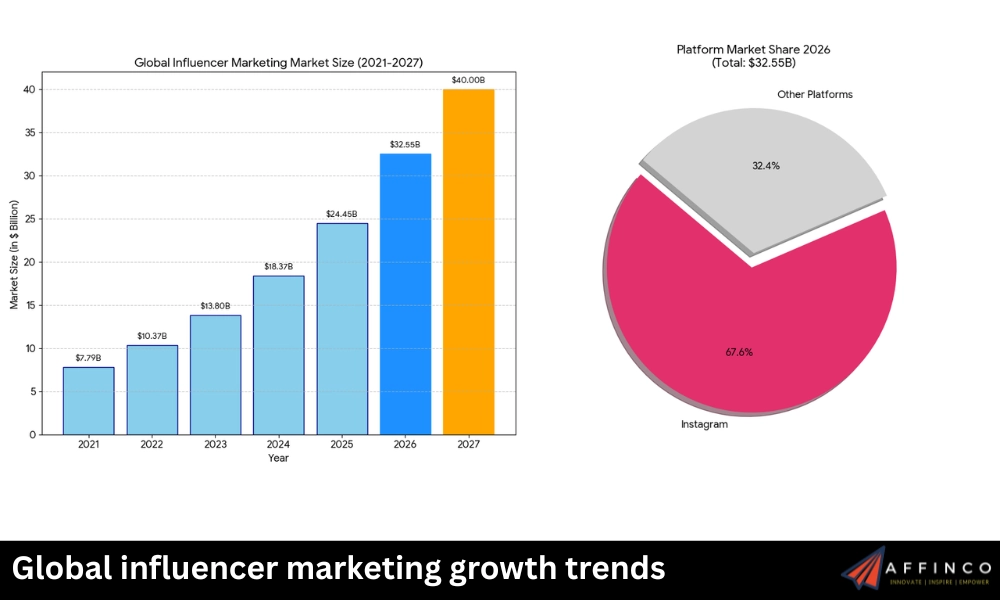
Influencer partnerships have evolved from simple shout-outs to complex, long-term brand ambassadorships that drive tangible PR results. The sector has matured into a multi-billion dollar powerhouse that integrates seamlessly with traditional PR.
Brands are increasingly using micro-influencers to generate authentic engagement and verifiable social proof for their products and services.
Social Media Audience Size and Daily Usage Patterns
Social platforms are the primary distribution channels for digital PR stories, amplifying reach beyond traditional media outlets. The sheer volume of active users presents a massive opportunity for viral content distribution.
These platforms have become indispensable for brand storytelling, allowing companies to bypass gatekeepers and connect directly with audiences.
Top Social Media Platforms for Digital PR
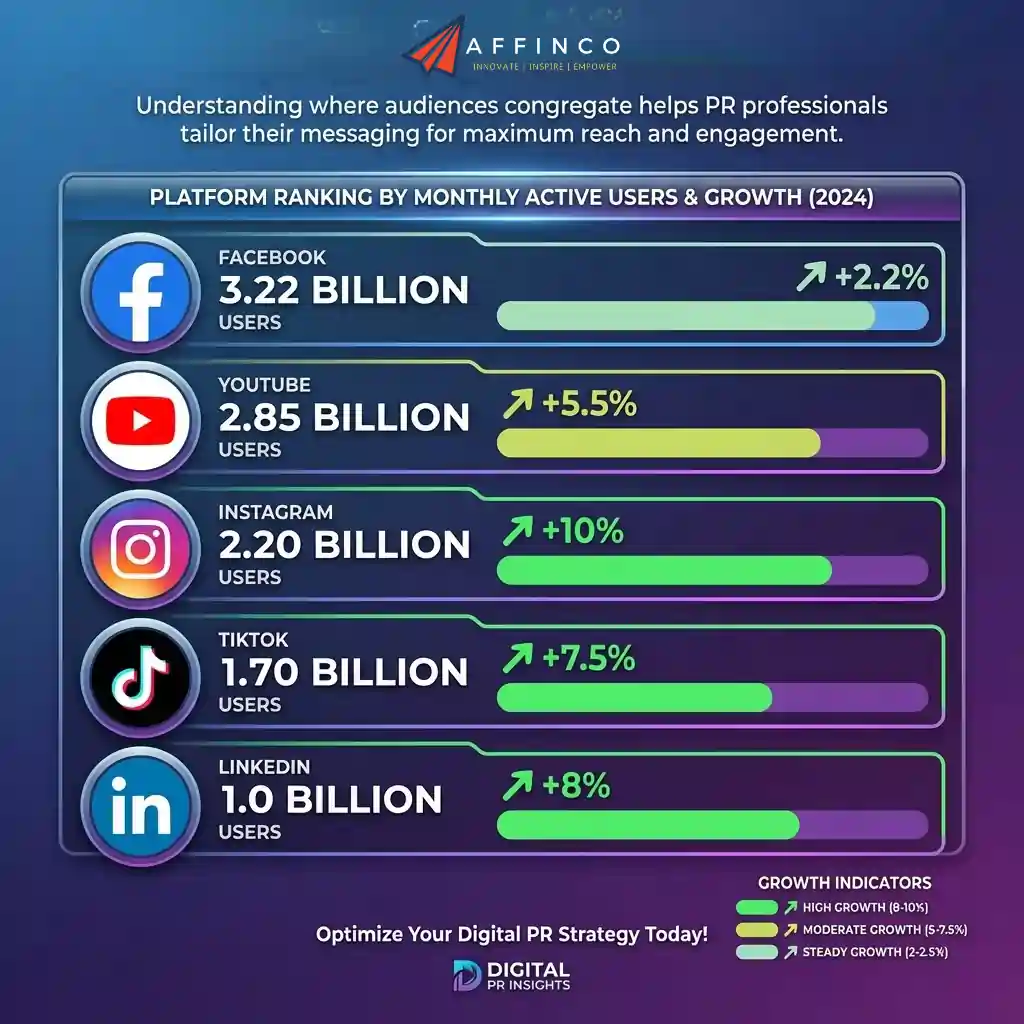
Understanding where audiences congregate helps PR professionals tailor their pitches and content formats. Facebook and YouTube continue to dominate, but newer platforms are capturing significant attention.
| Platform | Monthly Active Users (2026) | Growth Trend |
|---|---|---|
| 3.22 billion | +2.2% growth | |
| YouTube | 2.85 billion | +5.5% growth |
| 2.20 billion | +10% growth | |
| TikTok | 1.70 billion | +7.5% growth |
| 1.0 billion | +8% growth |
Visual-first platforms like Instagram and TikTok are seeing the fastest growth rates, demanding a shift towards video-centric PR assets.
Media Relations Success: What 70 Percent of Journalists Want
The relationship between PR professionals and journalists remains complex, with high volumes of pitches competing for limited attention. Success depends heavily on relevance and personalisation rather than mass distribution.
Crafting bespoke pitches that offer genuine value and exclusive data is the only reliable way to cut through the noise of crowded inboxes.
Content Formats That Generate the Most Links
Content lies at the heart of digital PR, with data-driven assets performing best for link acquisition. Marketers are doubling down on educational content to build trust and authority.
Producing linkable assets such as research studies and interactive tools is vital for earning coverage in top-tier publications.
Visual Content Demand: What Publishers Really Want
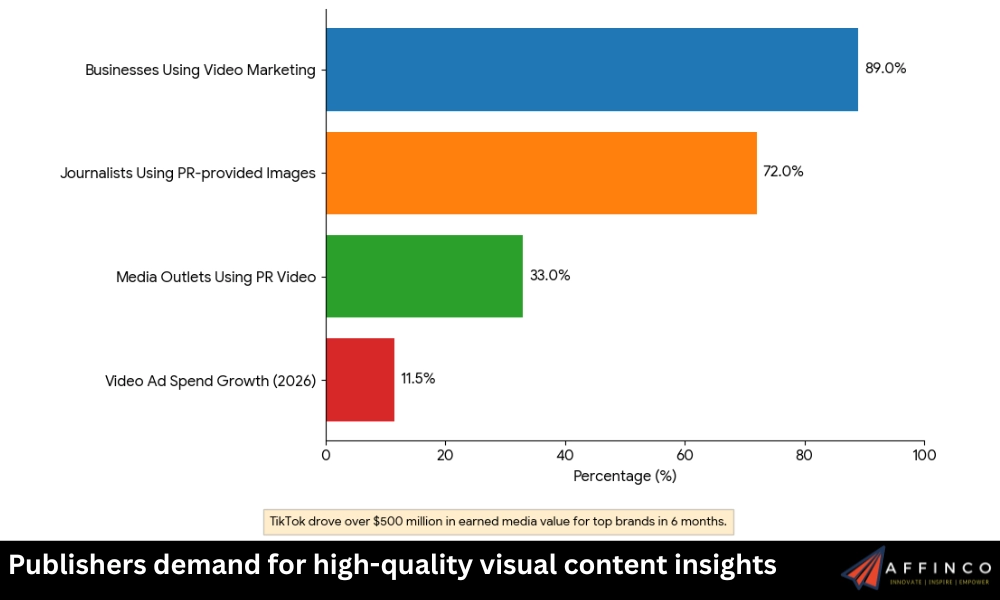
Video has become the dominant medium for consumption, forcing PR teams to produce broadcast-quality clips for online use. Short-form video is particularly effective for social sharing and quick engagement.
Visual assets are no longer optional; they are a requirement for securing coverage in modern digital news outlets.
B2B Authority Building: Stats That Matter Most
Business-to-business sectors are increasingly adopting consumer-style PR tactics to engage decision-makers. LinkedIn has solidified its position as the primary channel for corporate storytelling.
Thought leadership articles and executive positioning on social platforms are key drivers for B2B brand credibility in 2026.
Regional Coverage: Boosting Local Search Visibility Fast
For regional businesses, digital PR provides the local signals necessary to dominate “near me” searches. Localised content and citations are critical for geographic visibility.
Securing coverage in local publications not only drives foot traffic but also strengthens the overall domain authority for specific regions.
Why Brand Trust Outweighs Reach in 2026
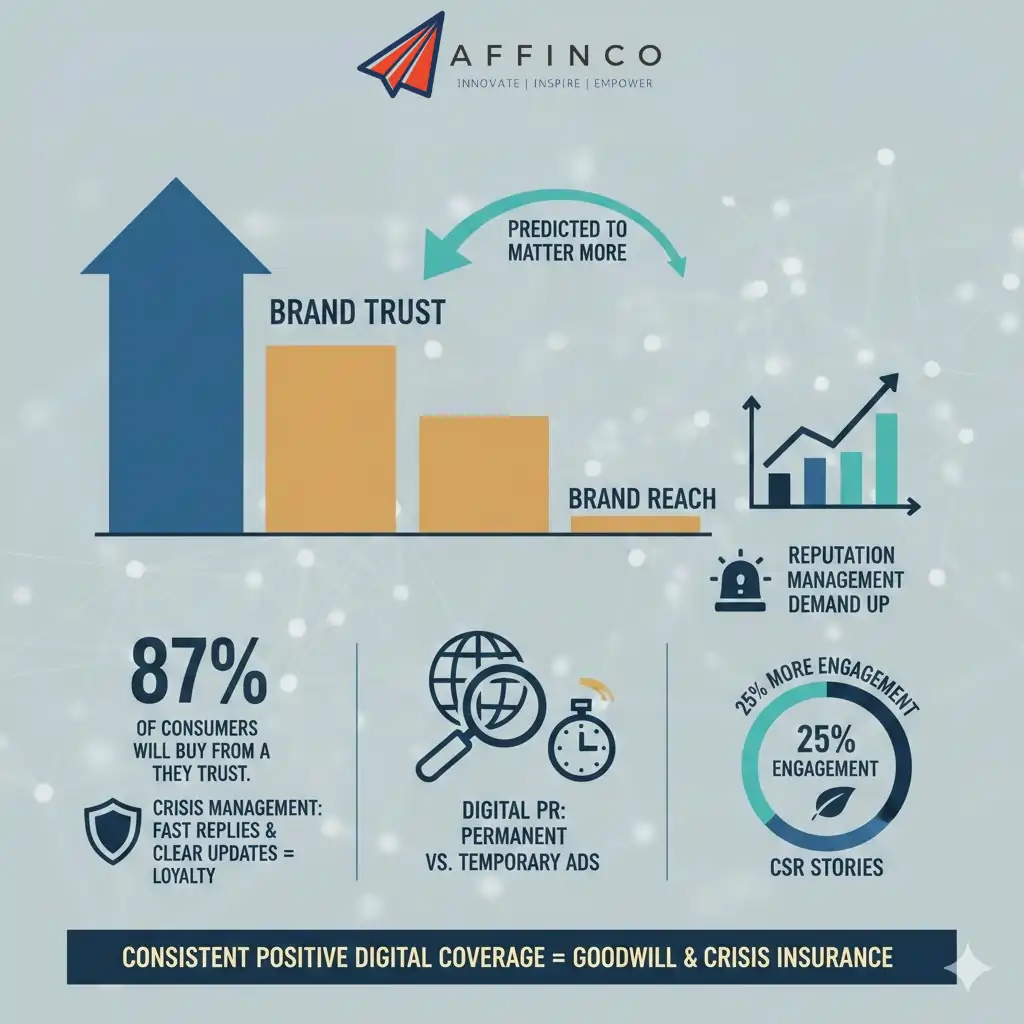
Crisis management in digital PR now hinges on building brand trust online, where fast replies and clear updates calm confusion and keep audiences loyal.
Building a reservoir of goodwill through consistent, positive digital coverage is the best insurance against potential reputational crises.
PR Success Rates: Which Industries Get Most Coverage
Success rates vary wildly depending on the business sector. Lifestyle brands find it easier to get coverage than B2B service providers.
Setting realistic KPIs based on industry difficulty prevents disappointment. Niche expertise is required to navigate difficult sectors like finance or health.
Agency vs In-House PR: Which Delivers Better ROI
Deciding between outsourcing and building an internal team depends on resources. Agencies offer scale, while in-house teams provide brand alignment.
- 62% of companies outsource digital PR to specialized agencies.
- In-house teams report 20% higher satisfaction with brand messaging.
- Agency retainers average between $3,000 and $10,000 monthly.
- Specialized agencies secure 30% more links than generalist marketing firms.
- 51% of external agencies collaborate directly with internal SEO teams.
- Contract flexibility is the top reason for choosing agencies in 2026.
- Turnover rates are 15% lower in in-house PR teams compared to agencies.
Hybrid models are becoming popular to balance expertise and control. Access to senior talent is often the deciding factor for hiring agencies.
Digital PR Tools and Tech Stack
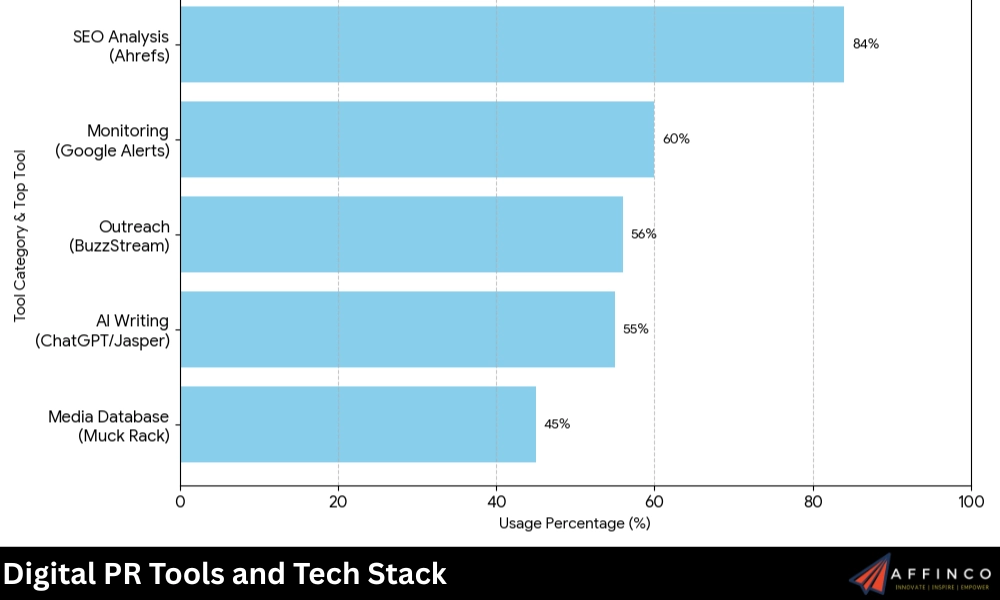
Efficiency relies on using the right software for media lists and outreach. Automation handles repetitive tasks, allowing humans to focus on strategy.
| Tool Category | Most Popular | Usage Stat |
|---|---|---|
| Outreach | BuzzStream | 56% |
| SEO Analysis | Ahrefs | 84% |
| Media Database | Muck Rack | 45% |
| Monitoring | Google Alerts | 60% |
| AI Writing | ChatGPT/Jasper | 55% |
Investments in PR technology yield time savings and better data accuracy. Integrated stacks allow for seamless reporting across all channels.
What Publishers Want: Content Formats That Work
Understanding what publishers want helps PR teams create assets that get used. Visuals and data are currently in high demand across newsrooms.
Supplying multimedia assets upfront removes friction for the publisher. Ready-to-publish content enjoys higher acceptance rates in fast-paced news cycles.
PR Budget Allocation: Where the Money Goes Now
Marketing leaders are reallocating funds to digital PR campaigns to secure long-term organic growth. Financial commitments to link building strategies have stabilized at higher levels compared to previous years.
Proper budget allocation ensures consistent outreach and higher placement quality. Companies tracking unit economics like CPL generally achieve better fiscal efficiency.
Domain Rating vs Trust Flow: Metrics That Matter
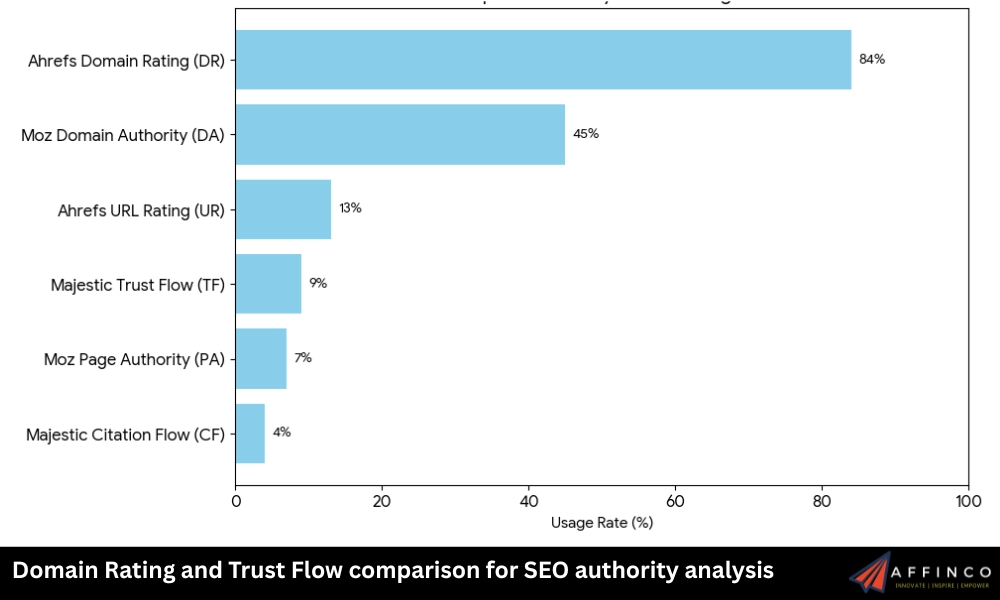
PR professionals rely on various authority metrics to evaluate coverage quality. Here are the most popular measurement tools.
| Authority Metric | Usage Rate |
|---|---|
| Ahrefs Domain Rating (DR) | 84% |
| Moz Domain Authority (DA) | 45% |
| Ahrefs URL Rating (UR) | 13% |
| Majestic Trust Flow (TF) | 9% |
| Moz Page Authority (PA) | 7% |
| Majestic Citation Flow (CF) | 4% |
Analytics and tracking separate successful campaigns from failures. Consistent measurement enables continuous improvement.
Digital PR Beats Guest Posting: Effectiveness Data Revealed
Knowing which PR content strategies work best helps allocate budgets wisely. Data-driven approaches dominate successful campaigns.
| Tactic | Effectiveness Rate |
|---|---|
| Digital PR | 48.6% |
| Guest posting | 16% |
| Linkable assets | 12% |
| Backlink exchange | 9.3% |
| Niche edits | 4.6% |
| HARO link building | 4.1% |
Content marketing and original research consistently outperform other tactics. Combining multiple approaches yields the best results.
Top Challenges Facing Digital PR Professionals Right Now
Understanding current PR industry trends helps professionals stay ahead. Key shifts are happening in measurement, strategy, and client expectations.
Growing interest in AI-powered PR tools and generative engine optimisation is reshaping how practitioners work. Adapting to new technologies separates successful campaigns from the rest.
What Agencies Charge: PR Retainer and Link Costs
Companies are allocating more funds to digital PR but demand measurable returns. These figures outline what businesses pay for services in 2026.
| Cost Category | Price Range (2026) | Description |
|---|---|---|
| Monthly Retainer | $5,000 – $15,000 | Standard fee for ongoing agency support |
| Enterprise Retainer | $20,000+ | Cost for large brands in competitive niches |
| One-Off Campaign | $5,000 – $30,000 | Price depends on scope and asset creation |
| Cost Per Link | $400 – $600 | Average price for a single high-quality backlink |
| Link Building Budget | $5,000 – $10,000 | Monthly spend for 46.5% of SEO professionals |
| Hourly Rate | $100 – $149 | Standard agency hourly billing rate |
Understanding these baselines helps marketing directors set realistic expectations for campaign performance.
Future Trends in Digital PR
Looking beyond 2026, the industry is poised for further integration with marketing technology. The lines between SEO, PR, and content marketing will continue to blur.
- Retail media is the fastest-growing digital channel at 14.1%.
- Connected TV (CTV) advertising is set to rise, offering new PR avenues.
- Voice search optimisation will become standard for PR content.
- Founder-led PR is emerging as a powerful alternative to brand accounts.
- Zero-click searches will force PRs to optimise for featured snippets.
The future belongs to brands that can tell authentic stories while navigating the technical requirements of an increasingly AI-driven web.
Conclusion
Digital PR campaigns deliver real results when backed by data. Around 67.3% of SEO experts now rank it as top link building strategy for 2026. Influencer marketing spend has crossed $32 billion globally.
Success comes from quality backlinks, strong media relationships, and data driven content. Budgets are rising. Competition is fierce. Measurement matters more than ever.
So, what will your next digital PR campaign look like?


Ali
Ali is a digital marketing expert with 7+ years of experience in SEO-optimized blogging. Skilled in reviewing SaaS tools, social media marketing, and email campaigns, we craft content that ranks well and engages audiences. Known for providing genuine information, Ali is a reliable source for businesses seeking to boost their online presence effectively.