
Brands are shifting cash from TV ads to creators faster than ever. The global influencer advertising market value hit a massive $39.33 billion in 2026.
This growth proves that creator partnerships are now a main need for business success rather than just a test.
We collected these fresh Influencer Marketing Statistics to show you exactly where the industry stands today.
You will find hard data on social commerce revenue, ROI efficiency, and the creator economy to fix your strategy. Here are the numbers that matter.
Global Influencer Marketing Market Size 2026
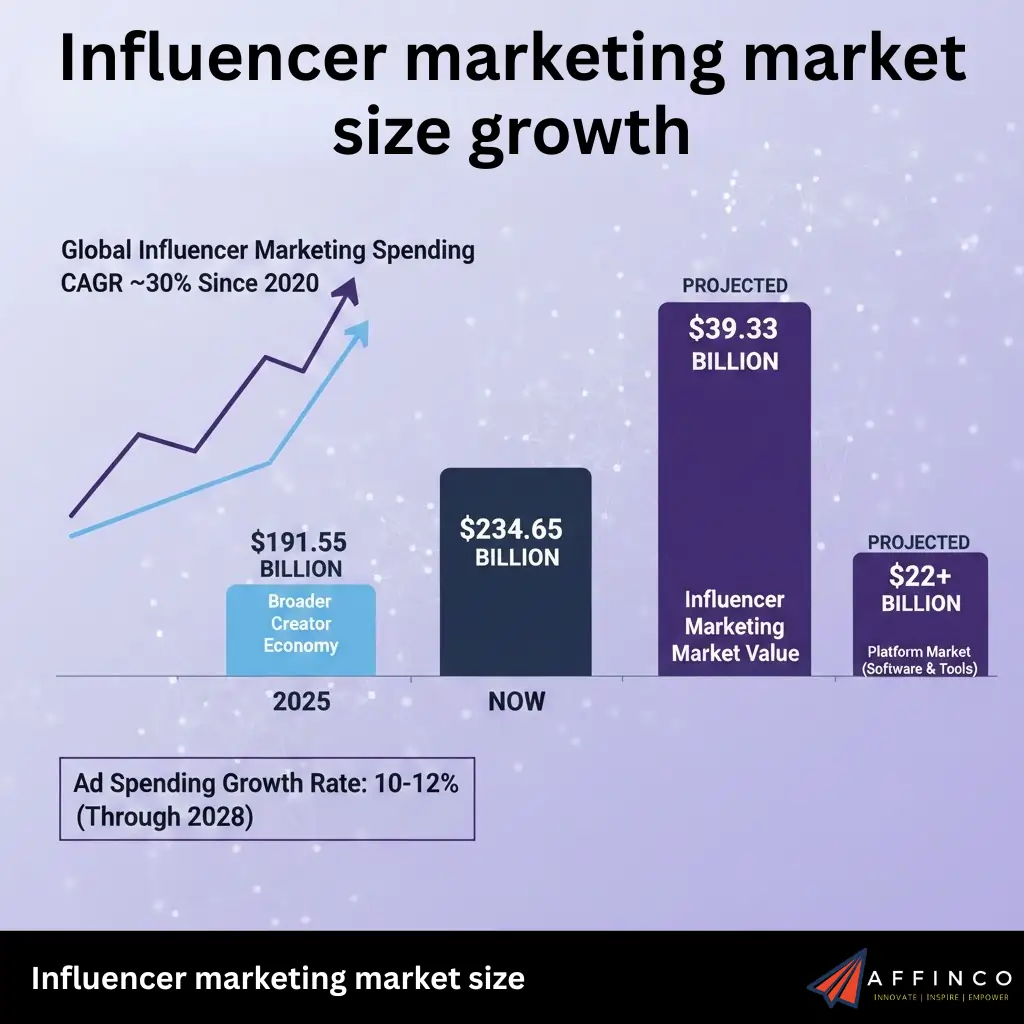
The industry continues to expand as brands reallocate funds from television and display ads to the creator economy.
This explosive financial growth confirms that creator partnerships are now a primary line item in corporate budgets rather than an experimental tactic.
Social Commerce: The $2 Trillion Opportunity
Social commerce is the seamless integration of shopping experiences directly within social platforms. In 2026, this trend will dominate retail, driven by features like TikTok Shop and Instagram Checkout.
Consumers now demand a friction-free path to purchase, making in-app checkout a non-negotiable feature for modern marketing campaigns.
Regional Market Analysis: APAC Leads the Charge
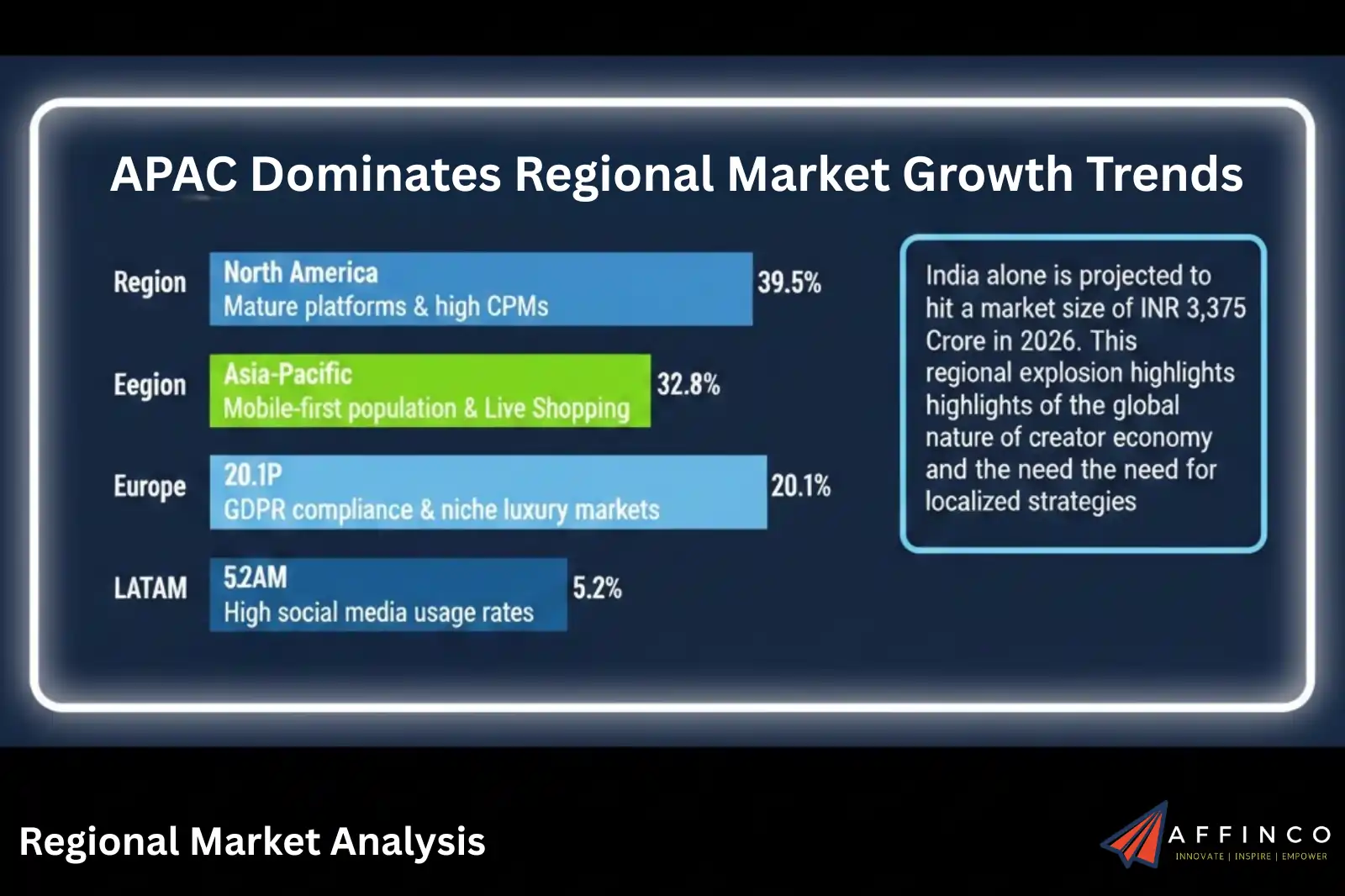
While North America remains the largest market by value, the Asia-Pacific region is experiencing the fastest acceleration in adoption and spend.
| Region | Market Share (Est.) | Key Growth Driver |
|---|---|---|
| North America | 39.5% | Mature platforms & high CPMs |
| Asia-Pacific | 32.8% | Mobile-first population & Live Shopping |
| Europe | 20.1% | GDPR compliance & niche luxury markets |
| LATAM | 5.2% | High social media usage rates |
India alone is projected to hit a market size of INR 3,375 Crore in 2026. This regional explosion highlights the global nature of the creator economy and the need for localized strategies.
Influencer Marketing Budget & Spend Trends
Marketing leaders are voting with their wallets, aggressively moving funds from traditional channels to influencer partnerships. The efficiency of creator content in driving both awareness and conversions has made it a budget priority for CMOs worldwide.
These spending habits reveal a shift toward long-term stability in the industry. Brands are investing in infrastructure, tools, and talent to manage these budgets effectively.
ROI and Budget Allocation Trends
Marketers are demanding clear performance metrics, moving away from vanity metrics like “likes” to concrete financial returns.
These figures illustrate a transition from experimental spending to accountability, where every creator interaction is measured against bottom-line revenue.
Platform Dominance: TikTok vs. Instagram
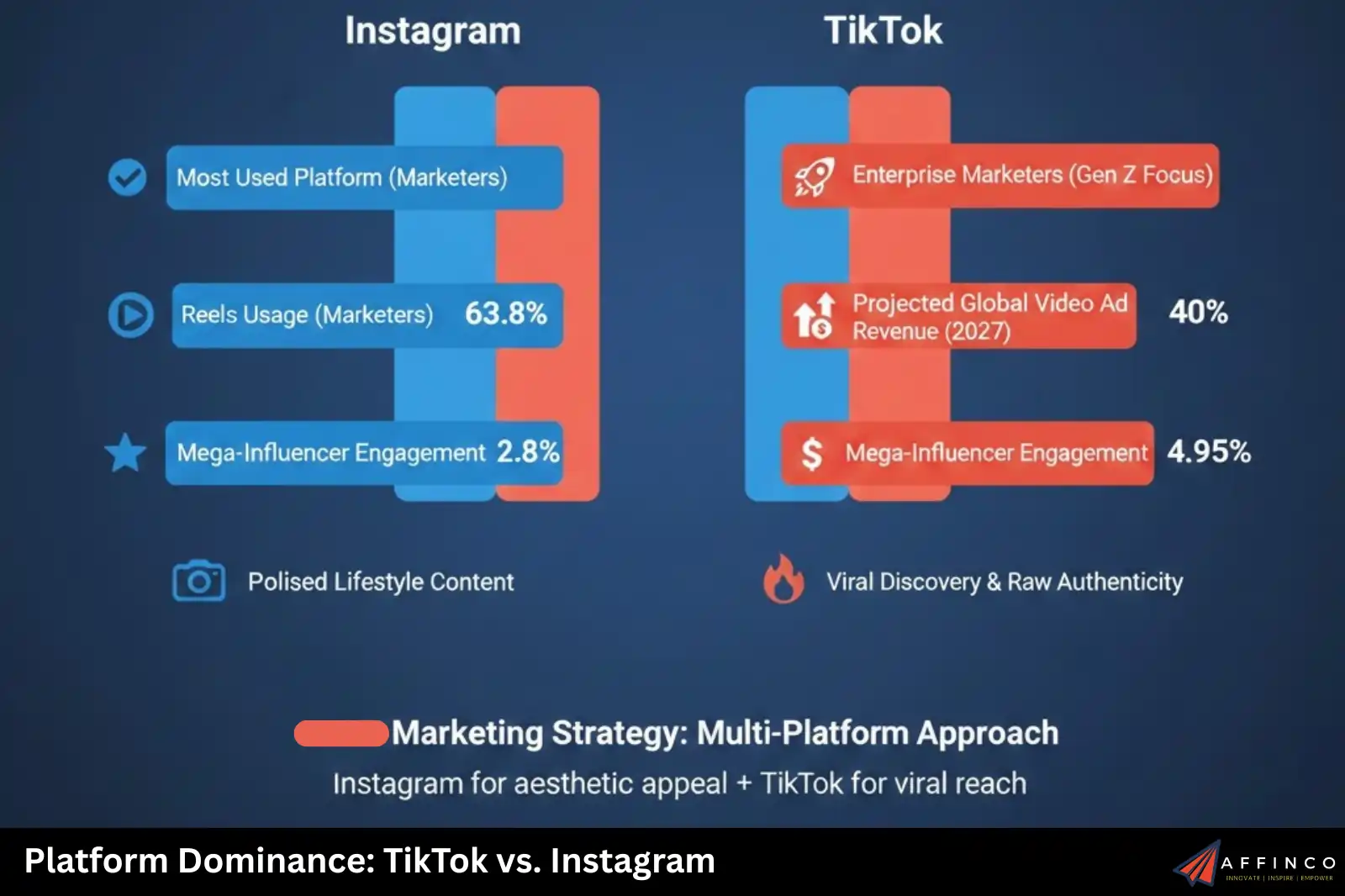
The battle for dominance between TikTok and Instagram continues to shape the industry, with each platform serving distinct marketing goals. While Instagram remains the home of polished lifestyle content, TikTok has become the engine of viral discovery and raw authenticity.
Marketers in 2026 must adopt a multi-platform strategy. Relying on a single app is risky; a balanced mix of Instagram for aesthetic appeal and TikTok for viral reach ensures comprehensive audience coverage.
The Rise of YouTube Shorts & Video Content
Video content has swallowed the internet, and short-form video is the preferred language of modern consumers. YouTube Shorts has emerged as a formidable competitor, offering high reach and seamless integration with the world's second-largest search engine.
The dominance of video means that static posts are becoming secondary support assets. Brands must prioritize video production capabilities or partner with creators who excel at editing and storytelling to stay relevant.
Micro-Influencer vs. Macro-Influencer Data
Bigger is not always better. The trend for 2026 is moving heavily toward smaller, more authentic voices.
| Influencer Tier | Follower Count | Avg. Engagement Rate | Avg. Cost Per Post |
|---|---|---|---|
| Nano | 1k – 10k | 5.0% – 10.0% | $10 – $100 |
| Micro | 10k – 100k | 3.0% – 5.0% | $100 – $500 |
| Macro | 100k – 1M | 1.0% – 3.0% | $5,000 – $10,000 |
| Mega | 1M+ | < 1.0% | $10,000+ |
High engagement indicates a loyal audience. Brands are paying for this loyalty rather than just broad reach.
Gen Z and Alpha Audience Behavior
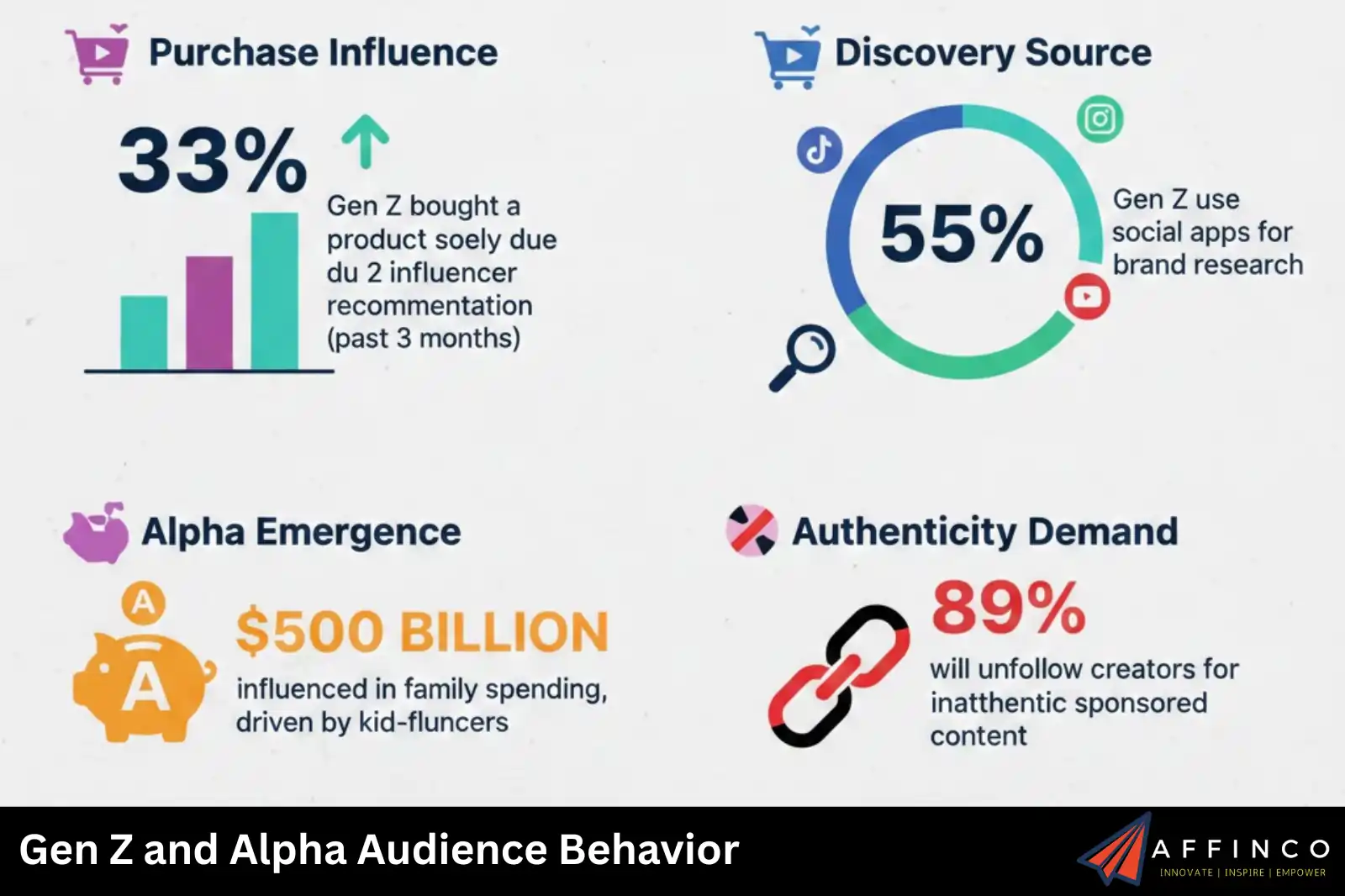
The youngest consumer cohorts are almost entirely immune to traditional advertising, making influencers their primary source of brand discovery.
To capture the youth market, brands must speak their language through creators who share their values and aesthetic.
B2B Influencer Marketing Statistics
B2B marketing has shed its boring reputation, embracing influencers to humanize complex technical products. LinkedIn creators and industry podcasts are now essential for driving qualified leads and brand credibility.
The era of faceless corporations is over. Thought leadership and personal branding are the new currencies of B2B sales, making executive influencers and industry analysts powerful allies.
Influencer Fraud & Fake Followers
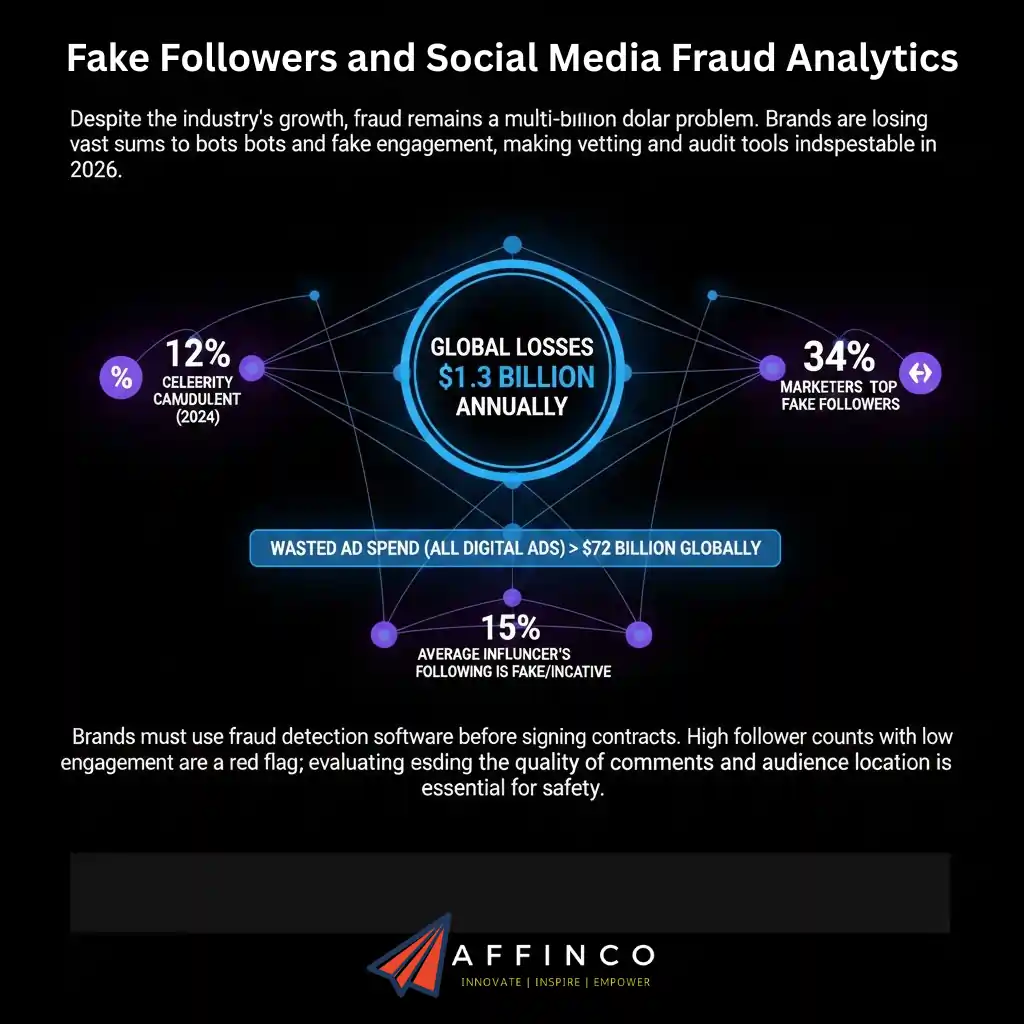
Despite the industry's growth, fraud remains a multi-billion dollar problem. Brands are losing vast sums to bots and fake engagement, making vetting and audit tools indispensable in 2026.
Brands must use fraud detection software before signing contracts. High follower counts with low engagement are a red flag; evaluating the quality of comments and audience location is essential for safety.
Virtual Influencers: The Rise of AI Avatars
Computer-generated characters are gaining traction as brands seek total control over their brand ambassadors. These digital avatars offer high engagement without the risks associated with human influencers.
As technology advances, hyper-realistic avatars will become indistinguishable from reality, opening new avenues for creative storytelling.
Creator Economy Growth Projections
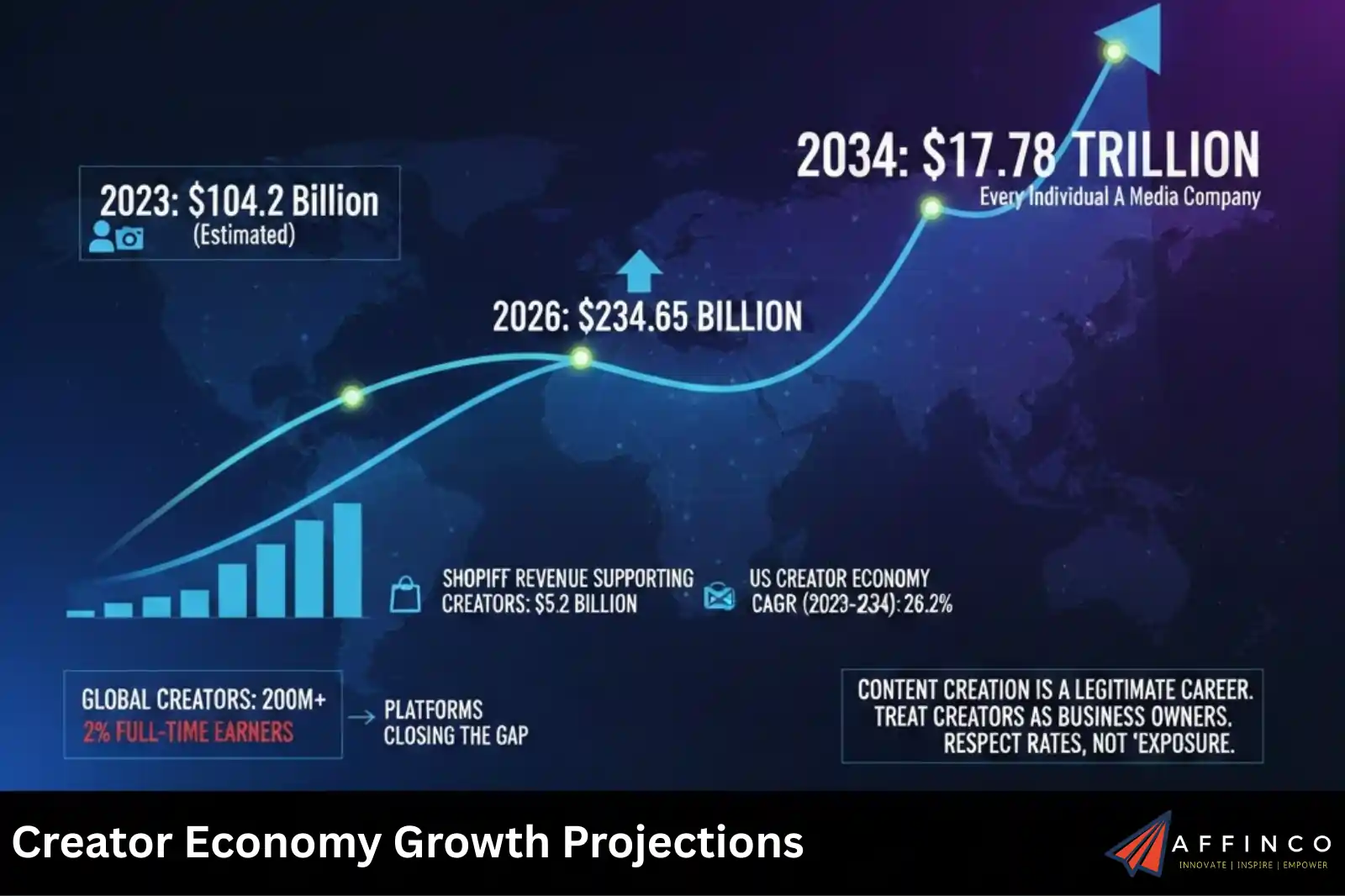
The creator economy is evolving into a formalized industry with its own middle class of earners. Platforms are competing to offer the best monetization tools, fueling a massive surge in the number of professional creators.
This data highlights that content creation is a legitimate career path. Brands need to treat creators as small business owners, respecting their rates and professional value rather than offering “exposure.”
Podcast Influencer Marketing Stats
Podcasts offer a unique environment of high attention and intimacy. Host-read ads are consistently rated as less intrusive and more trustworthy than other digital ad formats.
Audio influence is powerful because it is passive yet intimate. Podcast hosts are the new radio stars, and their endorsements carry the weight of a trusted friend recommending a product.
Niche Markets: Gaming & Esports
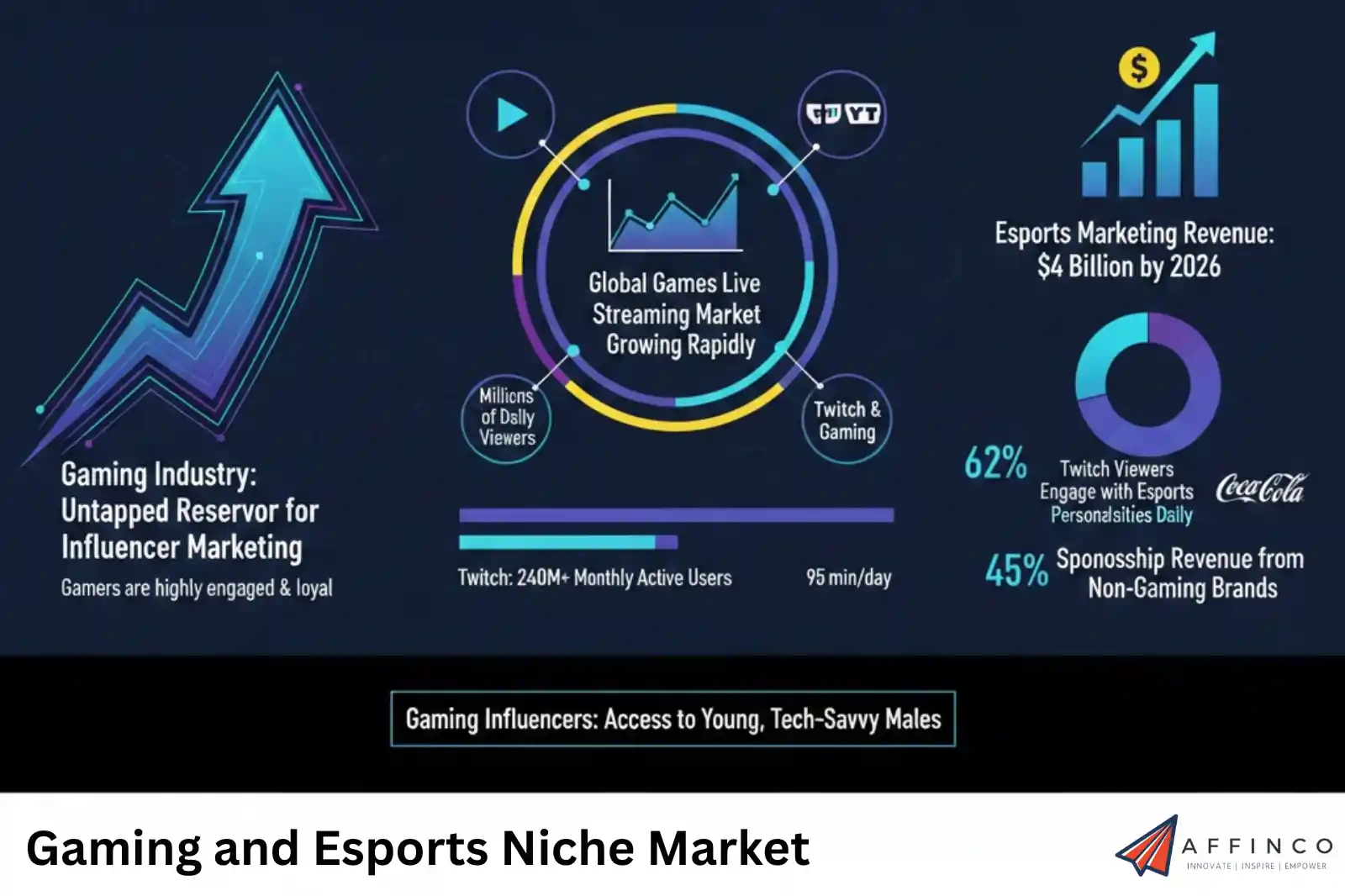
The gaming industry is a massive, often untapped reservoir for influencer marketing. Gamers are highly engaged and loyal, making them ideal targets for lifestyle and tech brands.
Gaming influencers offer access to a hard-to-reach demographic of young, tech-savvy males who largely ignore traditional media.
Conclusion
Influencer campaigns deliver tangible value rather than vanity metrics . With an average Earned Media Value of $6.50 for every dollar spent, financial returns are undeniable .
Focus is shifting to micro-influencers, where consumer trust sits at a massive 82% . Even B2B marketing now sees a huge 520% ROI .
2026 requires genuine connection over broad reach. With 59% of brands increasing budgets, how will you adapt your strategy ?


Ali
Ali is a digital marketing expert with 7+ years of experience in SEO-optimized blogging. Skilled in reviewing SaaS tools, social media marketing, and email campaigns, we craft content that ranks well and engages audiences. Known for providing genuine information, Ali is a reliable source for businesses seeking to boost their online presence effectively.