

Something big changed in the creator economy, and 2026 made it impossible to ignore.
Everyone with a real skill is becoming an educator. AI educators are running live masterclasses. Media buyers are coaching students on TikTok Shop selling.
Fitness coaches, psychologists, Python instructors, UGC creators, all of them are turning knowledge into communities and courses. We see it every week in our agency work. The most profitable digital product of this era is not an ebook or a template. It is a paid community with courses inside it.
And that raises the only question that matters: which platform do you build it on?
We have helped clients set up on Teachable, on WordPress course stacks, on Skool, and on custom builds.
After taking Circle's 14-day trial ourselves and going deep on every feature, our answer changed. Circle is the most polished, most complete community and course platform we have tested, and it is the one we are now using for our own upcoming course launches.
This is the full Circle.so review. Every feature, real pricing, the AI that genuinely surprised us, honest comparisons with Skool, Kajabi, LearnWorlds, and Teachable, and the drawbacks nobody mentions. It is long, because the decision deserves it.
⚡ Quick Verdict on Circle.so
Circle is the best all-in-one community and course platform for serious creators in 2026. It combines community discussions, courses, events, live streams, chat, email marketing, gamification, a website builder, and a genuinely useful AI layer in one clean product, with unlimited members on every plan starting at $89/month.
The mobile and desktop apps are excellent, the UI is the best in the category, and Circle AI can now build, run, and help grow the business with you.
The honest catches: workflows and API access sit on the $199 Business plan, email costs extra through the Email Hub, and full white-label plus AI agents live on the custom-priced Circle Plus tier. All covered below.
Every plan comes with a 14-day free trial, no risk.
What Is Circle?
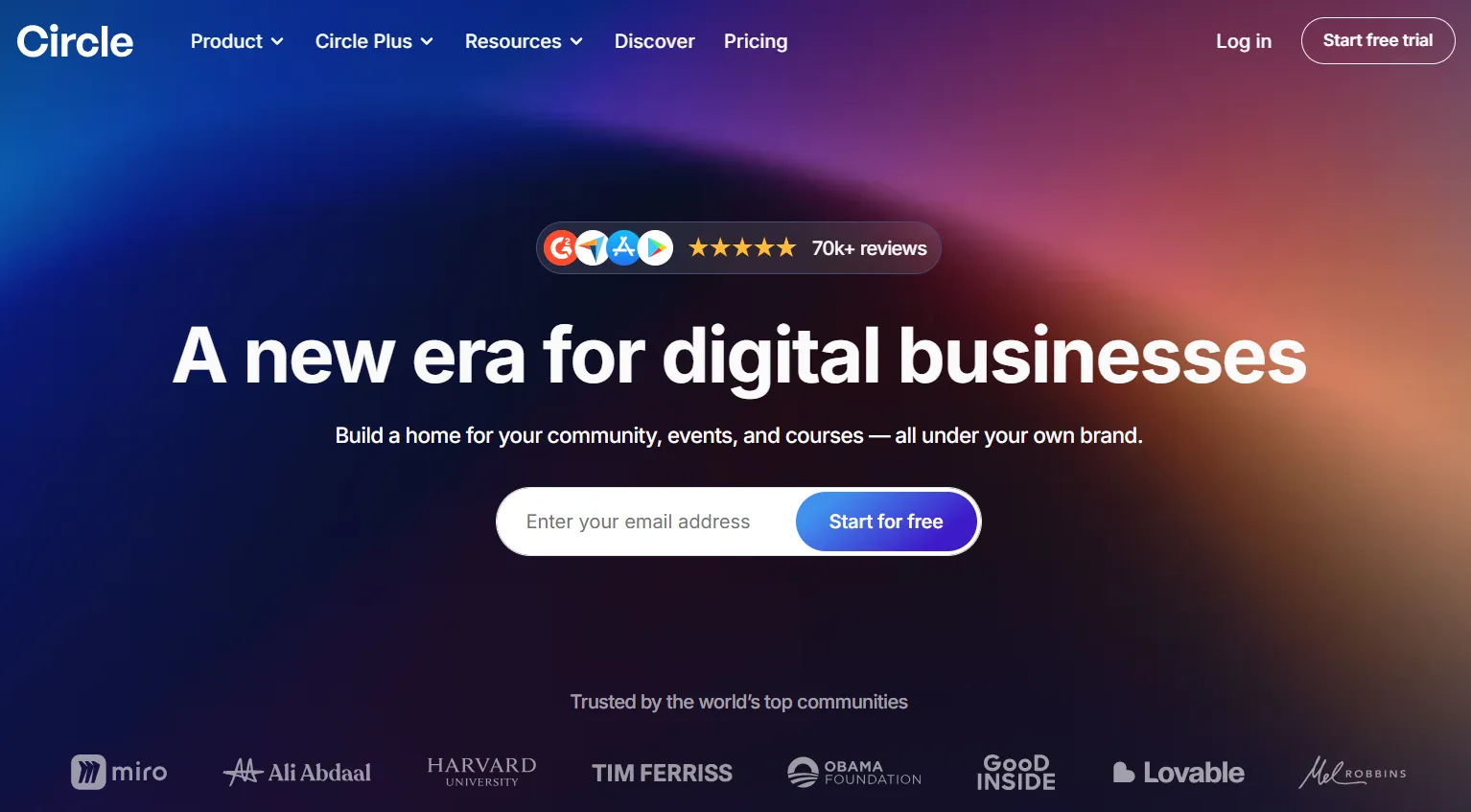
Circle is an all-in-one platform for building paid communities, courses, and digital businesses. One login gives you community discussions, structured courses, events, live streaming, member chat, paywalls, email marketing, automations, analytics, and mobile apps, all under your own brand and custom domain.
The simplest way to understand Circle is this: it replaces the duct-taped stack. The old way of running a course business meant a course platform, plus a Facebook group or Discord for community, plus Mailchimp for email, plus Zoom for calls, plus a gamification plugin, plus video hosting, plus a website builder. Seven tools, seven bills, seven logins, and members bouncing between all of them.
Circle puts the entire business in one place. Members log into one branded space, on web or on a genuinely good mobile app, and everything lives there: the course, the community, the events, the messages, the payments.
Circle was built by former Teachable team members who watched thousands of course creators struggle with exactly this fragmentation. That origin shows. The product feels like it was designed by people who ran course businesses, not by people who read about them.

Start Your Circle Community Today
Get full access to Circle for 14 days and test the platform used by AFFINCO for its own course launches.
Who Circle Is For (Real Examples From Our Agency Work)
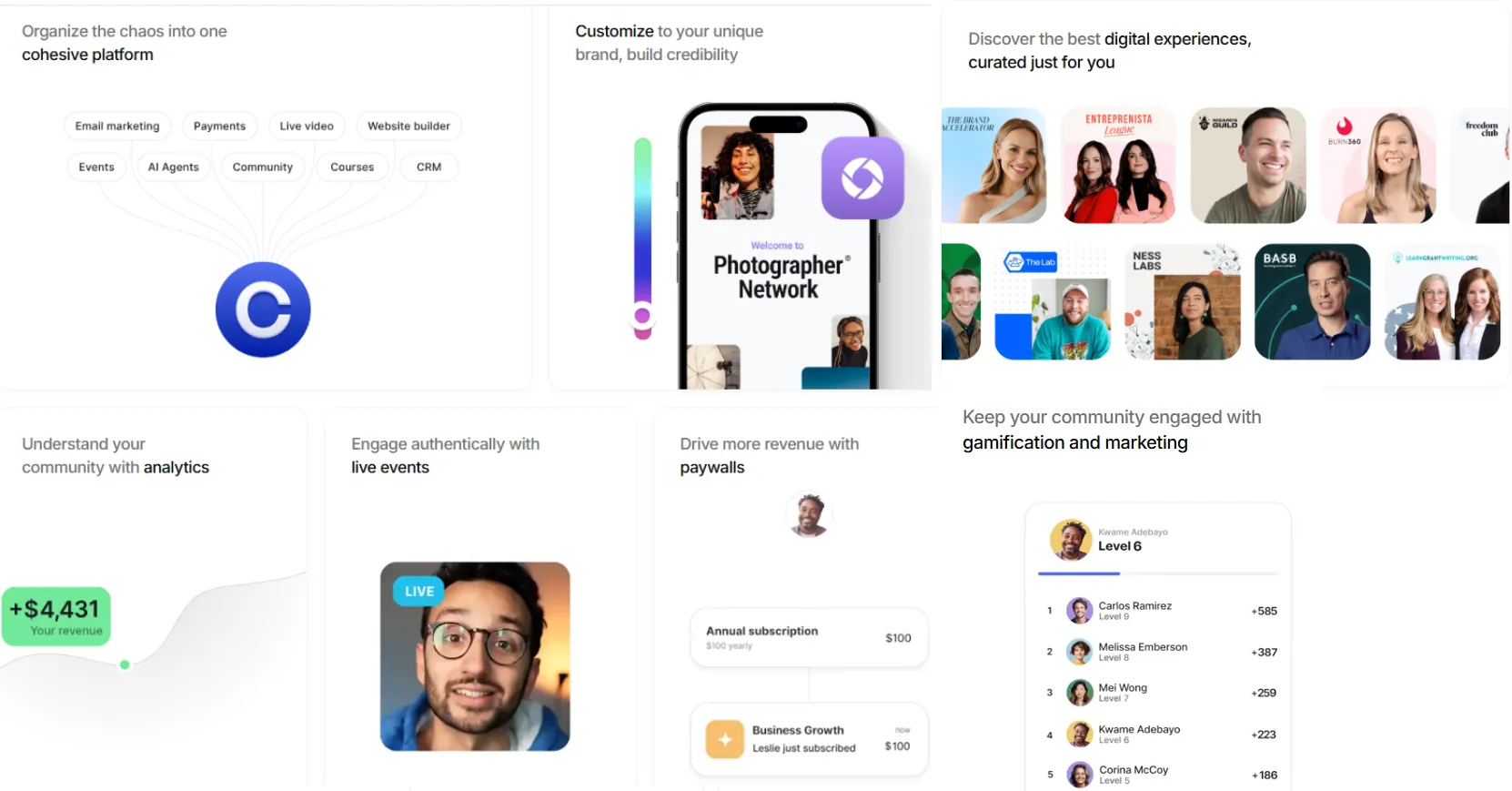
Circle is built for anyone selling knowledge with a community around it. From our own client work, that includes a wider range than most people expect.
The pattern across all of them is identical. Whatever you know, someone will pay to learn it with a community around them. Circle is the container for that business.
Circle's Core Products: The Full Breakdown
Circle organizes everything into products inside your community. Here is what each one actually does.
Discussions: The Community Core
Discussions are Circle's forum spaces, and they are the heartbeat of the platform. Members post, comment, react, and build threads inside organized spaces you control.
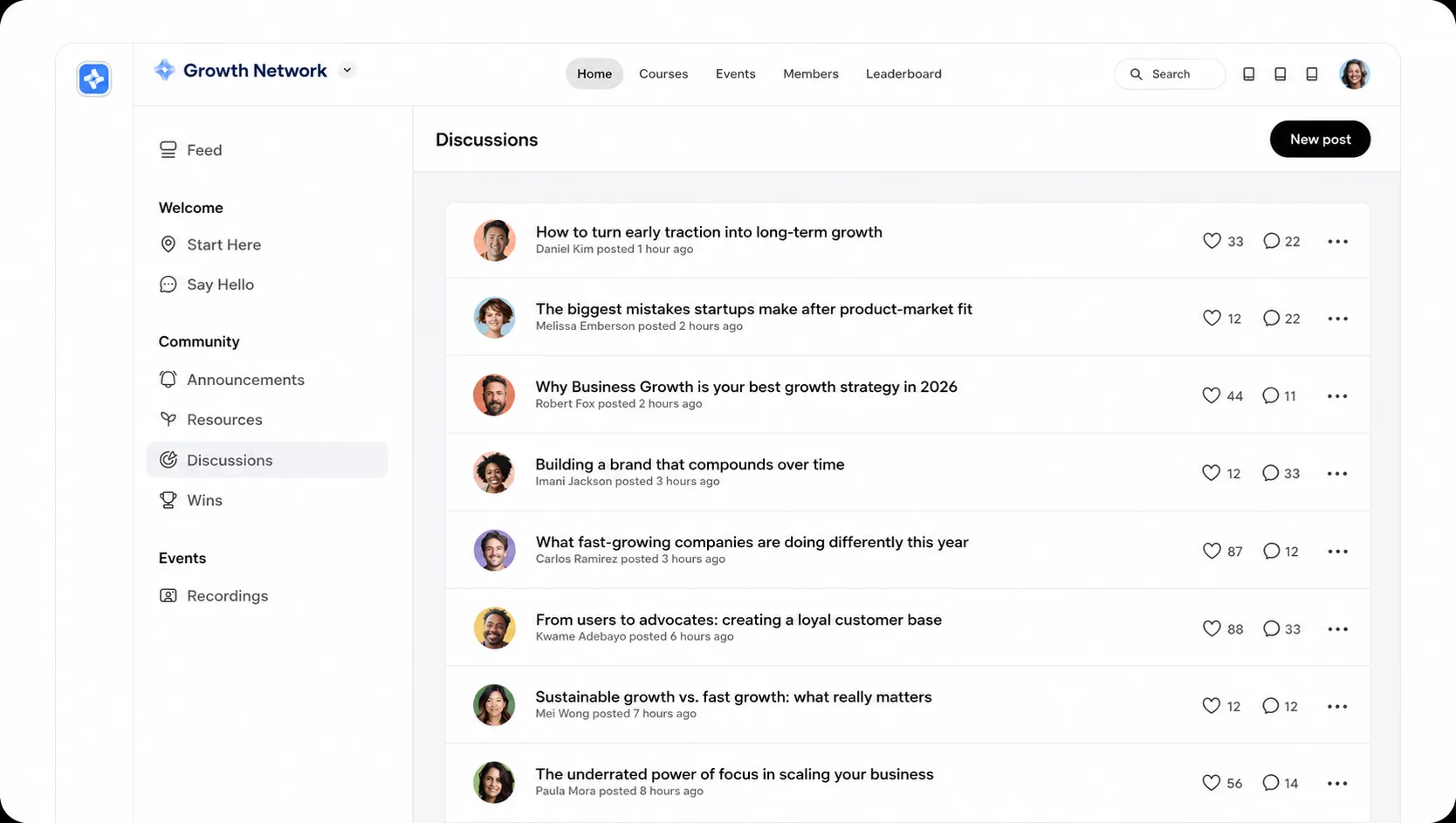
Circle discussions are polished and genuinely built for engagement. Rich posts with images, video, and embeds. Pinned posts. Space-level permissions. Private and secret spaces for premium tiers. The feed feels closer to a modern social app than an old forum, which matters, because members only return to places that feel alive.
Compared to running your community in a Facebook group, the difference is night and day. No algorithm hiding your posts from your own members. No ads. No distractions pulling attention to someone else's content. Your community, on your domain, under your brand.
Courses: The Money Maker
Courses are where Circle earns its place in this market, and the 2026 version is a serious step up.
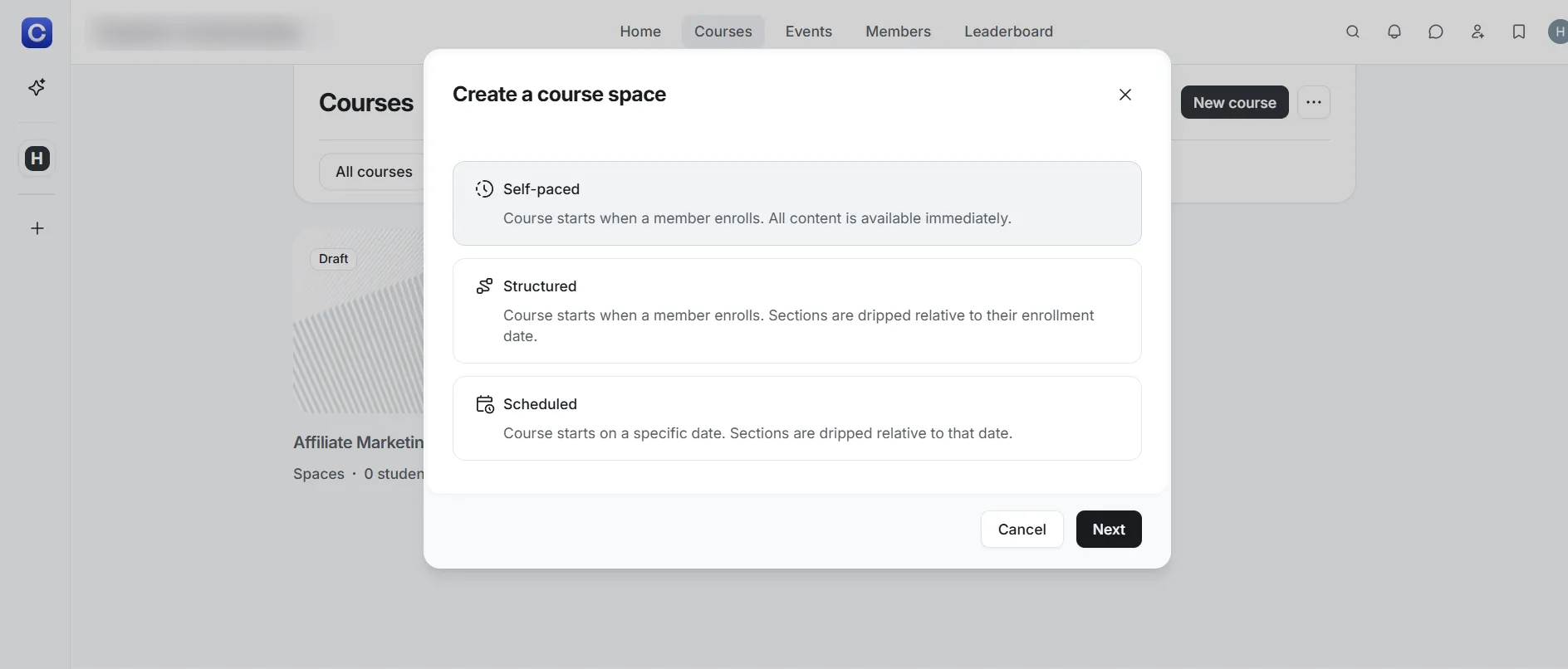
You get structured courses with sections and lessons, drip scheduling, cohort-based delivery, self-paced options, completion tracking, quizzes, and paywalls. The builder is clean and fast. A non-technical creator can assemble a professional course in an afternoon.
Three newer pieces stand out.
- AI-native course building. Circle AI can help design and structure your next course. You describe the outcome, and it scaffolds the curriculum with you. For creators staring at a blank page, this alone saves days.
- The learning journey canvas. You can design learning journeys on a context-rich visual canvas, organizing courses and paths as visual learning parts rather than flat lists. It makes complex programs feel designed instead of dumped.
- A video-first player built for outcomes. Circle's built-in video player is made for course consumption, with hosting included. You do not pay separately for video hosting, and your lessons do not live on YouTube with competitor recommendations next to them.
Events: Native and Clean
Circle has a full native event system. Schedule events, sell tickets or gate them by membership tier, send reminders, and host directly inside Circle through live streams or link out to wherever you run sessions.
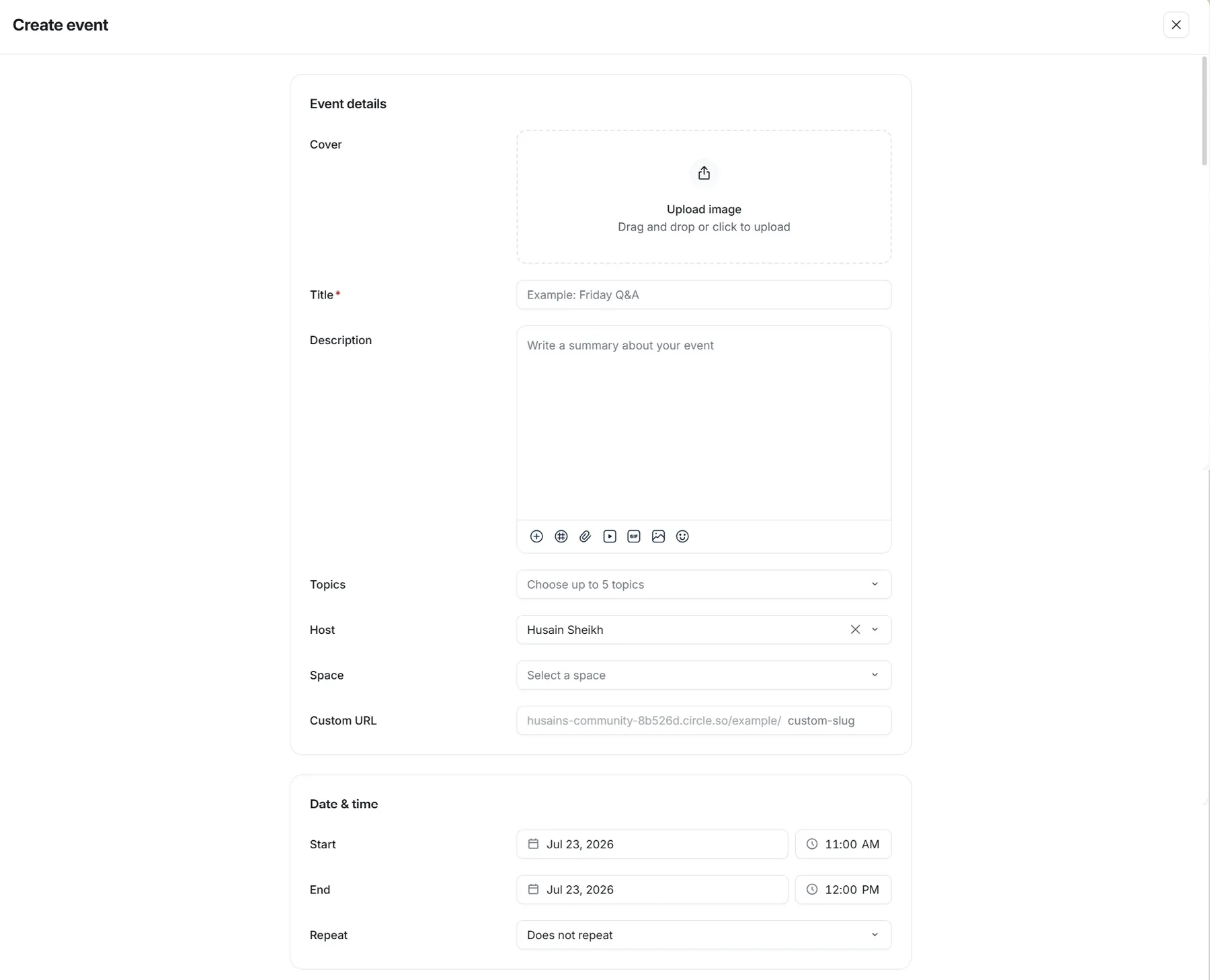
Recurring events, RSVPs, calendar syncing, and event spaces all work as expected. For coaching programs and cohort courses, the event layer removes the entire “which Zoom link was it” mess that plagues every course business.
Live Streams and Live Rooms
Circle includes both large-audience live streams and smaller interactive live rooms.
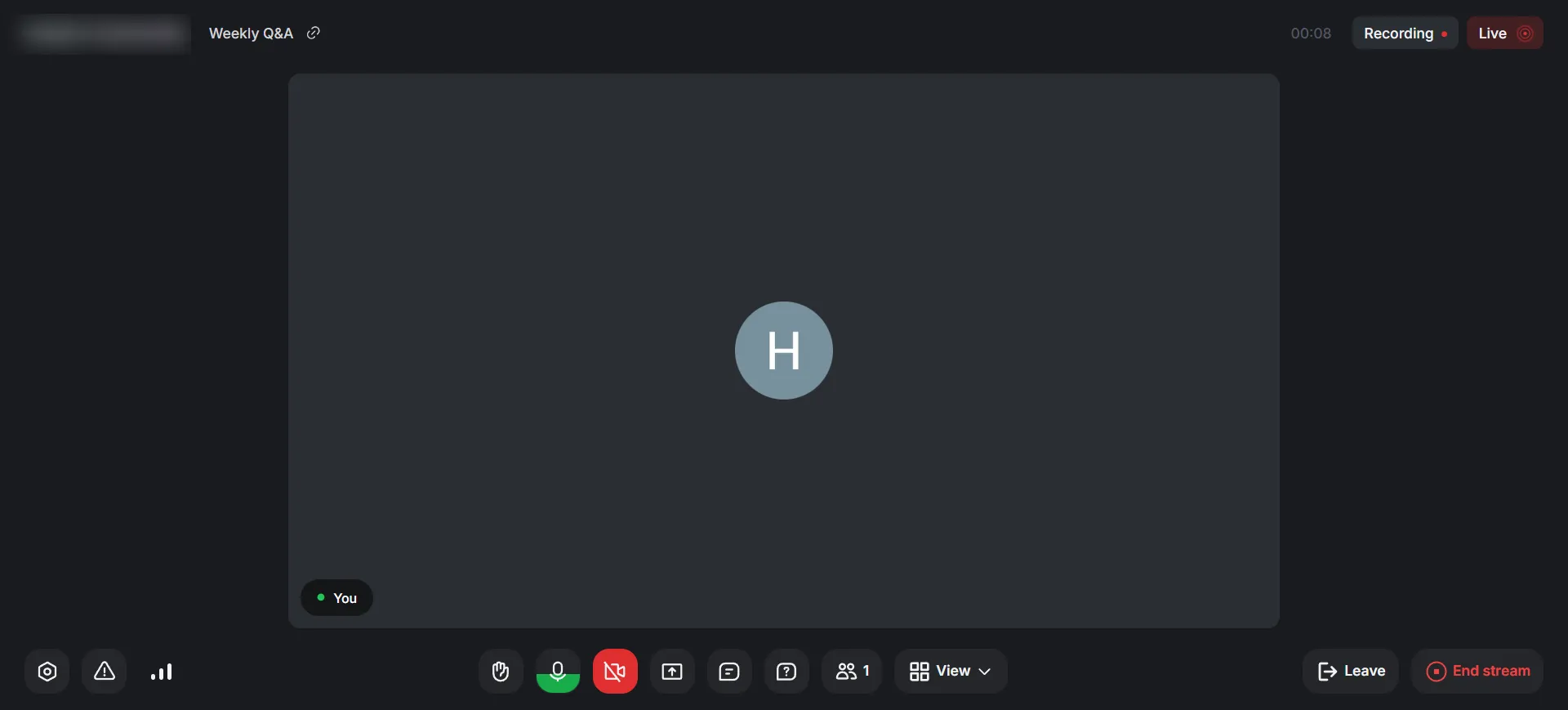
Streams handle the masterclass format: one-to-many teaching, launches, weekly trainings. Live rooms handle the coaching format: face-to-face small group calls inside the community. Recordings can land back into your spaces for replay.
This is a real Zoom replacement for most creator use cases, and it is included rather than bolted on.
Chat and Direct Messages
Members can chat in real time, in group chat spaces and direct messages. If you have seen Skool's community chat, think of this as the same idea executed with more polish and more control. Chat keeps the community sticky between posts, courses, and events.
Circle AI: The Feature That Changed Our Minds
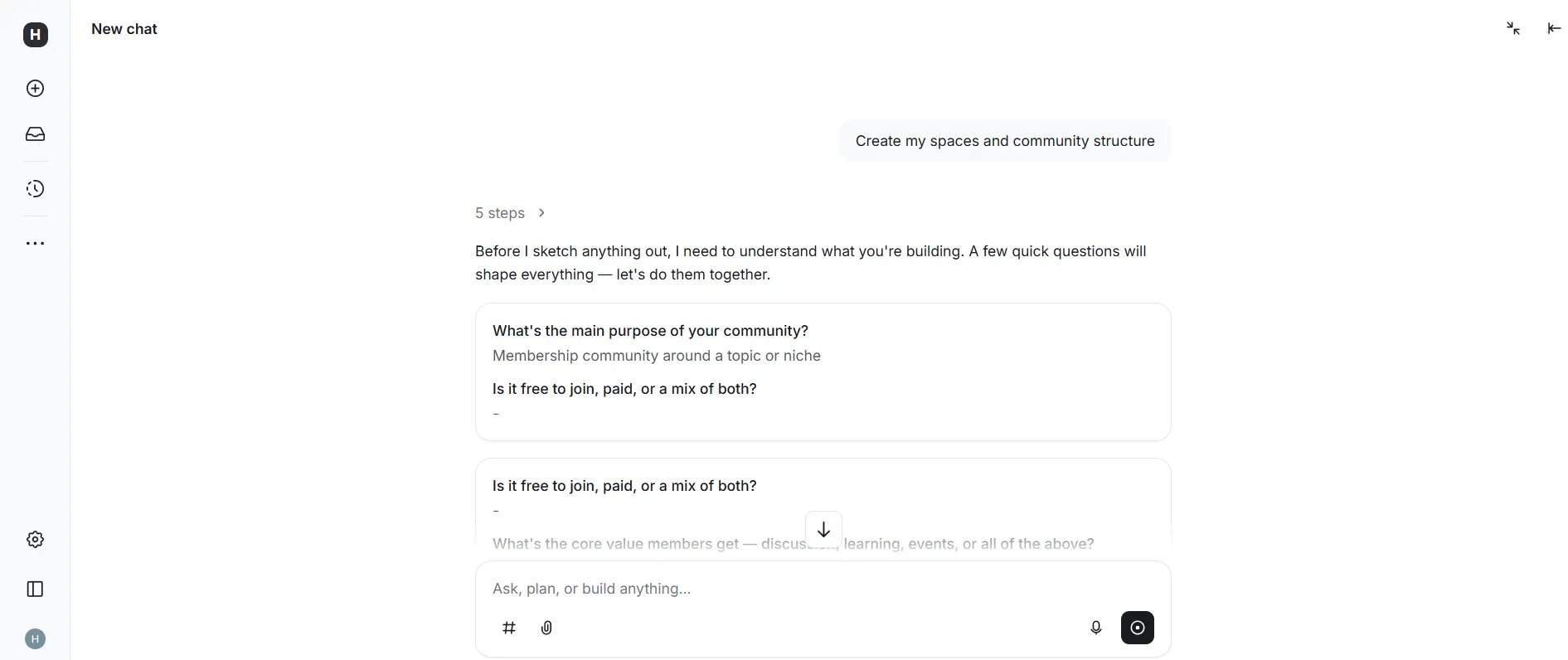
We went into the trial expecting a good community platform. What we did not expect was how genuinely useful Circle AI has become. This is the part of the review to slow down on.
Circle AI is positioned as an AI partner that helps you build, run, and grow your business, and for once the marketing matches the product.
An AI That Actually Operates the Platform
Circle AI is not a chatbot pasted into a corner. It ships with more than 50 operational skills that take real actions in your community. The ones we found most useful:
Read that list again as a solo creator. That is an operations assistant, a content scheduler, and a data analyst, included in the platform. You chat, it configures. We tested several of these during the trial and the “describe it, watch it get built” experience is real.
AI Agents That Coach Your Members
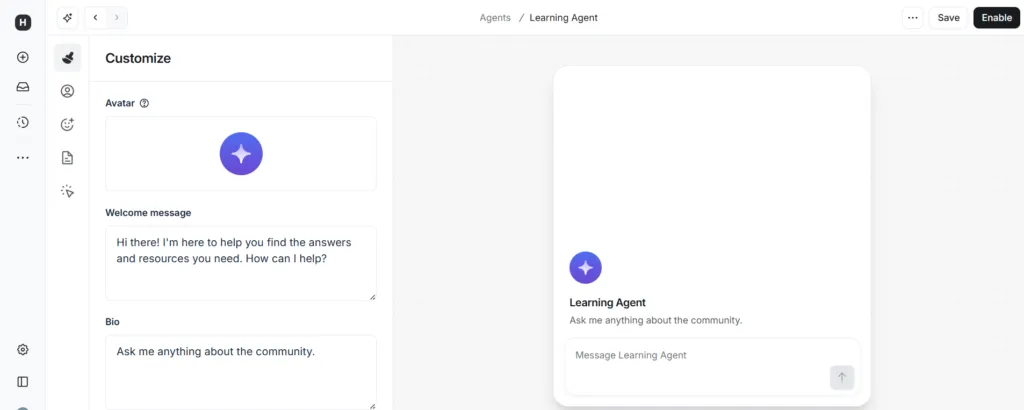
This is the headline feature for 2026, available on the Circle Plus tier. You can deploy AI agents inside your community that actively help and coach your members, even while you are offline.
Think about what that means for a course business. A student gets stuck at 2am. Instead of waiting for your morning reply or dropping off entirely, an agent trained on your content answers, guides, and keeps them moving. Member questions get first-line responses around the clock. The community feels attended, always.
For coaches and educators, this is the closest thing to cloning yourself that the market currently sells. It will not replace your live presence, and it should not, but it kills the dead air that quietly murders course completion rates.
The AI Runs Watch Duty Too
Circle AI monitors the community continuously, surfaces conversations that need your attention, analyzes member behavior and trends, spots the right moments to present offers, and advises on pricing and marketing decisions. It also supports team projects with shared context and memory, so your VA and you can hand off work inside the same AI workspace.
We write about AI systems constantly, and our honest read is this: most platforms bolted a chatbot on in 2024. Circle rebuilt the operating layer around AI, and the difference shows in daily use.
Marketing Tools: Email, Workflows, and the End of the Tool Stack
Here is where Circle quietly saves creators serious money every month.
Workflows and Automations
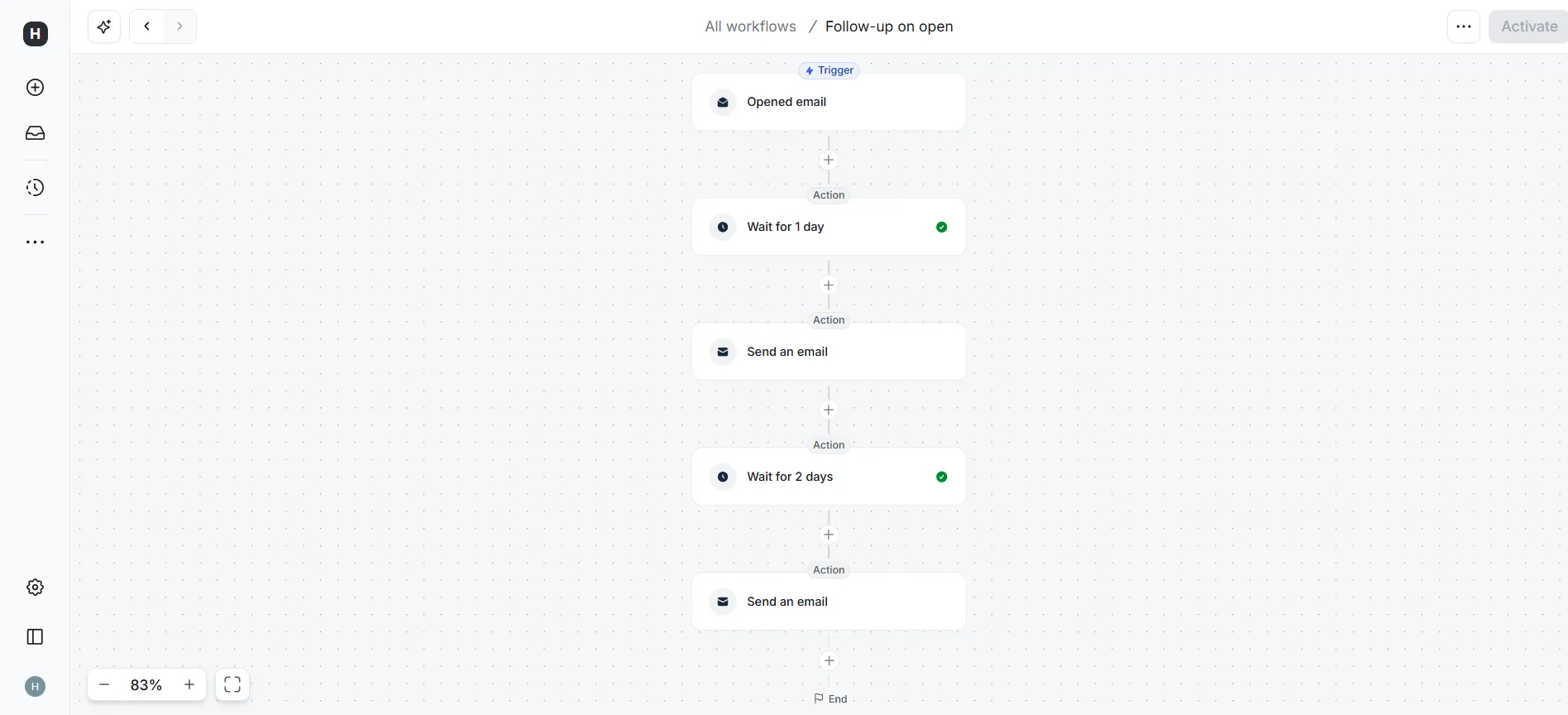
Circle's workflow engine (on the Business plan) automates the operational grind. Member joins, gets tagged, receives onboarding sequence. Student finishes module three, unlocks module four, gets a congratulations DM. Subscription payment fails, recovery flow triggers.
A complete step 1 to step 10 automation for a new course buyer is genuinely easy to build, and with the AI Workflow Builder you can describe it in plain English instead of dragging boxes. Lesson emails, nudges when someone stalls, upsells at completion, all of it runs hands-free.
The Email Hub: Real Email Marketing Inside Circle

Circle now includes a full email marketing system, the Email Hub, with broadcasts, automations, and CRM-style member profiles.
The pricing is an optional add-on: $99 per month for 10,000 contacts, with the first 30 days free, scaling up from there (large lists into the hundreds of thousands are supported). That works out to roughly $10 per 1,000 contacts.
Two honest notes here. First, yes, it costs extra, and we flag that in the cons. Second, the reason it costs money is the reason it works: Circle sends on premium IP pools and premium email infrastructure, which means your emails land in the primary inbox instead of promotions or spam, unless you behave like a spammer.
We have written extensively about deliverability on this site, and cheap shared email infrastructure is where creator emails go to die. Circle chose the premium route, and for a business whose revenue depends on emails being opened, that is the right trade.
The practical win: you can cancel Mailchimp, AWeber, or whatever email tool you pay for separately. One member database, one automation brain, one bill.
Website Builder, Paywalls, and Payments
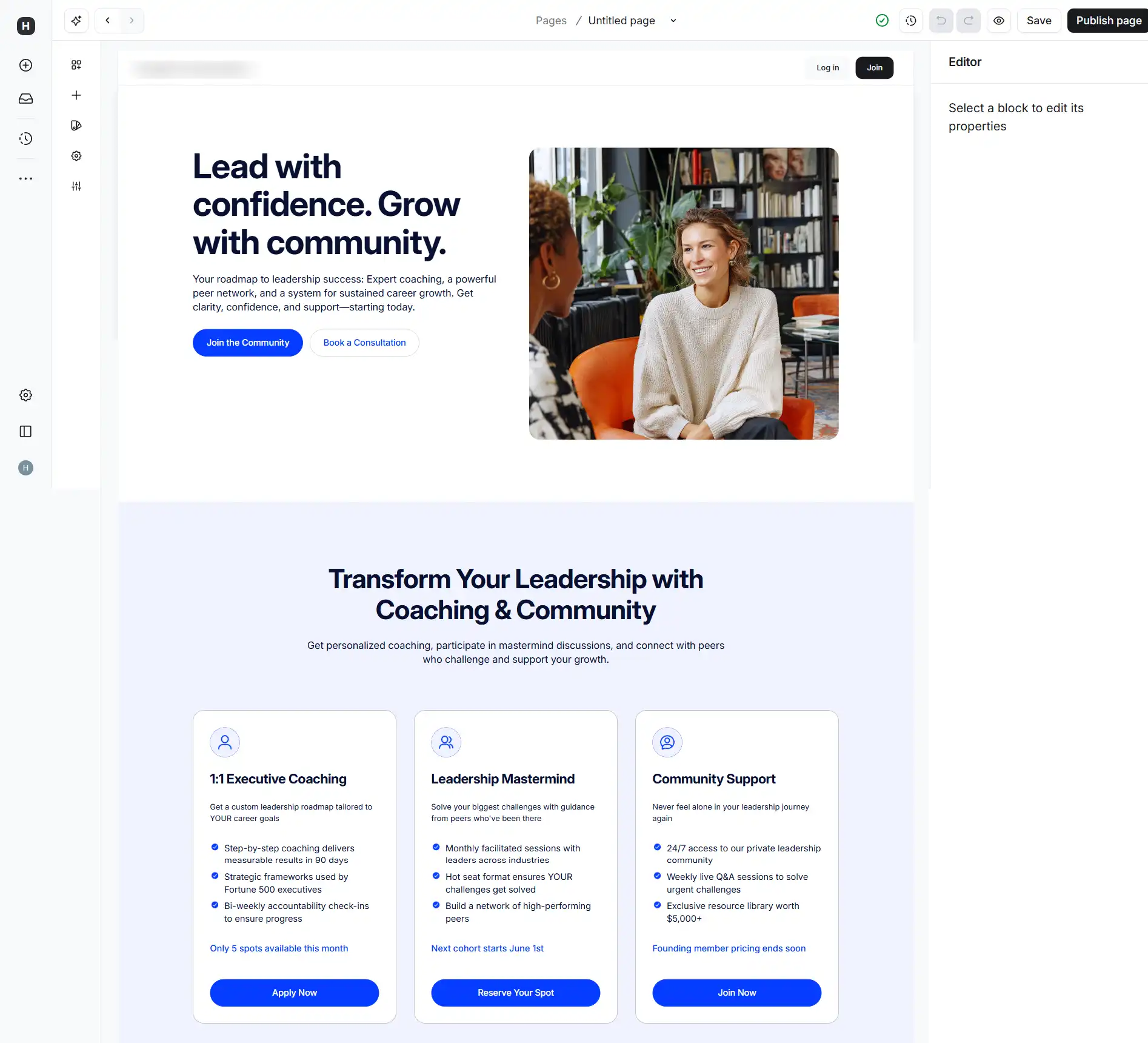
Circle includes a website builder for your public pages, so the marketing site and the community live in one system. Paywalls handle one-time purchases, subscriptions, and tiered memberships through Stripe, with coupons and trials built in. A searchable member directory and proper admin panel round out the operations layer.
Add it up. Course platform, community, email tool, automation tool, video hosting, event system, gamification, and website builder, one subscription. That consolidation is the actual product.
Customization, Gamification, and Member Experience
Circle communities are polished in a way that competitors simply are not. Custom branding, your colors, your logo, and critically, your own custom domain. Members see your brand, not Circle's. It stops short of 100% white label on standard plans (full white label and branded apps live on Circle Plus), but for most creators the standard custom branding is more than enough to look fully professional.
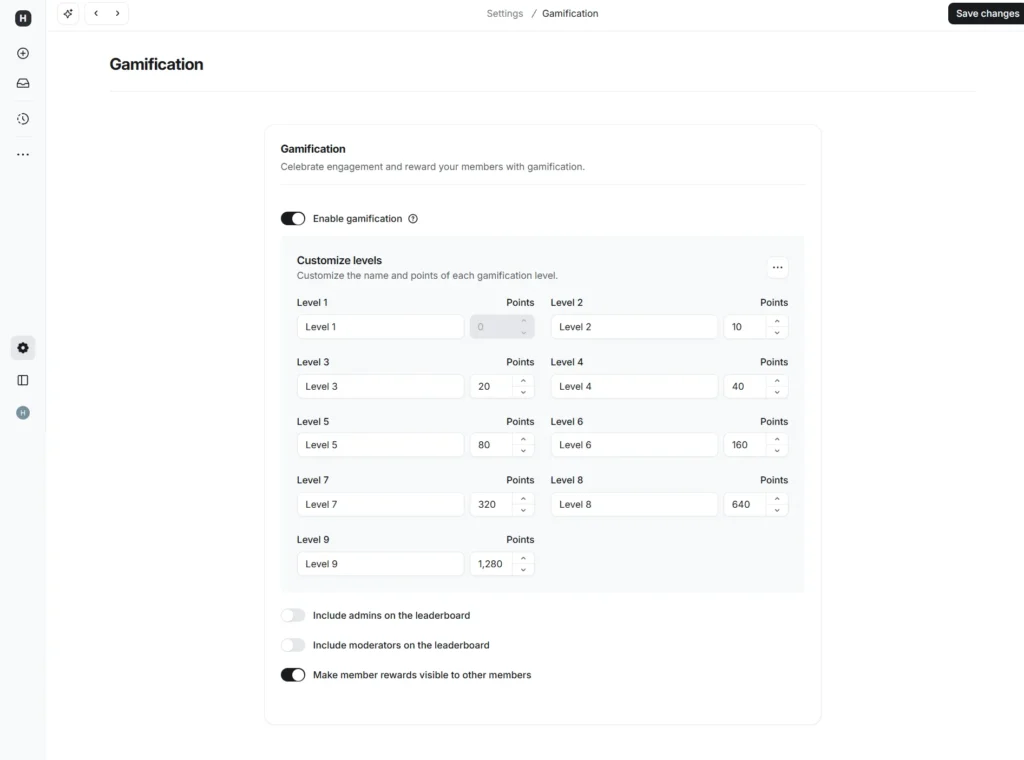
Gamification is built in and it works. Points, levels, leaderboards, and rewards keep members active, and you can promote engaged members into moderators to scale community management without hiring. Engagement mechanics that Skool made famous exist here too, with more control and better design.
Mobile Apps, Desktop Apps, and Branded Apps
This section matters more than most reviews admit, because in 2026 your members live on their phones.
Circle's mobile apps are actually very useful, not an afterthought. iOS and Android apps deliver the full experience: feed, courses, chat, events, notifications. Members consume lessons and join conversations from the couch, which is where course completion actually happens. There are desktop apps for Mac as well, keeping the community one click away all day.
For bigger brands, Circle offers fully branded apps (your own app, your name, in the app stores) as an option on the Plus tier. That is enterprise-grade polish when you are ready for it.
Our agency take: we have watched clients lose members purely because their platform's mobile experience was miserable. Circle removes that risk entirely.
For the Technical Crowd: Headless, API, and MCP
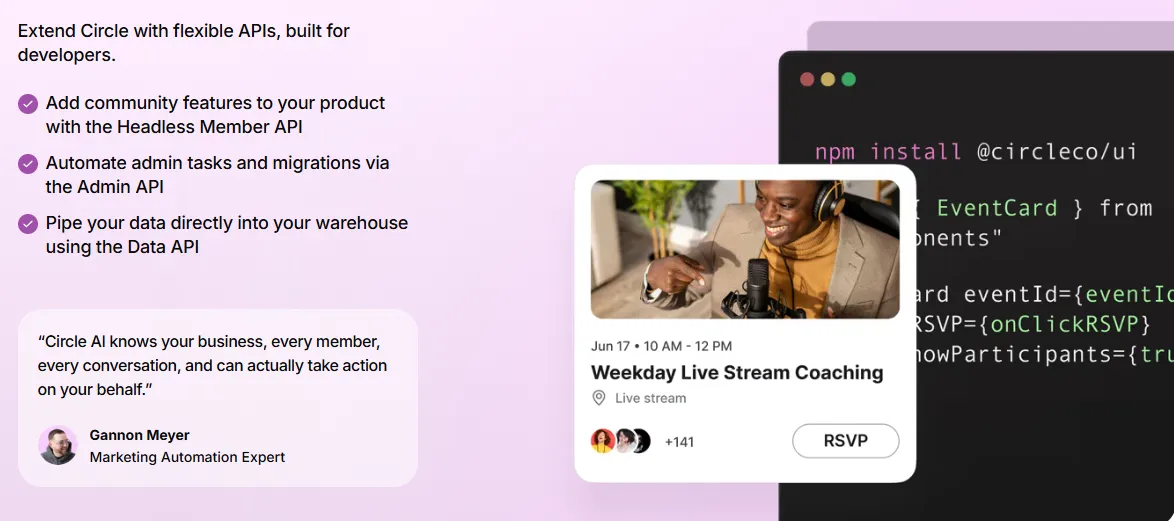
Circle did something unusual for a creator platform: it built for developers too.
The Business plan includes headless API access and an admin API, so you can build a fully custom front end on top of Circle's community engine, or wire Circle into your existing product. Agencies and SaaS teams can run community infrastructure without Circle's UI at all.
Even more interesting for 2026: Circle ships an MCP, which means AI agents (Claude and other MCP-compatible tools) can operate your community programmatically. Combined with the AI skills inside the platform, Circle is one of the few community products genuinely ready for the agent era. For a team like ours that automates everything, this is a real differentiator, and it connects directly to the AI automation work we do for clients.
Integrations cover the usual favorites (Zapier and friends), so your existing stack connects without drama.
Getting Started: How a Circle Community Comes Together
A quick walkthrough of the actual setup path, because this is where Circle's one-click promise gets tested. This mirrors how we set up our own trial workspace.
- Start the trial and scaffold. Sign up for the 14-day trial, then let the Space Scaffolder build your initial structure from a description. Tell it what your community teaches and who it serves, and watch it draft your spaces. What used to be an afternoon of blank-page decisions becomes a ten-minute review.
- Brand it. Add your logo, colors, and custom domain. This is the moment the community stops looking like a platform and starts looking like your business.
- Build the first course. Use the course builder (or the AI Course Builder) to structure sections and lessons, upload video straight into the native player, and set drip or cohort scheduling.
- Configure the paywall. Connect Stripe, set your membership tiers or one-time course pricing, and add a coupon for launch through the Coupon Manager.
- Wire the automation. On Business, build the new-member journey: welcome sequence, lesson emails, a nudge if someone stalls, an upsell at completion. Describe it in plain English to the Workflow Builder and refine.
- Open the doors. Invite your list with the Member Inviter, schedule your first live event, and pin a welcome post. Gamification handles the early engagement gravity from there.
A realistic timeline: a polished, sellable community in a weekend. Non-technical creators can do every step above without touching code, and that is precisely the point.
Circle Discover and Circle Studios: The Ecosystem Extras
Two newer pieces worth knowing about.
Circle Discover is a marketplace where digital businesses on Circle can be found by new members. It is early, but the direction matters: your community gains a discovery surface beyond your own marketing, something no standalone WordPress course stack will ever give you.
Circle Studios is a full-service partnership program for established creators, where Circle's team helps design and run the community operation with you. For bigger brands moving serious audiences onto the platform, this is the concierge lane.
Neither is a reason to buy on its own. Both signal a platform investing in its creators' growth rather than just billing them, and after watching other platforms stagnate for years, that trajectory counts.
Circle Pricing 2026: The Full Breakdown
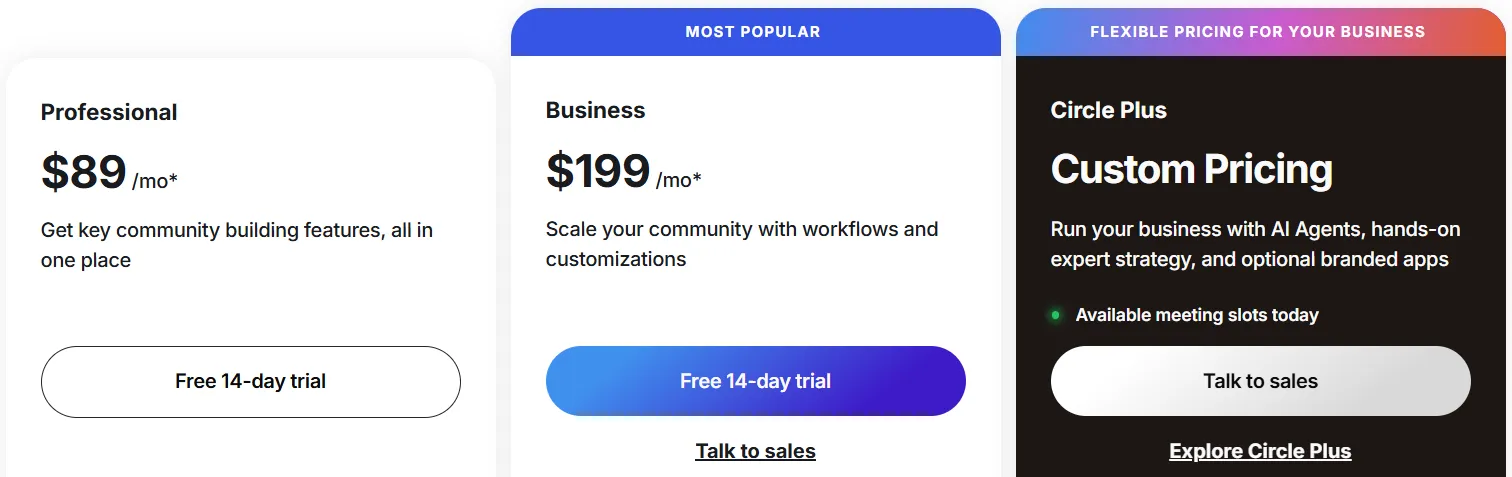
Verified from Circle's pricing page this month. Every plan includes a 14-day free trial and unlimited members.
| Plan | Price | Transaction Fee | Admins / Mods |
|---|---|---|---|
| Professional | $89/mo | 2% | 3 / 10 |
| Business | $199/mo | 1% | 5 / 15 |
| Circle Plus | Custom | 0.5% | Unlimited |
Email Hub add-on: $99/month per 10,000 contacts, first 30 days free (included at 10K contacts on Plus).
Now the analysis, because a price table without context is useless.
- The $89 Professional plan is a genuinely complete business. Unlimited members, unlimited courses, discussions, events, live streams, website builder, gamification, Circle AI, custom domain. Compare that honestly with the market: several rival platforms charge $80 to $150 per month with member caps, product limits, or missing pieces that force extra subscriptions.
Circle's entry plan has no member ceiling, and that single fact changes the economics of growing a community.
- Business at $199 is where power users land. Workflows, APIs, MCP, and the automation layer that lets one person run what used to need a team. If your funnel depends on automated sequences, this is your plan.
- The transaction fee detail matters. 2% on Professional, 1% on Business, 0.5% on Plus, on top of standard Stripe fees. At small revenue this is trivial. At $20K/month in course sales, the difference between plans starts paying for itself. Factor it into your math.
- The real pricing story is consolidation. Price Circle against a stack instead of a single tool: a course platform plus a community tool plus an email platform plus video hosting plus a webinar tool routinely totals $250 to $400 per month, before the integration headaches.
Circle at $89 to $199 replaces that entire pile, and you stop paying the pain-in-the-neck tax of syncing five tools. That is why we call it cost-effective despite not being the cheapest sticker on the shelf.
Circle vs Skool vs Kajabi vs LearnWorlds vs Teachable
The comparison everyone actually wants. We have set clients up on most of these, so this is experience talking, not spec sheets.
Circle vs Skool
Skool deserves credit for making community-plus-courses simple, and its gamification-first model built a movement. But the platforms are not equals in 2026.
Skool gives you one flat plan at around $99/month with a deliberately minimal feature set: community, courses, calendar, gamification, and that is roughly it. No native email marketing. No website builder. No live streaming built in. Minimal branding control, and your community lives visibly inside Skool's ecosystem.
Circle offers everything Skool does, executed with more polish, plus the entire layer Skool is missing: email marketing, automations, live streams and rooms, a website builder, real branding on your own domain, APIs, and a dramatically more capable AI. Skool's chat-style community? Circle has it, better.
Choose Skool if you want maximum simplicity and you are happy inside its ecosystem. Choose Circle if you are building a brand you own. For our clients, that answer is almost always Circle.
Circle vs Kajabi
Kajabi is the veteran all-in-one for marketing-heavy course sellers, and its funnel tooling is genuinely strong. It is also expensive, with plans starting around $149/month and climbing fast, with limits on products and contacts at each tier.
Kajabi is funnels-first with community attached. Circle is community-first with marketing attached. In 2026, when retention and community are the moat, we think Circle has the architecture pointing the right way. Kajabi's community features feel added on; Circle's are the foundation. Unless your business is primarily complex sales funnels, Circle delivers more of what a modern creator business needs at a lower entry price, with no member caps.
Circle vs LearnWorlds
LearnWorlds is a strong pure LMS, arguably deeper than Circle on assessment tooling, SCORM, and formal training features, with plans from around $29/month (plus per-sale fees on the entry tier) up through $299.
But LearnWorlds is a course platform with a light social layer. Circle is a living community with a serious course engine inside it. For corporate-style training programs, LearnWorlds fits. For creators building engaged paid communities around their courses, Circle wins comfortably, and its AI layer has no LearnWorlds equivalent.
Circle vs Teachable
Teachable is where many creators start, with accessible pricing tiers and a familiar course builder. It is also where many creators outgrow, usually the day they realize they need community, email, and events living somewhere else.
The telling detail: Circle was founded by ex-Teachable people who built what Teachable was missing. Teachable sells courses. Circle runs course businesses. If you only need a simple course checkout, Teachable is fine. The moment community matters, and in 2026 it always does, Circle is the upgrade path.
The Comparison Table
| Circle | Skool | Kajabi | LearnWorlds | Teachable | |
|---|---|---|---|---|---|
| Entry price | $89/mo | ~$99/mo | ~$149/mo | ~$29/mo + fees | Lower tiers + fees |
| Members | Unlimited | Unlimited | Contact limits | Varies | Varies |
| Community | Best in class | Good, minimal | Add-on feel | Light | Weak |
| Courses | Excellent | Basic | Excellent | Deepest LMS | Good |
| Email marketing | Built in (add-on) | No | Built in | Limited | Limited |
| Live streams/rooms | Built in | No | Limited | Limited | No |
| Website builder | Yes | No | Yes | Yes | Basic |
| AI layer | 50+ skills + agents | Minimal | Some AI tools | Some AI tools | Minimal |
| API/headless/MCP | Yes (Business) | No | Limited | Yes | Limited |
| Branded apps | Optional (Plus) | No | Yes (add-on) | Yes (add-on) | No |
Our Experience: Why We Are Betting Our Own Courses on Circle
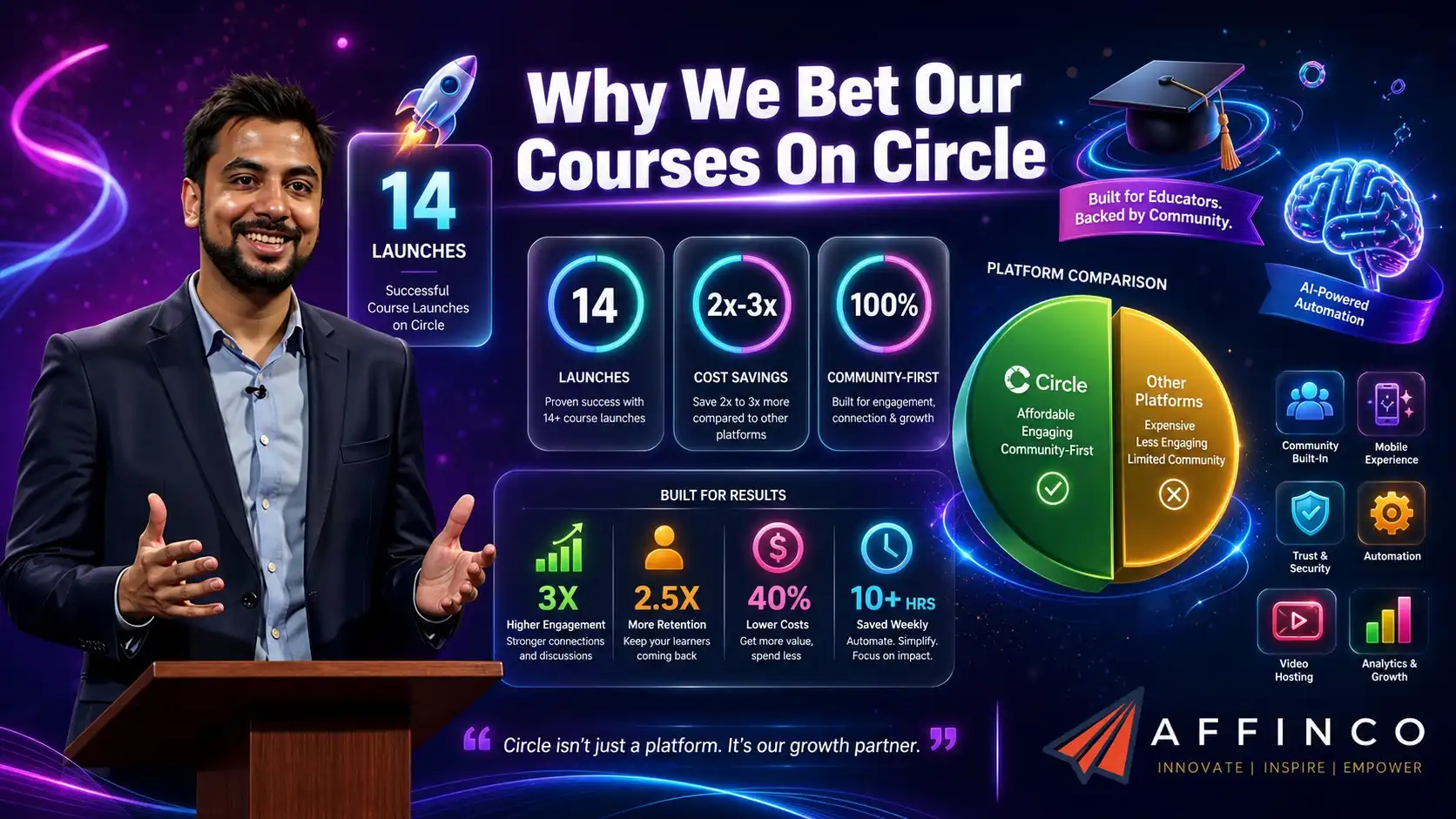
Full transparency, because this is the part that makes a review worth trusting.
We took the Circle 14-day trial ourselves and pushed it hard. We built spaces, tested the course builder, ran the AI skills, checked the mobile apps, and stress-tested the parts our clients always break. The polish is real. The AI is real. The consolidation is real.
In our agency work, we advise course creators, coaches, and digital professionals on their platform stack constantly. Circle has become our default recommendation for community-first course businesses, and we say that as people who have set clients up on Teachable, WordPress LMS stacks, Skool, and custom builds.
The support experience matters here too: fast, human-powered support and genuinely deep documentation, which is exactly what a non-technical creator needs at 11pm before a launch.
And here is the strongest endorsement we can give. We are launching our own upcoming courses on Circle. Video-first courses with heavy AI automation behind them, built on the same platform we recommend to clients.
We compared the total cost against rival stacks and kept arriving at the same answer: elsewhere we would pay double or triple for the same capability, spread across tools that do not talk to each other.
When an agency that reviews platforms for a living picks one for its own money, that is the review inside the review.
What We Like and What We Don't
The honest ledger, after real hands-on use.
What We Like
What We Don't Like
Who Should Choose Circle (and Who Should Not)
Choose Circle if you are:
Look elsewhere if you are:
FAQs Related to Circle.so
What is Circle.so used for?
Circle is an all-in-one platform for building paid communities and online courses. Creators use it to host discussions, sell and deliver courses, run events and live streams, send email marketing, automate member journeys, and manage payments, all under their own brand and custom domain with unlimited members.
How much does Circle cost in 2026?
Circle's Professional plan costs $89/month and the Business plan $199/month, both with a 14-day free trial and unlimited members. Circle Plus is custom-priced for enterprises and adds AI agents, SSO, and optional branded apps. The Email Hub add-on costs $99/month per 10,000 contacts with the first 30 days free.
Is Circle better than Skool?
For most serious creators, yes. Circle matches Skool's community, courses, and gamification, then adds email marketing, automations, live streaming, a website builder, real custom branding on your own domain, APIs, and a far deeper AI layer. Skool wins only on radical simplicity.
Does Circle have AI?
Yes, and it is a genuine differentiator. Circle AI includes 50+ operational skills that build spaces, structure courses, create posts, configure paywalls, generate workflows from plain English, and analyze community data. On the Circle Plus tier, deployable AI agents can even coach and support your members around the clock.
Does Circle have mobile apps?
Yes. Circle has polished iOS and Android apps covering the full experience (courses, feed, chat, events, notifications), plus desktop apps. Fully branded apps under your own name are available as an option on the Circle Plus tier.
Can Circle replace my email marketing tool?
Yes. Circle's Email Hub provides broadcasts, automations, and CRM-style member profiles on premium sending infrastructure, at $99/month per 10,000 contacts. For most creators it replaces Mailchimp or similar tools and unifies email with the member database.
Does Circle take a cut of sales?
Circle charges a transaction fee on paid memberships and courses: 2% on Professional, 1% on Business, and 0.5% on Circle Plus, in addition to standard payment processing fees.
Is there a Circle free trial?
Yes. Every Circle plan includes a 14-day free trial with full access, no long-term commitment. It is the easiest way to test whether Circle fits your business before paying.

Final Verdict: The Platform We Chose for Ourselves
After years of setting up course creators on every major platform, and after testing Circle hands-on through its trial, our conclusion is not complicated.
Circle is the most complete, most polished community and course platform available in 2026. The UI embarrasses competitors. Unlimited members from $89/month changes the growth math. The AI layer is genuinely operational rather than decorative. And the consolidation story is real: it quietly replaces the course platform, the community tool, the email service, the webinar software, the video host, and the gamification plugin you are currently paying for separately.
It is not flawless. Automation lives on the pricier Business plan, email costs extra, the best AI agents require the Plus conversation, and transaction fees never disappear. We told you all of it, because that is the difference between a review and an advertisement.
But the verdict was never really in doubt. We recommend Circle to our agency clients, and we are launching our own courses on it. In a market drowning in half-finished creator platforms, Circle is the one that feels finished.
The trial costs nothing and takes two minutes to start. Build a space, run the AI, open the mobile app. The product will close the deal better than any review can.

Ali
Ali is a digital marketing expert with 7+ years of experience in SEO-optimized blogging. Skilled in reviewing SaaS tools, social media marketing, and email campaigns, we craft content that ranks well and engages audiences. Known for providing genuine information, Ali is a reliable source for businesses seeking to boost their online presence effectively.