
Building a clothing brand in 2026 means choosing a print partner long before you settle on a logo. Get that call wrong and your margin quietly disappears.
Short answer first: PODpartner wins on blank quality and included branding, while Printful wins on catalogue size and delivery speed.
Both handle direct-to-garment printing, embroidery and global dispatch with zero minimums. Costs, fabric weights and print placement options pull apart fast.
We opened accounts on both, ordered samples, washed them and logged every single fee. Below is the honest scorecard, priced in dollars and business days.
Quick AFFiNCO Verdict After Testing Both Suppliers
Skip ahead if you only want the result. Our scores come from sample orders, live pricing pages and published fulfilment data.
| Supplier | AFFiNCO score | Best suited to | Biggest strength | Biggest weakness |
|---|---|---|---|---|
| PODpartner (our pick) | 4.6 / 5 | Streetwear and heavyweight apparel brands | Per-order branding, 21 print areas, thick blanks | Apparel only, slower international transit |
| Printful | 4.4 / 5 | Multi-product stores and fast US delivery | 542+ products, 2 to 5 day fulfilment | Paid membership needed for sharp pricing |
Our pick: PODpartner, by a modest but real margin. Anyone selling apparel as the core product keeps more money per order and hands customers a heavier, better-finished garment. Printful still earns a place in a multi-supplier setup, and we explain exactly where further down.
What Is PODpartner And Who It Suits

PODpartner is an apparel-only print on demand supplier operating from a manufacturing base in Wuxi, China. Design tooling, printing, embroidery, branding and dispatch all happen under one roof.
The parent factory has produced garments since 2013 and now supplies more than 3,000 brands. PODpartner itself launched in 2019 as the on-demand arm of that operation, which explains why the blanks feel like factory stock rather than resold wholesale goods.
Core traits worth knowing
Best fit: brands built around oversized silhouettes, faded washes, heavyweight fleece and multi-placement graphics. Merchants who care about cost per unit before advertising tend to settle here quickly.
What Is Printful And Who It Suits
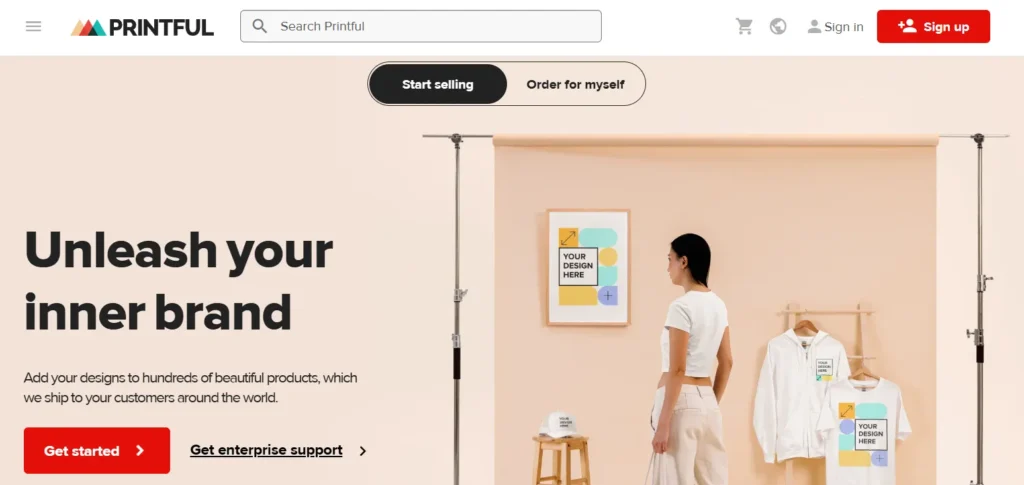
Printful is a general-purpose print on demand fulfilment company covering apparel plus a wide range of home goods, drinkware, stationery and accessories. Production runs through seven company-owned facilities supported by partner sites in Brazil, Japan and Australia.
Volume tells the story here. Printful has produced over 141.9 million items since 2013 and now ships more than a million items a month into 190+ countries.
Core traits worth knowing
Best fit: stores selling mugs alongside tees, US-heavy customer bases, and brands where quick arrival matters more than two dollars of margin.
PODpartner vs Printful: Full Side by Side Comparison
Below sits the side-by-side view before we take each area apart properly. Every figure comes from official supplier documentation rather than third-party guesswork.
| Parameter | PODpartner | Printful |
|---|---|---|
| Membership fee | USD 0, permanently | Free tier or USD 24.99/mo paid tier |
| Order minimum | None | None |
| Catalogue size | Apparel only, focused range | 400+ products, apparel and non-apparel |
| Lightest tee base cost | USD 10.31 (190GSM) | Around USD 13.50 mid-catalogue, undiscounted |
| Heaviest fleece | 440GSM hoodie at USD 29.85 | Mostly 8oz to 9oz fleece |
| Standard print area | 16″ × 21″ | Varies by garment, typically smaller |
| Oversize print option | Jumbo DTG at 24″ × 24″ | Not offered at that dimension |
| Maximum placements | Up to 21 per garment | Extra placements charged individually |
| Extra placement cost | USD 2.99 multi-process fee | USD 2.49 sleeve, up to USD 5.25 back |
| Embroidery digitising | Flat USD 5.99 per frame, reusable DST | USD 2.95 to USD 6.50 per design |
| Custom neck label | $1.99, produced per order | Available, materials must be stocked in advance |
| Hang tag and poly bag | $0.99–1.98, produced per order | Paid branding add-ons |
| Branded poly bag | $1.49–2.48, produced per order | Paid branding add-on |
| Production speed | 98% inside 48 hours | 97%+ inside five business days |
| US tee shipping | USD 4.96 first, USD 2.44 extra | USD 4.69 first, around USD 2.20 extra |
| US hoodie shipping | USD 8.89 first, USD 6.37 extra | USD 8.49 first, around USD 2.50 extra |
| International transit | 10 to 30 business days | Regional warehouses shorten transit |
| Shrinkage guarantee | ZeroShrink policy, 30-day claim window | No equivalent published policy |
| Late delivery compensation | 1% per day, capped at 20% | No published compensation scale |
| Personalisation feature | Free, automated, up to 3 layers | Imports as drafts needing manual entry |
Blank Quality And GSM Fabric Weight
Fabric weight decides if a customer keeps a garment or requests a refund. We ordered matching colourways from both suppliers and put them through repeated wash cycles before writing a word.
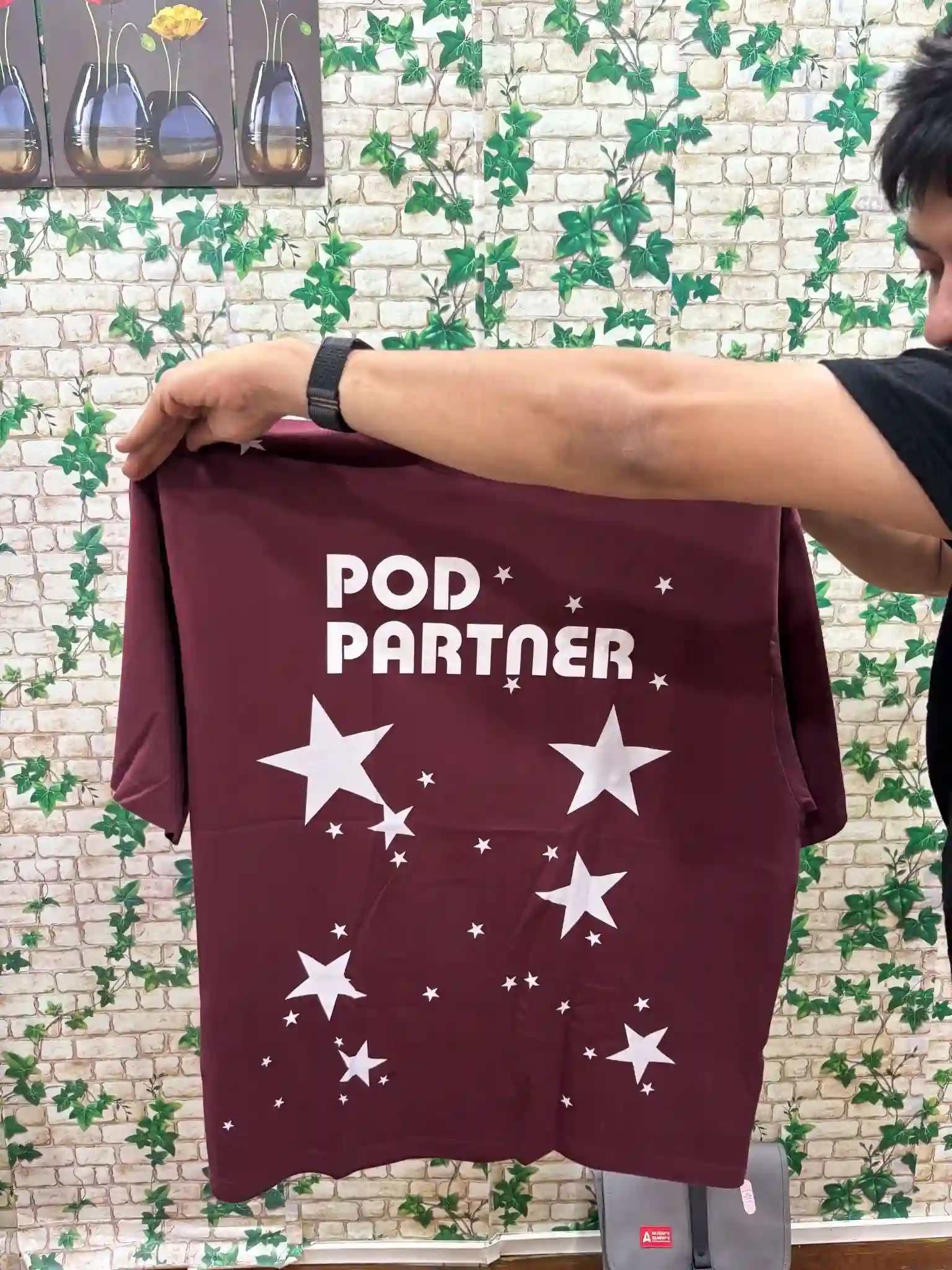
PODpartner carries an unusually heavy catalogue. The entry tee sits at 190GSM, which already beats the thin high-street feel most POD blanks carry. From there the range climbs through a 280GSM boxy cut, a 285GSM snow wash tee, a 370GSM sweatshirt and a 440GSM super heavyweight faded hoodie. Core lines are 100% cotton.
Printful leans on named wholesale brands instead, mostly Bella + Canvas, Gildan and Cotton Heritage. Quality stays consistent and predictable because every facility pulls from the same supply chain, though the ceiling sits lower.
Fleece rarely passes 9oz, and true heavyweight streetwear blanks simply do not appear in the catalogue.
What the wash test showed
One honest qualifier: heavier fabric raises parcel weight, which pushes hoodie postage higher on both platforms. Nobody escapes physics on that one.
Winner: PODpartner. Weight range, cotton quality and finishing all sit a clear step above what wholesale-sourced blanks deliver.
Product Catalogue Depth And Category Range
Catalogue size is where these two stop being directly comparable. One went deep, the other went wide, and both decisions were deliberate.
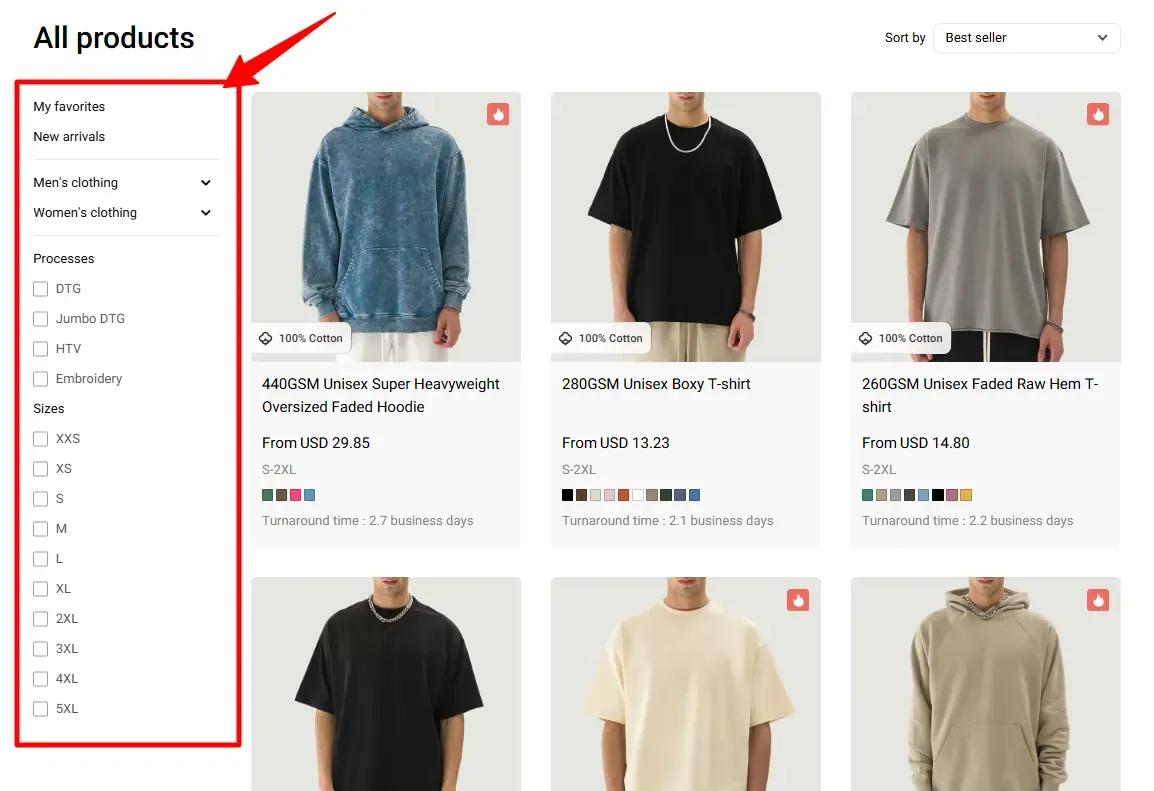
PODpartner covers men's and women's clothing across tees, long sleeves, hoodies, sweatshirts, tank tops, jackets, shorts and trousers. Nothing else. No mugs, no posters, no phone cases, no tote bags, no pet gear.
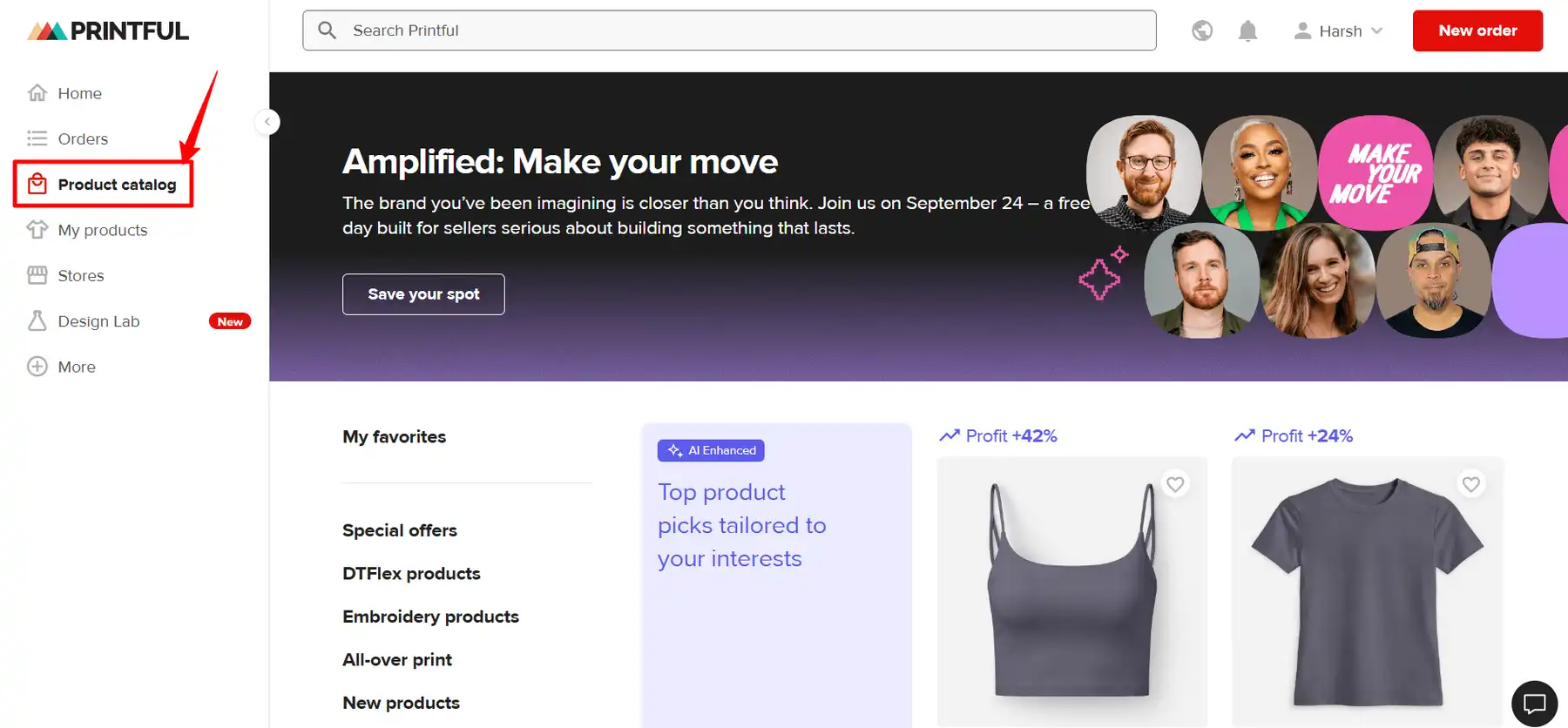
Printful carries over 400 products spanning apparel, home décor, drinkware, wall art, stationery, accessories and pet supplies. A store selling one graphic across a tee, a mug and a canvas print fulfils all three from a single account.
Where catalogue width actually pays off
Printful also adjusted base costs during 2026, lifting Cotton Heritage hoodies, heavyweight tees, sweatshirts and joggers by roughly 0.4% to 1.7%. Accessory postage moved too, with stickers,
postcards and patches going from USD 3.99 to USD 4.29 and phone cases from USD 4.59 to USD 4.99. Popular Bella + Canvas and Gildan lines were left untouched and standard apparel postage stayed flat, so the change landed narrower than the headlines suggested.
Winner: Printful. Nothing PODpartner offers competes with 400+ SKUs across a dozen categories, and pretending otherwise would be dishonest.
Print Hardware And Decoration Method Options
Most comparisons skip the machinery entirely, which is odd, because the printer decides the output. We checked what each supplier actually operates on the floor.
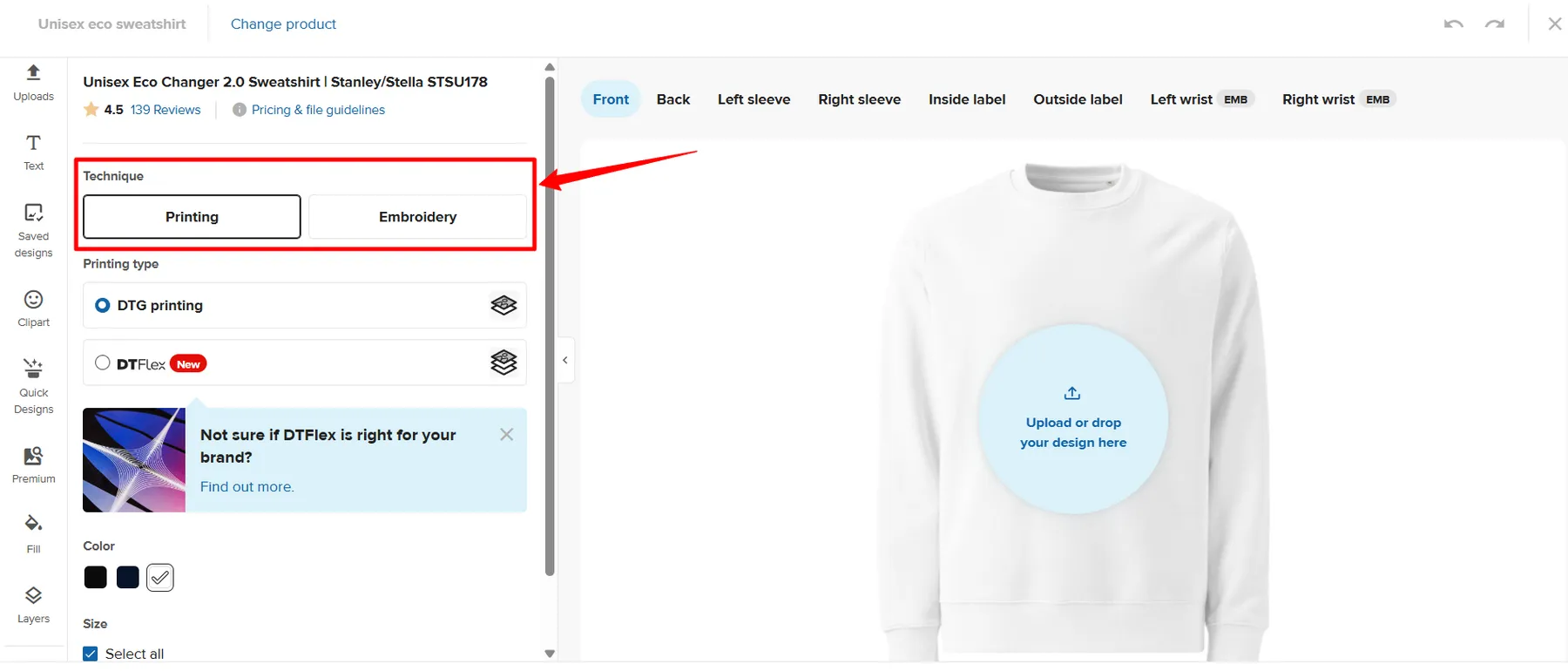
PODpartner prints on Brother GTX Pro-B direct to garment printers using water-based inks, and embroiders on Tajima TMEZ-S1501C machines threaded with COATS Sylko 120D. That combination is professional-grade kit, and results back it up: dense blacks, clean gradients and stitching that survives washing without fraying.
Printful operates a mixed fleet across its facilities, tuned heavily for throughput and repeatability. Output quality is reliably good rather than exceptional, which suits high-volume stores perfectly well.
Decoration methods compared
| Method | PODpartner | Printful |
|---|---|---|
| Standard DTG | 16″ × 21″ maximum | Garment-dependent, generally smaller |
| Oversize DTG | Jumbo DTG at 24″ × 24″ | Not available |
| Embroidery | Tajima machines, up to 15 thread colours | Available, stitch-count pricing on large designs |
| Heat transfer vinyl | 6 premium finishes | Limited to specialty categories |
| Mixed decoration | DTG + HTV + embroidery on one garment | Not combinable in the same manner |
| Placement count | Up to 21 areas | Charged per additional placement |
The vinyl range deserves proper attention because almost nobody offers it on demand. PODpartner runs six finishes covering metallic, glitter, velvet, glow, sparkle and premium matte, cut from PU, TPU and silicone materials rather than PVC, at 0.2mm precision. Pressing happens pneumatically at 320°F under 60 PSI, tested through 20+ wash cycles.
Better still, heat transfer vinyl elements combine with DTG and embroidery on the same garment through a hybrid process that adds only one extra production day and a flat USD 2.99 fee. That single capability lets small brands sell garments resembling a proper apparel label rather than a merch table.
Winner: PODpartner. Larger print area, oversize printing, six vinyl finishes and combinable decoration put genuine distance between the two.
Embroidery Digitising Fees And DST Reuse
Embroidery pricing quietly eats margin, and the digitising model matters more than the headline number. Both suppliers charge once per design, though reuse rules differ sharply.
PODpartner charges a flat USD 5.99 per embroidery frame using an uploaded image. Turnaround runs one to two business days, two rounds of revision come free, and a refund stays available right up until the preview gets approved. Once digitised, the resulting DST embroidery file works across every future product template at zero further cost.
Merchants already holding a DST file upload it directly and skip the fee entirely. Long-term accounts also unlock tiered digitising discounts as order volume grows.
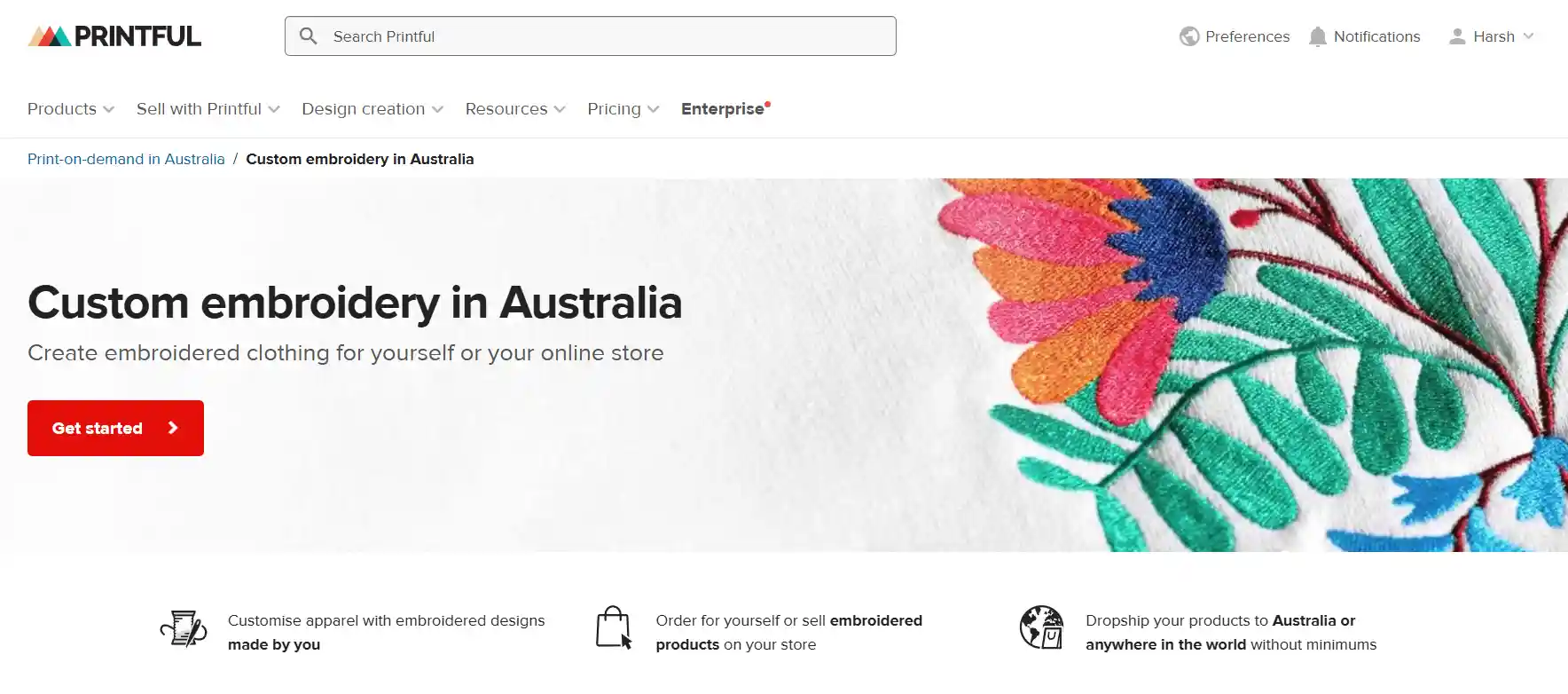
Printful charges USD 2.95 to USD 6.50 per new design, waived on sample orders for paid-tier members and on bulk orders of 25+ embroidered items. Large designs beyond the standard area shift to stitch-count pricing, which climbs without much warning.
How the maths lands on a five-design collection
Printful looks marginally cheaper on the first pass. PODpartner pulls ahead the moment a brand puts the same logo across tees, hoodies and caps, because one paid file covers the whole collection with no repeat charges and a published refund route before approval.
Winner: PODpartner. Flat pricing, portable files, two free revisions and pre-approval refunds make embroidery costs predictable rather than variable.
Fulfilment Speed Facilities And Shipping Rates
Speed is Printful's strongest card and we are not going to soften that. Geography does most of the work.
Printful operates seven in-house facilities plus partner locations, routing every order to whichever site sits nearest the customer. Over 97% of orders ship within five business days, more than half inside three, and the reshipment rate holds at 0.24%. US customers frequently see delivery inside a week.
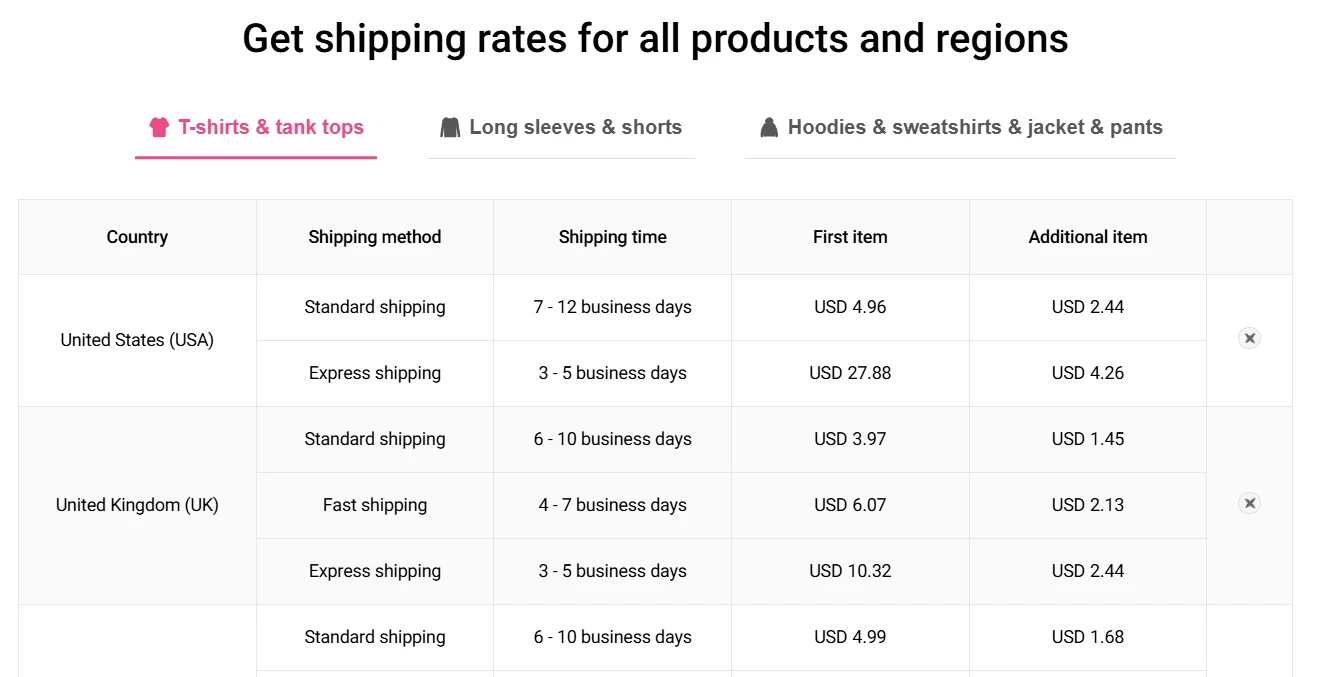
PODpartner produces centrally and fulfils 98% of orders within 48 hours, genuinely faster at the production stage. Transit is where the gap opens: standard shipping runs 10 to 30 business days to most destinations, handled through UPS, FedEx, USPS, CNE and YunExpress.
Shipping cost comparison
| Route | PODpartner | Printful |
|---|---|---|
| US tee, first item | USD 4.96 | USD 4.69 |
| US tee, additional | USD 2.44 | Around USD 2.20 |
| US hoodie, first item | USD 8.89 | USD 8.49 |
| US hoodie, additional | USD 6.37 | Around USD 2.50 |
| Rest of world | Up to USD 10.92 / USD 6.98 | Varies by facility and destination |
| Surcharges | None published | USD 0.50 Minnesota fee over USD 100, peak-season USD 0.40 |
PODpartner calculates multi-item parcels from the highest-cost item first, then charges everything else at the additional rate. A parcel holding one tee and two hoodies costs USD 8.89 + USD 6.37 + USD 2.44 = USD 17.70. Printful stacks additional apparel items more cheaply, which favours bundle-heavy stores.
One point in PODpartner's favour belongs here: shipping rates stay stable with advance notice before any change, and no seasonal surcharges apply. Printful adds a peak-trading shipping increase plus a state-mandated Minnesota fee on larger orders.
Winner: Printful. Local warehouses, cheaper stacked postage and a sub-1% reshipment rate beat central production wherever delivery speed drives conversion.
White Label Branding And Customer Personalisation
Branded packaging separates a real clothing label from a print shop, and pricing models diverge more here than anywhere else in this comparison.
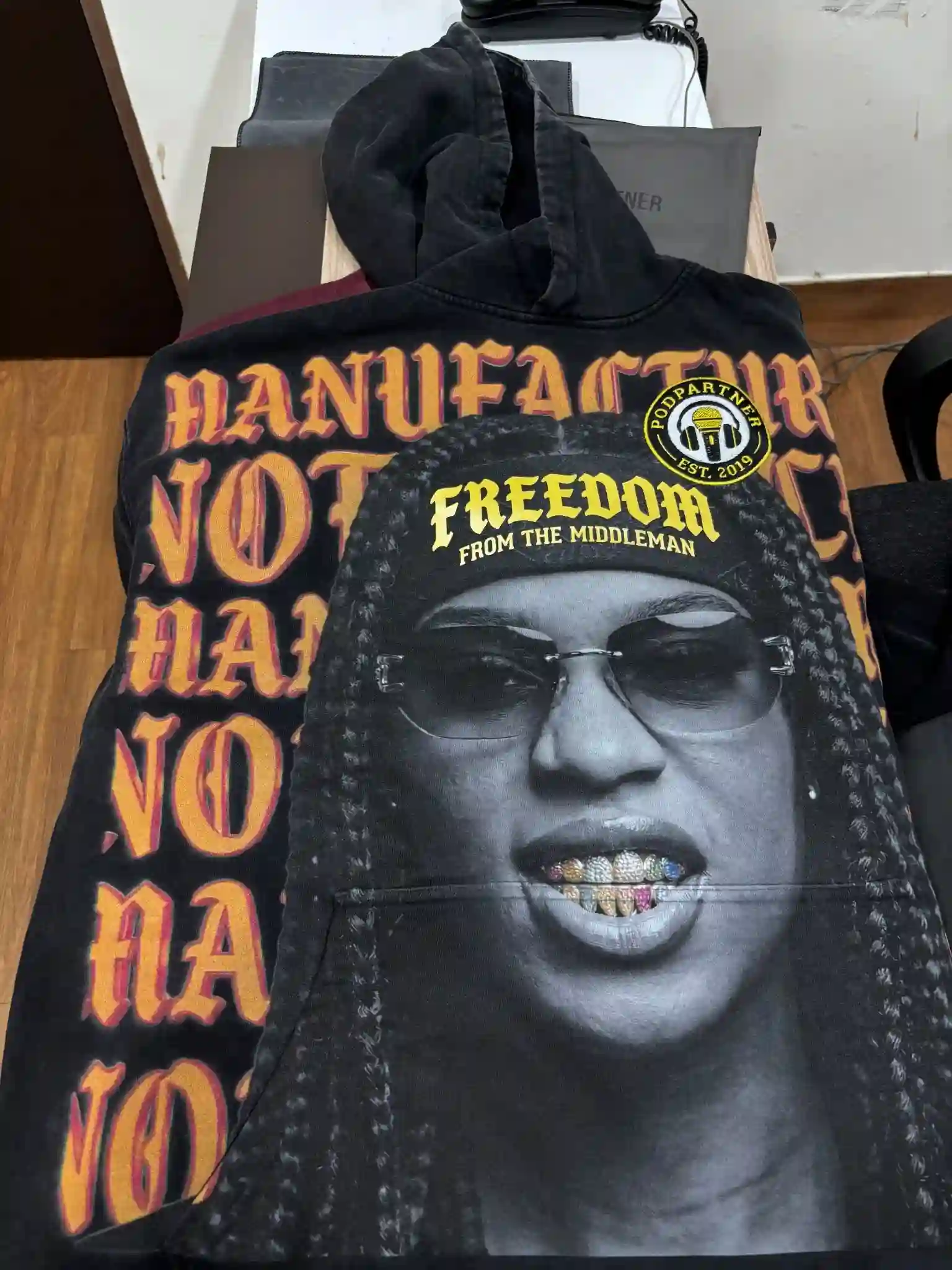
PODpartner produces custom neck labels, hang tags and branded poly bags per order, in sync with the garment. They're paid add-ons, with no minimum order attached.
Every item is printed dynamically when an order drops: no pre-purchasing, no storage fees, no dead stock. A seller running ten designs can put branded packaging behind all ten from unit one, and if eight of them never sell, nothing was spent on packaging for those eight. With a stocked-inventory model that same experiment means buying ten batches of labels upfront.
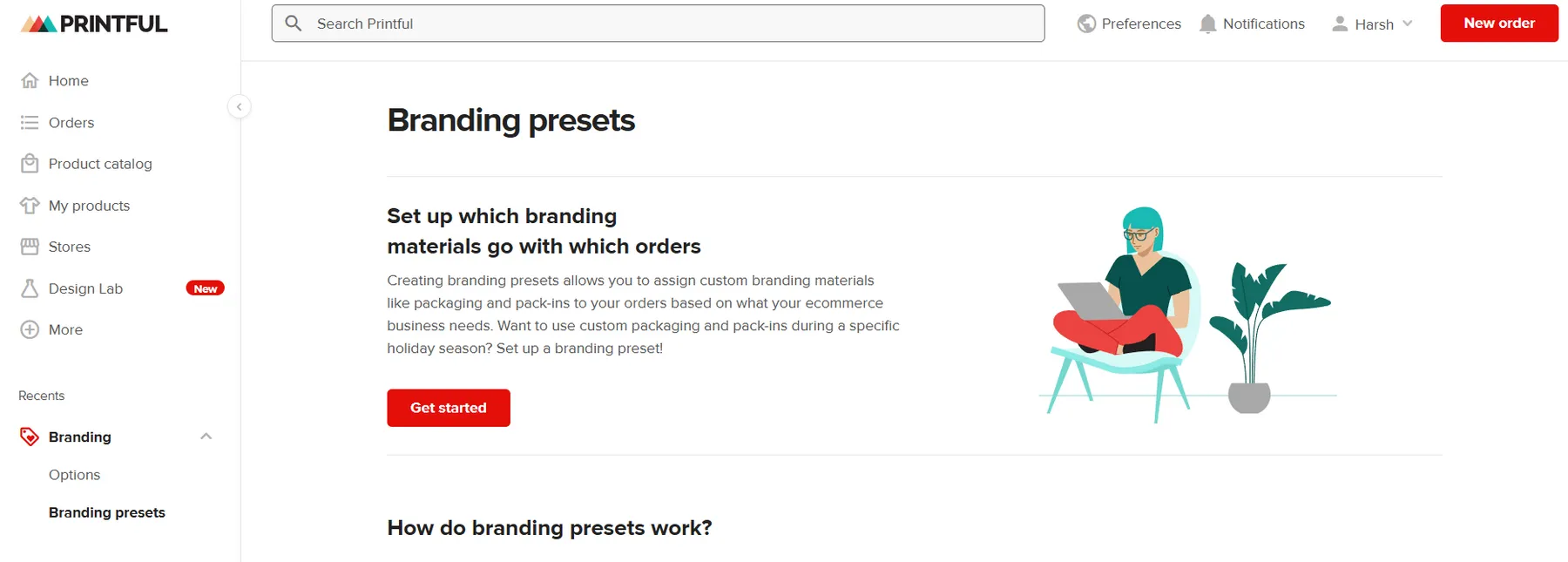
Printful treats branding as paid add-ons. Inside labels cost around USD 0.99 each, discounted 9% on the paid tier. Branded pack-ins require a USD 25 monthly storage minimum plus a USD 0.50 picking fee per item, which only makes sense above roughly 100 orders a month.
Personalisation capability compared
That draft-import behaviour is the part worth flagging loudly. Every personalised Printful order needs somebody to open it, retype the customer's text and push it through. At ten orders a day, that becomes a job someone has to do. PODpartner's version routes straight into production untouched.
Winner: PODpartner. Branding materials produced per order plus properly automated personalisation removes the inventory commitment and a daily manual task.
Base Cost Subscription Fees And Margin
Pricing structure separates these two more than any feature comparison. One charges nothing beyond product cost, the other builds a subscription into the model.
PODpartner pricing
No membership tiers exist at all. Every account gets identical pricing regardless of volume, with published base costs anyone can check before signing up.
| Garment | Weight | Base Cost |
|---|---|---|
| Unisex loose t-shirt | 190GSM | USD 10.31 |
| Unisex boxy t-shirt | 280GSM | USD 13.23 |
| Raw hem faded t-shirt | 260GSM | USD 14.80 |
| Oversized snow wash tee | 285GSM | USD 16.71 |
| Raw hem faded long sleeve | 260GSM | USD 18.19 |
| Heavyweight oversized sweatshirt | 370GSM | USD 15.98 |
| Fleece-lined hoodie | 380GSM | USD 24.96 |
| Super heavyweight faded hoodie | 440GSM | USD 29.85 |
Printful pricing tiers
That paid tier is well designed and the discount genuinely pays for itself somewhere around ten to fifteen apparel orders a month. Below that threshold, the fee simply drains cash from a store still finding its footing. PODpartner sidesteps the calculation completely by giving every account the same rate from order number one.
Winner: PODpartner. Lower entry costs, zero subscription and identical pricing at every volume level protect profit margin per order without any break-even sums.
Store Integrations Apps And Sales Channels
Connection options decide how much manual admin a store owner inherits. This area is Printful's second clear win, and a decisive one for some sellers.
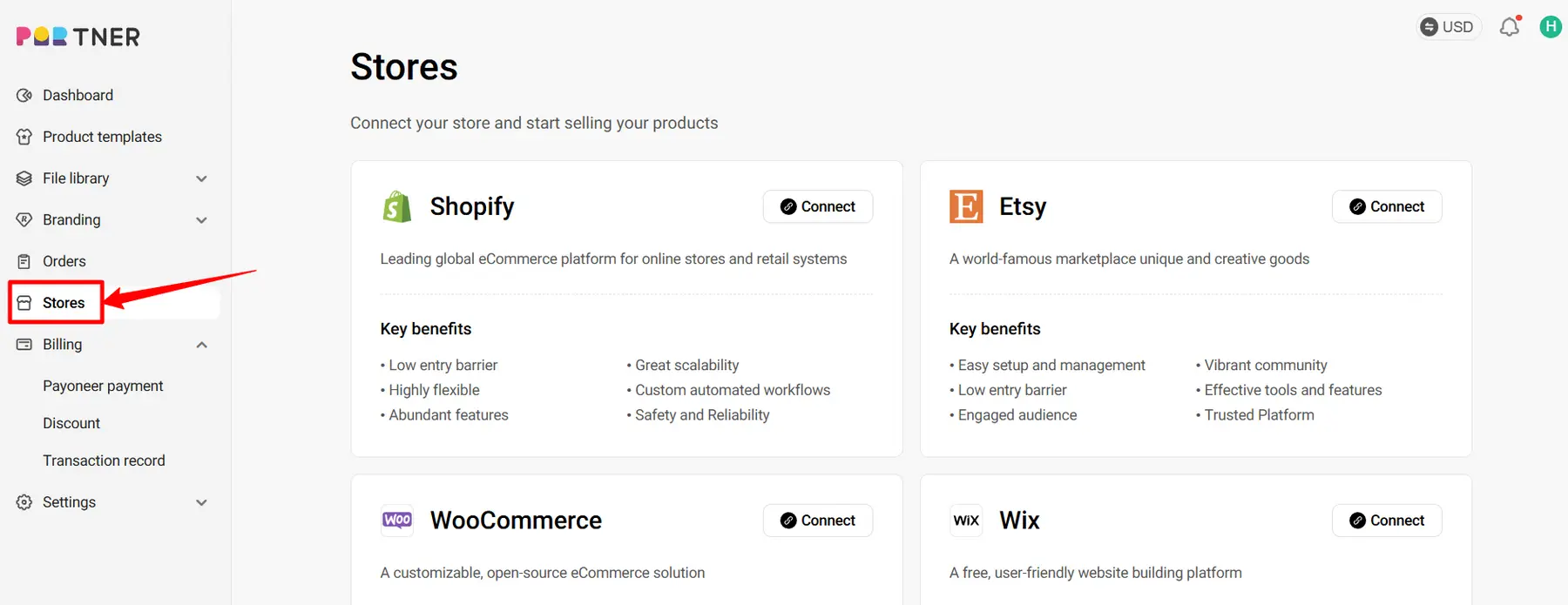
PODpartner connects to Shopify, Etsy, Wix, WooCommerce and Squarespace. Product publishing, order syncing and automatic tracking updates all function properly, and the built-in Design Creator handles mockups without extra software.
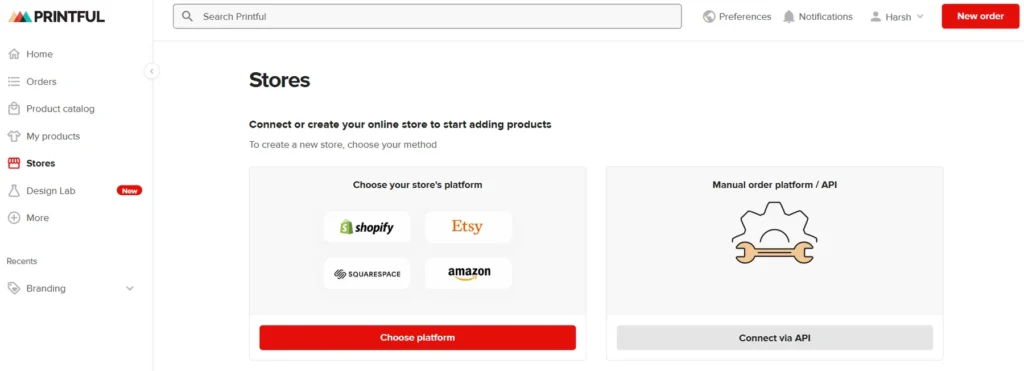
Printful covers those platforms plus Amazon, eBay, TikTok Shop, BigCommerce, Webflow, Ecwid, Big Cartel, Magento, PrestaShop, Storenvy and a documented API with developer support. Marketplace sellers benefit most, since Amazon and eBay print on demand integration is not something PODpartner currently matches.
What each connection set enables
For anyone selling through TikTok Shop or Amazon, this section alone may settle the decision regardless of garment weight.
Winner: Printful. Broader channel coverage and a mature API give multi-channel sellers options PODpartner has yet to build.
Returns Guarantees And Merchant Support Quality
Guarantees reveal how much confidence a supplier holds in its own output. Published policies beat vague promises every single time.
PODpartner publishes two policies most competitors avoid entirely. ZeroShrink covers any garment shrinking more than one inch, claimable within 30 days. The Delay Compensation policy pays 1% of order value per day late, capped at 20%, rising by a further 10% once an order passes 20 days late.
Support runs through email, Messenger, WhatsApp and live chat, with response times that stayed inside a working day across every test query we sent.
Printful takes the opposite approach: prevention over compensation. That 0.24% reshipment rate is the proof point, and misprints get reprinted without argument. Support operates through a documented help centre with ticket and chat access, while higher-volume accounts receive account management.
Policy comparison
| Area | PODpartner | Printful |
|---|---|---|
| Shrinkage cover | ZeroShrink, 30-day window | Not published |
| Late delivery payout | 1% per day, 20% cap | Not published |
| Misprint handling | Reprint or refund | Reprint or refund |
| Defect rate published | Not published | 0.24% reshipment rate |
| Support channels | Email, live chat, WhatsApp, Messenger | Help centre, tickets, chat |
Printful's low failure rate is admirable and verifiable, and we rate it highly. Even so, a written compensation scale gives merchants something concrete to point at when an order goes wrong, and PODpartner is one of very few suppliers willing to put actual numbers on paper.
Winner: PODpartner. Published, quantified guarantees carry more weight than an unwritten promise to sort problems out.
Real Margin Maths On 100 Orders
Feature comparisons matter, though bank balances matter more. We modelled 100 tee orders at a USD 35 retail price with branded neck labels included on both sides.
| Cost line | PODpartner | Printful (free tier) | Printful (paid tier) |
|---|---|---|---|
| Blank base cost | USD 10.31 | USD 13.50 | USD 10.50 |
| US shipping | USD 4.96 | USD 4.69 | USD 4.69 |
| Neck label | USD 0.00 | USD 0.99 | USD 0.90 |
| Landed cost per unit | USD 15.27 | USD 19.18 | USD 16.09 |
| Gross profit on 100 orders | USD 1,973 | USD 1,582 | USD 1,891 |
| Less subscription | USD 0 | USD 0 | USD 24.99 |
| Net position | USD 1,973 | USD 1,582 | USD 1,866 |
PODpartner clears roughly USD 391 more than Printful's free tier and around USD 107 more than the paid tier across identical volume. Scale that to 1,000 orders and the difference funds a meaningful slice of ad spend, which is exactly where most POD brands feel the squeeze.
Two honest qualifiers belong alongside those numbers. Printful's discount widens on premium garments, narrowing the gap on higher-priced blanks. And faster delivery reduces refund requests, carrying a real cash value our table cannot capture.
Who Should Choose Which POD Supplier
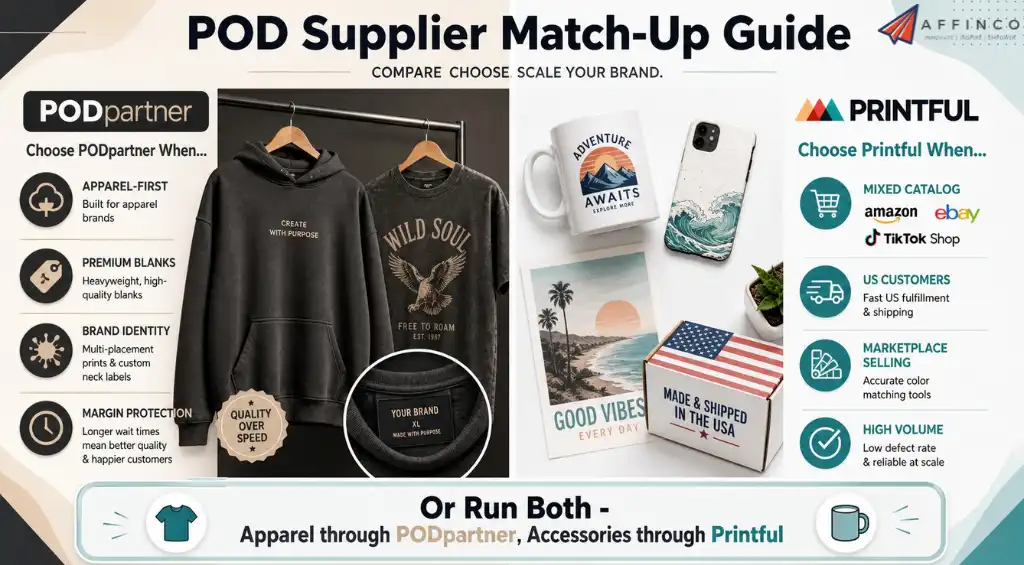
Neither supplier suits every store. The right answer depends entirely on what a brand sells and where customers live.
Choose PODpartner when
Choose Printful when
Plenty of brands simply operate both. Apparel through PODpartner for margin and quality, accessories through Printful for speed and category coverage. Configuring that split takes an afternoon and works well once volume justifies the extra admin.
FAQs Related to Printful and PODpartner
Does PODpartner charge any monthly subscription fee?
No. Every account operates on identical pricing with no membership fee, no order minimum and no tiered plan structure. The only recurring costs are product base cost and shipping on orders that actually sell.
How does Jumbo DTG differ from standard DTG printing?
Standard DTG at PODpartner covers a 16″ × 21″ area, already larger than most rivals allow. Jumbo DTG extends that to 24″ × 24″, letting a graphic wrap across the full front panel of an oversized garment without cropping the artwork.
Can embroidery digitising files transfer between product templates?
At PODpartner, yes. The flat USD 5.99 fee produces a DST file usable across every future template at no additional charge. Merchants holding an existing DST file upload it directly and pay nothing at all.
Which supplier handles personalised customer orders automatically?
PODpartner processes personalised orders through to production untouched, supporting up to three layers of text and images on Shopify with DTG decoration. Printful imports personalised orders as drafts requiring manual text entry before fulfilment begins.
What happens if a PODpartner order arrives late?
The Delay Compensation policy pays 1% of order value per day late, capped at 20%. Orders passing 20 days late attract a further 10% on top. Printful publishes no equivalent compensation scale.
Are Printful base costs cheaper on the paid tier?
Product discounts reach up to 33% on the paid tier, bringing a mid-catalogue tee close to PODpartner territory. The USD 24.99 monthly fee needs covering first, and break-even typically arrives around ten to fifteen apparel orders per month.
Can HTV, DTG and embroidery combine on one garment?
PODpartner supports all three on the same piece through a hybrid process adding one extra production day and a flat USD 2.99 multi-process fee. Printful does not offer combinable decoration in the same manner.
How long does international shipping take from PODpartner?
Standard shipping runs 10 to 30 business days to most destinations, priced up to USD 10.92 for the first item and USD 6.98 for additional items. Carriers include UPS, FedEx, USPS, CNE and YunExpress.
Does Printful apply seasonal or state-level surcharges?
Yes. A USD 0.50 Minnesota retail delivery fee applies to orders above USD 100, and a temporary shipping surcharge of around USD 0.40 has been applied during peak trading periods. PODpartner publishes no equivalent surcharges.
Which supplier suits a heavyweight streetwear brand better?
PODpartner, without much argument. Fabric weights reach 440GSM on hoodies and 370GSM on sweatshirts, alongside snow wash and raw hem finishes that Printful's wholesale-sourced catalogue does not carry.
Is the ZeroShrink guarantee actually claimable in practice?
Yes, within 30 days of delivery, covering any garment shrinking more than one inch. Claims go through merchant support with reshipment or refund as the resolution.
Can both suppliers operate alongside each other in one store?
They can. Many brands route apparel through PODpartner for margin and garment quality while sending mugs, prints and accessories through Printful. Both connect independently to Shopify and WooCommerce without conflict.
Final Ratings And AFFiNCO’s Recommendation
Scores below reflect our own testing across garments, print output, fee structures and support responses. None of it comes from marketing material.
| Category | PODpartner | Printful |
|---|---|---|
| Blank quality and fabric weight | 4.8 | 4.2 |
| Catalogue depth | 3.9 | 4.9 |
| Print and decoration options | 4.9 | 4.1 |
| Embroidery and digitising value | 4.7 | 4.3 |
| Fulfilment speed and shipping | 4.2 | 4.8 |
| Branding and personalisation | 4.8 | 3.9 |
| Pricing and margin retention | 4.9 | 4.2 |
| Integrations and sales channels | 4.0 | 4.8 |
| Guarantees and merchant support | 4.7 | 4.4 |
| Overall | 4.6 / 5 | 4.4 / 5 |
Our recommendation: PODpartner takes the win for apparel-led brands, which describes most merchants we work with at AFFiNCO. Heavier blanks, a bigger print area, free branding materials, published guarantees and roughly USD 4 more retained per order add up to a supplier that supports a real clothing label rather than a merch table.
Printful remains a strong operator and earns its 4.4 honestly. Anyone selling across marketplaces, shipping mostly inside the US, or carrying non-apparel products should treat Printful as the default choice and possibly add PODpartner alongside it for a heavyweight apparel line.


Ali
Ali is a digital marketing expert with 7+ years of experience in SEO-optimized blogging. Skilled in reviewing SaaS tools, social media marketing, and email campaigns, we craft content that ranks well and engages audiences. Known for providing genuine information, Ali is a reliable source for businesses seeking to boost their online presence effectively.