

Native ad spying quietly became one of the priciest line items on a media buyer's card, and most of us simply paid up.
OpenAdLibrary
AdPlexity
Straight answer: OpenAdLibrary takes it on network breadth, funnel evidence and price. AdPlexity takes it on traffic-source range and archive depth.
Both belong to the native ad spy tool category, both catalogue live creatives, and both point at the offer sitting behind each ad.
We paid for each one ourselves, logged every filter, exported real creatives, and scored each area properly below.
Quick AFFiNCO Verdict After Testing Both
| Platform | AFFiNCO score | Best suited to | Biggest strength | Biggest weakness |
|---|---|---|---|---|
| OpenAdLibraryOUR PICK | 4.6 / 5 | Native and search-arbitrage buyers wanting research plus launch in one seat | 50 networks in one library, hop-by-hop funnel tracing, tracker bundled | No mobile pop, in-app or adult coverage |
| AdPlexity | 4.3 / 5 | Multi-format media buyers on mobile pop, push and adult traffic | 120+ carrier visibility, six separate modules, .zip lander downloads | Premium per-module pricing, no trial, 24-hour refund window |
Our pick: OpenAdLibrary, by a real but honest margin. Anyone buying Taboola, Outbrain, MGID or MSN inventory gets wider network reach, a traced funnel on every creative and a bundled click and conversion tracker at roughly a tenth of what one AdPlexity module costs. AdPlexity keeps its crown where nobody has caught it yet, and we mark those sections clearly rather than pretending otherwise.
What Is OpenAdLibrary And Who Suits
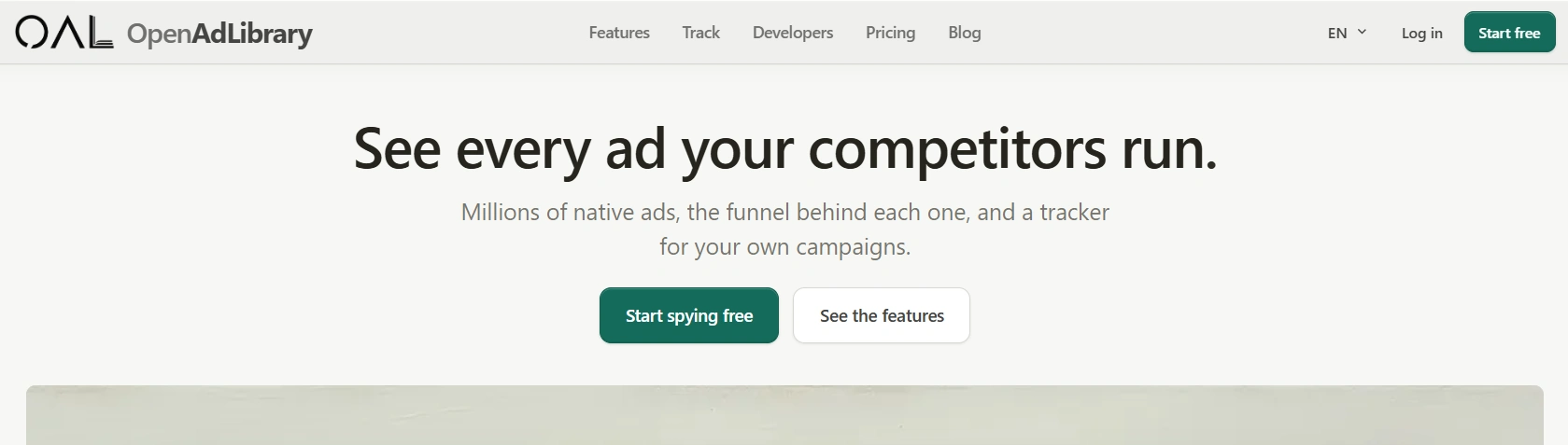
OpenAdLibrary is an open ad-transparency and competitive ad intelligence platform aimed squarely at media buyers and affiliates. Think of it as the missing public ad library for sponsored-content inventory, since Taboola, Outbrain, MGID and friends never shipped one of their own.
Three products sit under a single login: the ad library itself, Creative Studio, and Track. Research, creative build and measurement therefore happen without a second subscription or a CSV export in between.
Core traits worth knowing
Best fit
Native buyers, search-arbitrage operators, lead-gen teams and agencies wanting research, creative production and reporting under one roof. Smaller teams feel the benefit fastest, because the free tier alone answers most first-week questions.
What Is AdPlexity And Who Suits
AdPlexity is a modular ad intelligence suite serving performance marketers since roughly 2014. Rather than one catalogue, six separate products each go deep on a single traffic type: native, desktop display, mobile, push, adult and YouTube. A seventh product covers Meta on its own domain.
Depth over width was a deliberate architectural call. Each module carries its own crawler infrastructure, its own filter set and its own price, which explains both the loyalty and the grumbling among affiliates.

AdPlexity Coupon: Unlock 50% Off Ad Intelligence
Use AdPlexity coupon code AFFMAVEN_S to claim 50% off your first month and spy winning campaigns faster.
Core traits worth knowing
Best fit
Media buyers whose spend spreads across mobile pop, in-app, push or adult inventory, plus agencies needing carrier-level targeting proof for clients. Anyone already sitting on £10,000-plus monthly spend recovers the fee quickly.
OpenAdLibrary vs AdPlexity Feature Comparison
The wide view first, then each area gets taken apart properly.
| Parameter | OpenAdLibrary | AdPlexity |
|---|---|---|
| Product structure | One subscription, three products in one login | Six modules sold separately, plus Meta on a separate domain |
| Native networks covered | 50 across the catalogue | 7 in the native module |
| Geographic reach | 100+ countries and locales | 75–90+ countries depending on module |
| Data refresh | Hourly | Continuous crawling per module |
| Mobile pop and in-app | Not covered | Covered, with 120+ carriers |
| Push notification inventory | Not covered | Dedicated module, 90+ carriers |
| Adult inventory | Not covered | Dedicated module |
| YouTube video ads | Not covered | Dedicated module |
| Meta and Instagram signals | Covered | Separate product |
| Redirect chain visibility | Hop-by-hop on every creative | Available on native, mobile and Meta modules |
| Real advertiser resolution | Click domain traced to the brand, intermediaries filtered out | Advertiser plus affiliate network surfaced from lander data |
| Lander capture | Rendered capture stored, full-text searchable, raw HTML export | Complete .zip download with every dependency |
| Dead creative archive | Retained with pull-down dates | Historical records held per module |
| Creative build and launch | AI Studio plus direct publishing to your ad accounts | Not offered |
| Campaign tracking | Included, 50,000 events monthly free | Not offered |
| Developer access | REST API plus hosted MCP with 40+ agent tools | Limited |
| Swipe boards and sharing | Boards with no-login share links | Boards in the Meta product only |
| Free tier | Yes, no card required | None |
| Trial or refund | Free tier acts as the trial, cancel anytime | No trial, 24-hour refund window, demo call available |
| Human support | Help centre, docs, email | 24/7 chat, onboarding calls, account manager |
| Entry price | $0, then $29.99 monthly | $149 monthly for the cheapest module |
Native Ad Network Coverage And Database
Coverage decides whether a competitor sits inside the catalogue at all. Nothing else matters until then.
We began with a plain test. Twelve advertisers already known to be buying native traffic in three markets, then a hunt for each brand inside both tools.
OpenAdLibrary returned all twelve. Its catalogue spans 50 networks, so Taboola, Microsoft/MSN, Outbrain, MGID, RevContent, Yahoo, Teads and MediaGo all sit behind a single search field.
Taboola and MSN carry the deepest volume by a wide gap, which mirrors where real native budget actually goes in 2026.
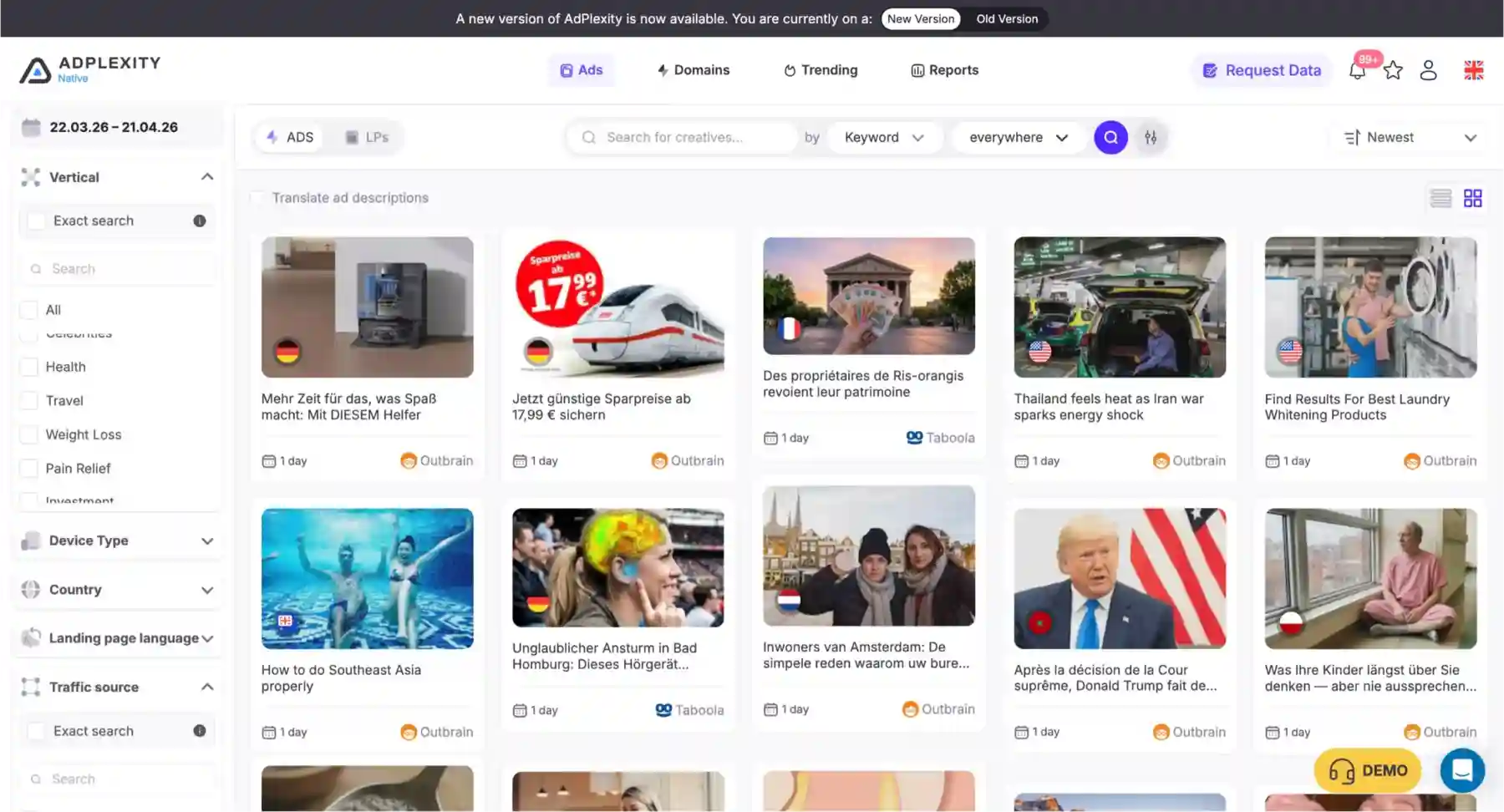
AdPlexity returned nine of the twelve inside its native module. Those three misses were buying on smaller exchanges outside its seven-source remit. Data quality on the nine matches was excellent, with richer publisher-level detail than we got elsewhere, so the gap here is about width rather than accuracy.
What coverage width changed day to day
One honest qualifier belongs here. Raw catalogue size gets quoted loosely across this category, and neither number can be independently audited from outside. Network count and country reach proved far more useful to us as buying signals, and on both measures the wider library came out ahead.
Winner: OpenAdLibrary. Fifty networks in one searchable catalogue against seven, plus 100+ locales, simply finds more competitors before a single pound gets committed.
Funnel Tracing And Real Advertiser Resolution
Creative research stops being guesswork the moment a destination becomes visible.
Native creatives rarely point where a click URL suggests. Most route through a network click tracker, then a self-hosted tracker, then a cloaker, then finally a lander. Anyone modelling a competitor needs that whole chain, not just the thumbnail.
OpenAdLibrary presents the chain as numbered hops with every domain labelled by role: network tracker, advertiser tracker, lander.
Underneath sits the resolved brand, with known ad-tech and supply-side domains filtered out so a tracking vendor never gets mislabelled as the advertiser. Wrong attribution is the classic failure mode in this category, and that filtering genuinely helped.
AdPlexity handles the same job from a different starting point. Its native and mobile modules expose an LP redirect chain view alongside outgoing lander URLs, revealing an offer without any live click.
Where AdPlexity pulled ahead was network naming: seeing that a funnel terminates at a specific affiliate network, plus which tracker sits in the middle, saved us real time on offer sourcing.
| Capability | OpenAdLibrary | AdPlexity |
|---|---|---|
| Numbered hop trail with domain roles | Every creative | Native and mobile modules |
| Brand resolved behind the click domain | Yes, intermediaries stripped | Advertiser shown, some intermediaries retained |
| Affiliate network named | Visible via lander tech and offer domain | Named directly as a filter value |
| Tracker fingerprinting | Lander tech stack panel | Filterable tracking-tool field |
| Lander full-text search | Across the captured corpus | Keyword search inside lander content |
| Cloaked funnel handling | Chain recorded to the block point | Chain recorded to the block point |
Neither tool defeats a properly configured cloaker, and any vendor claiming otherwise deserves suspicion. Both stop where a competitor wants them to stop, which is exactly what a well-built funnel gets designed to do.
Winner: OpenAdLibrary. Tracing arrives on every creative rather than on selected modules, and stripping ad-tech intermediaries out of attribution produced fewer wrong answers across our sample.
Search Filters And Ad Longevity Signals
Filters turn a huge catalogue into ten creatives worth studying. Everything else is scrolling.
Both platforms take filtering seriously, and both reward anyone willing to learn field names properly. Approaches diverge sharply though.
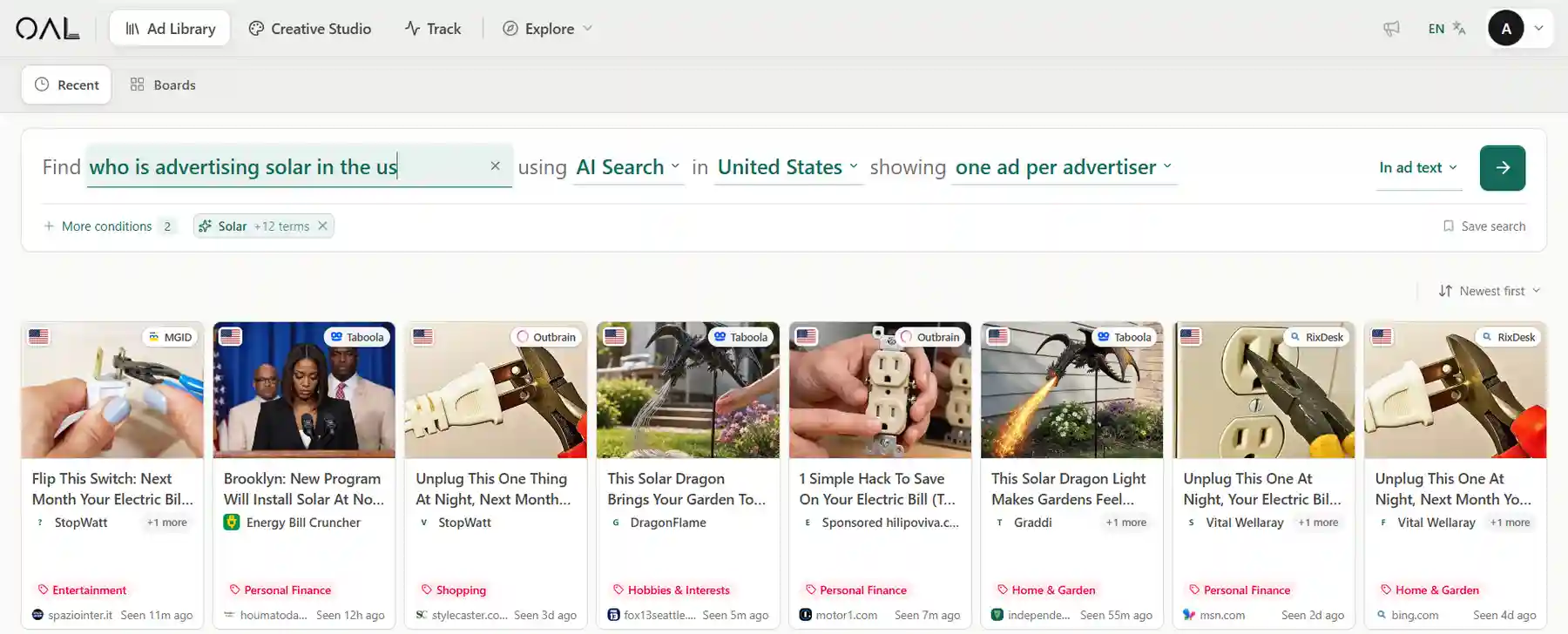
OpenAdLibrary offers over seventy filter values grouped into families: network, publisher, country, language, device, IAB 3.0 category, ad size, CTA text, format, search-arbitrage flag, plus ad longevity filters covering days live, minimum placements and last-seen date. Domain groups let fifty competitor sites get saved as a one-click filter, which we used constantly for weekly market checks.
Plain-English querying is the part we did not expect to like. Typing “solar ads on Taboola in the US live more than 30 days” returned parsed filters displayed back on screen before results loaded, so nothing happened behind a curtain. Older ad spy tools would have needed six clicks for the same question.
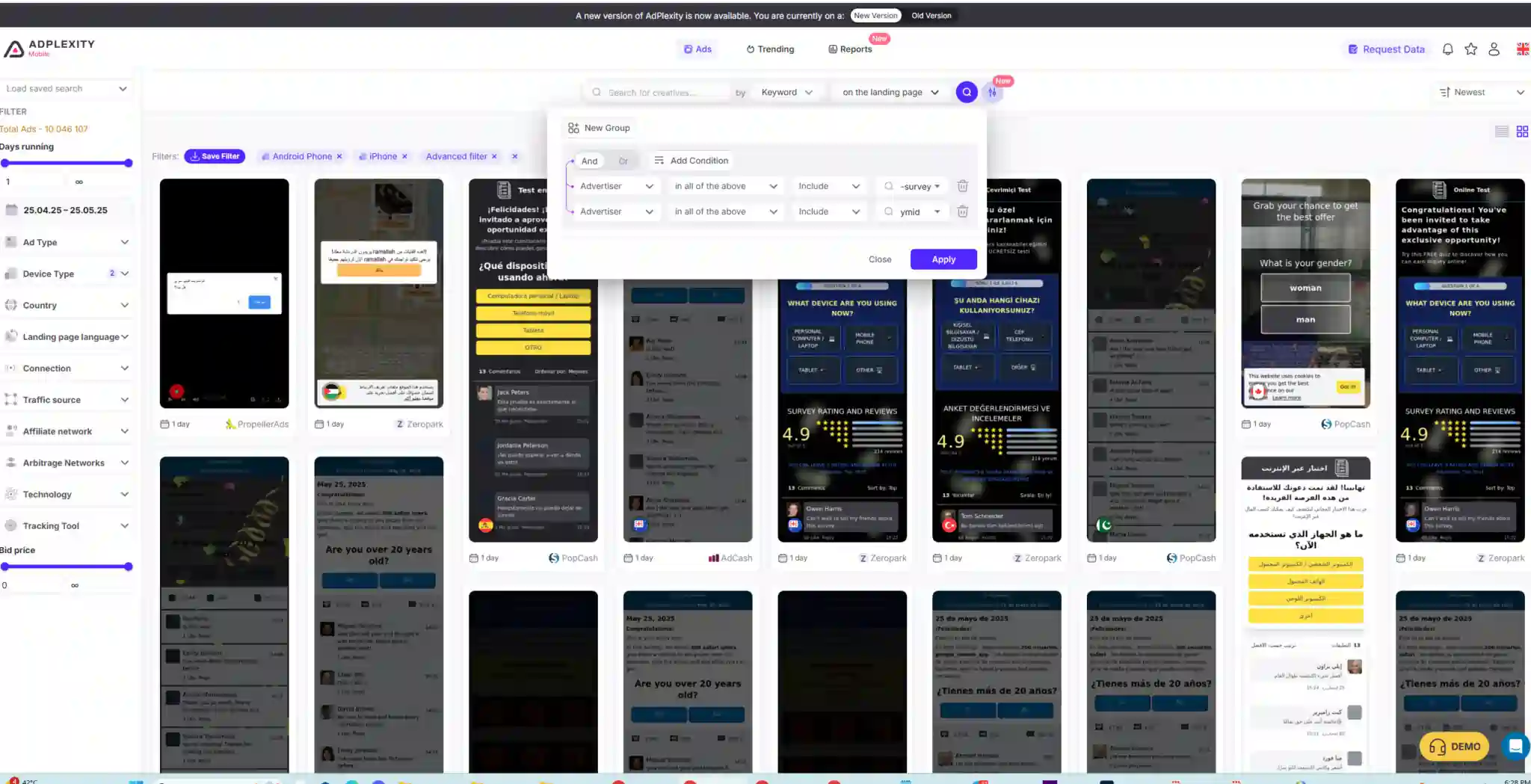
AdPlexity answers with precision instead of speed. Four distinct search modes matter more than the label suggests: keyword, advertiser, publisher and placement.
Placement search in particular reaches a granularity OpenAdLibrary does not currently match, since it shows every creative competing for one specific slot on one specific site. AND/OR logic and an exact-phrase checkbox tighten results further.
Where each filter set earned its keep
A fair note for balance: OpenAdLibrary gates search and filters behind its paid plan, while the free tier stays browse-only with top-three previews on intelligence pages. Filtering is the whole product here, so treat that free tier as a look rather than a working licence.
Winner: OpenAdLibrary. Seventy-plus filter values, saved domain groups and parsed plain-English queries cover more ground than four search modes, even allowing for AdPlexity's superior placement drill-down.
Carrier Data And Traffic Format Breadth
This section belongs to AdPlexity, and softening that would be dishonest.
Carrier-targeted campaigns stay invisible to almost every crawler, because inventory only serves to devices sitting on a specific mobile connection. Capturing it needs dedicated infrastructure, not clever software.
AdPlexity built exactly that. Its mobile module exposes 120+ carriers, its push module 90+, and a connection-type filter separates WiFi traffic from carrier traffic so hidden campaigns surface deliberately. Multi-geo detection then shows when one advertiser pushes an identical campaign across several countries at once.
Format range compounds that advantage. Six modules cover native, desktop display and pop, mobile display and in-app, push, adult and YouTube video. Adult and YouTube in particular have almost no serious competition in the dedicated spy category, which makes AdPlexity the only realistic option for buyers in those verticals.
| Traffic format | OpenAdLibrary | AdPlexity |
|---|---|---|
| Native and sponsored content | 50 networks | 7 sources |
| Display and banner | Included in the catalogue | 15 exchanges per module |
| Desktop pop | No | 4 networks |
| Mobile pop | No | 5 networks |
| Android in-app | No | 5 networks |
| Push notification | No | 10+ networks |
| Adult inventory | No | Dedicated module |
| YouTube video | No | Dedicated module |
| Meta and Instagram | Signals inside brand profiles | Separate product |
| Carrier-level visibility | No | 120+ carriers |
Our own conclusion was blunt. A buyer whose media mix includes pop, in-app or push has no substitute here, and no amount of native breadth compensates. OpenAdLibrary made a deliberate choice to go deep on sponsored content instead, and that choice carries a cost.
Winner: AdPlexity. Carrier-level capture and six traffic formats put genuine distance between the two, and nothing inside a native-only catalogue answers it.
Landing Page Capture And Download Tools
Creative research is only half the job. Funnel structure is where conversion actually gets decided.
Both platforms capture landers, and both do it without clicking a live ad. Output format differs enough to change how each gets used.
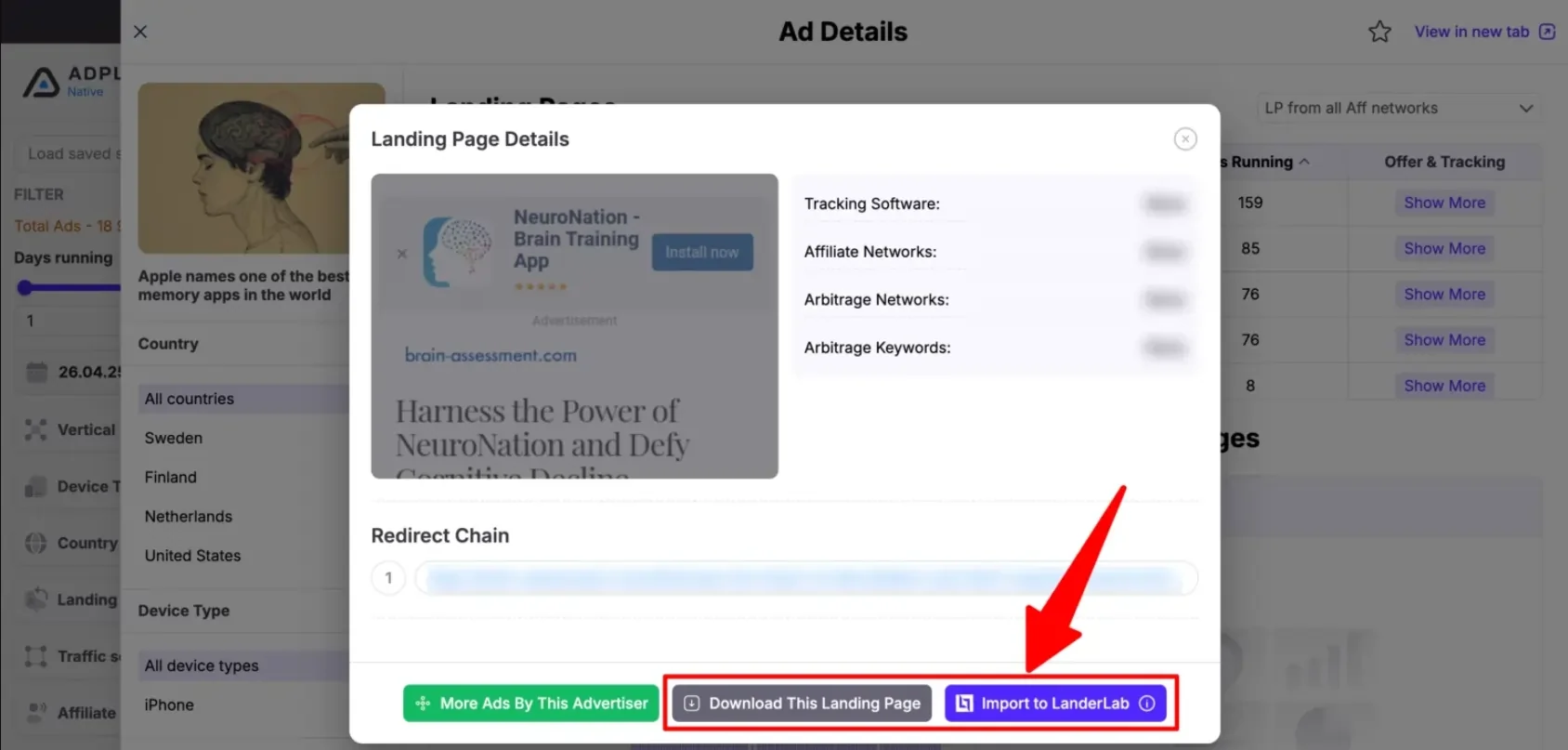
AdPlexity delivers a working .zip: HTML, CSS, JavaScript, every image and every script, opened locally with no live connection.
For anyone studying page structure, form logic, social-proof placement or a video sales letter sequence, having the whole thing offline is markedly better than a screenshot. We rebuilt three quiz funnels from downloaded packages during testing, and each took under an hour.
OpenAdLibrary takes a research-first route instead. Captures get stored, rendered and made full-text searchable across the whole corpus, with the page builder identified per lander: Unbounce, WordPress, Shopify and so on. Raw HTML export is available on the paid plan.
Searching lander text rather than ad text turned out to be the sharper instrument for finding offers hidden behind vague curiosity hooks.
Two different jobs, two different answers
Brand Protection deserves a mention, since almost nobody offers it. Register your own landers and the catalogue gets scanned for close copies, with a similarity score attached. Two of our client funnels came back with matches above 90%, which made uncomfortable reading and proved immediately useful.
Winner: AdPlexity. A complete, locally-runnable lander package with every dependency remains the most practical asset in this comparison for anyone rebuilding funnels at speed.
Creative Production And Direct Network Publishing
Finding a winner is step one. Shipping something better is where profit actually appears.
Here the two products stop being comparable, because only one attempts the job at all.
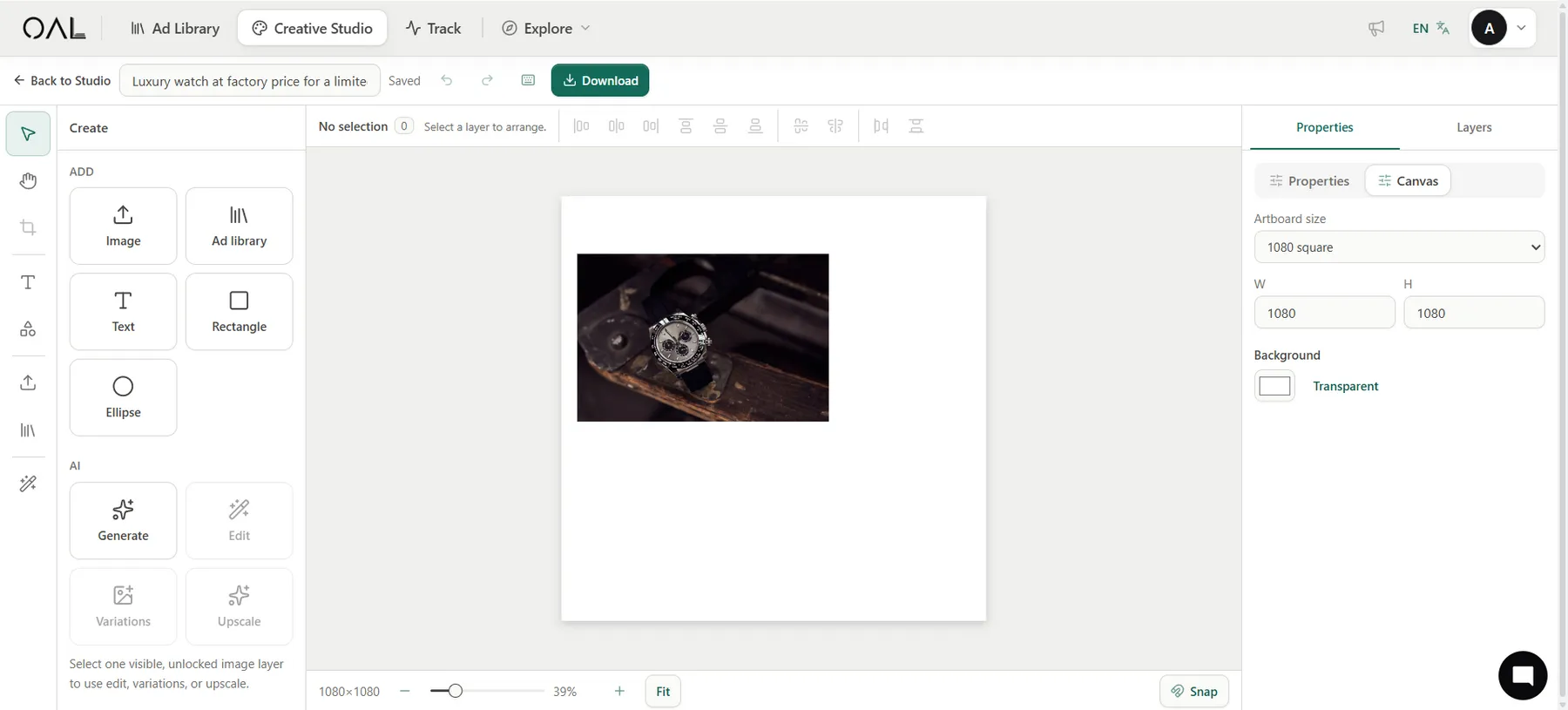
Creative Studio inside OpenAdLibrary opens any catalogue creative as a starting point. Plain-English prompts drive image regeneration, upscaling and edits, headline variants get produced in batches, and previews render at each network's real slot dimensions rather than a generic box.
That last detail matters more than it sounds, since a 4:3 Taboola desktop slot crops very differently from a mobile unit.
Publishing then closes the loop. Connect a network account, prepare up to ten campaigns, and push finished creatives live without touching another dashboard.
Credentials are AES-256-GCM encrypted and never logged. Manual editing and downloads work on the free tier, while AI generation and direct publishing sit behind the paid plan.
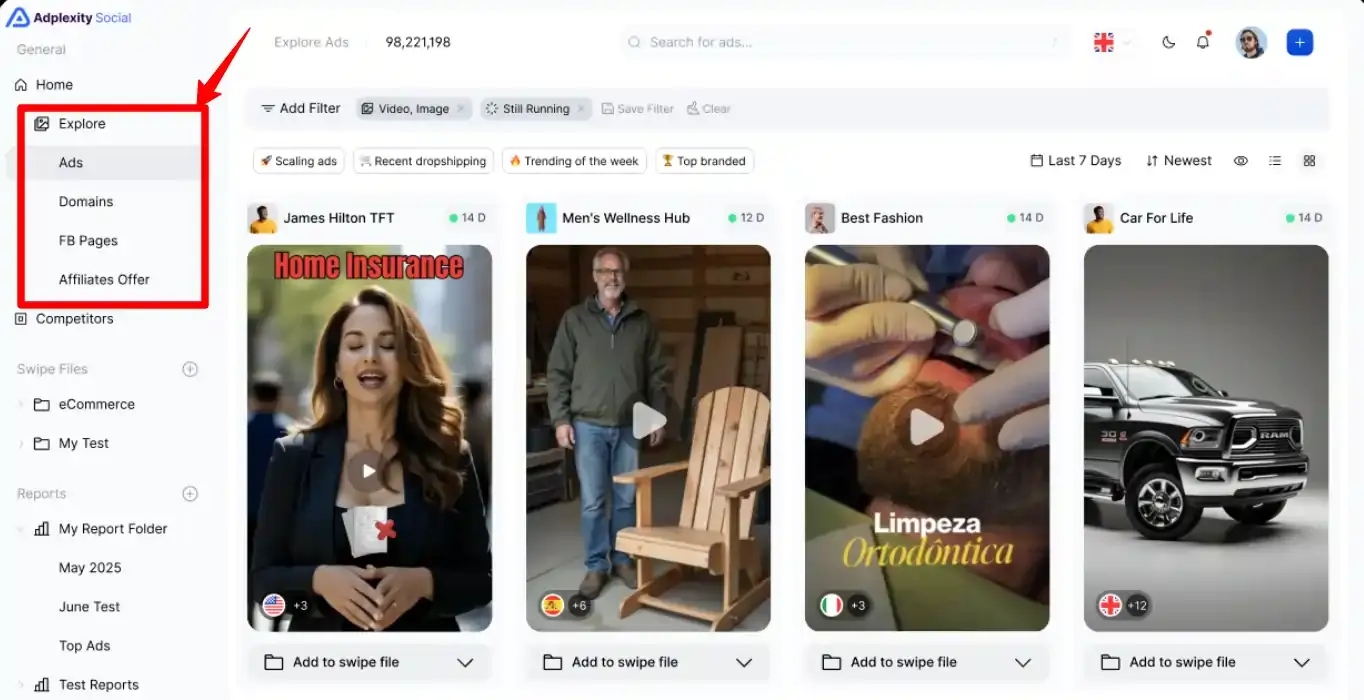
AdPlexity offers none of this, and has never claimed to. Its remit stops at intelligence, which is a defensible position: a research tool staying a research tool avoids feature bloat and keeps crawler quality as the priority. Buyers pairing AdPlexity with Canva, Photoshop or an in-house designer will not feel the absence much.
What a combined process saved us
Copy DNA earns its own line. Hooks, headlines and CTAs get ranked from thousands of live creatives in any niche, so patterns emerge as counts rather than as hunches. Writing against ranked patterns beats writing against instinct, particularly in crowded verticals like insurance and solar.
Winner: OpenAdLibrary. AI creative production plus direct network publishing exists on one side of this comparison and not the other, which makes the result straightforward.
Campaign Tracking And Conversion Data Together
Research without measurement is entertainment. Both halves need to live somewhere.
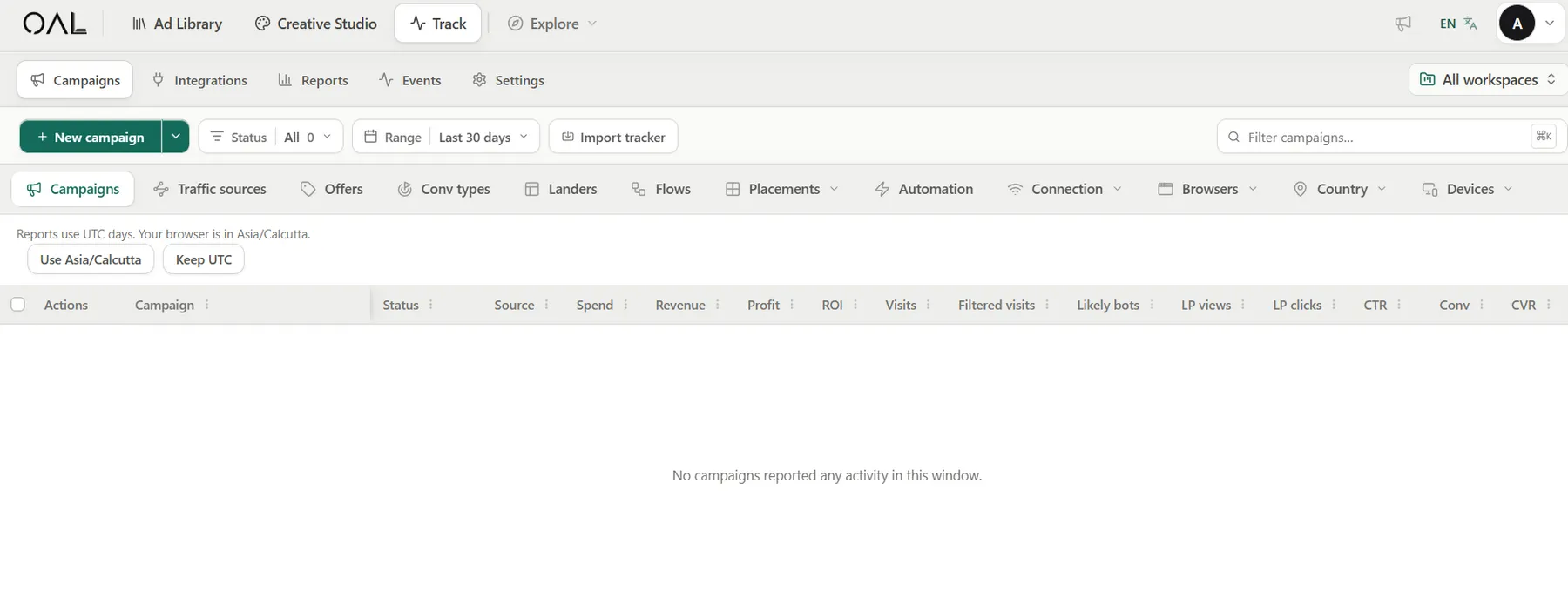
Track is the piece we expected to be a token add-on, and it is not. Campaigns, traffic sources, offers, conversion types, landers, flows, placements and automation rules all sit in a working tracker, with visits, lander views, clicks and conversions reported per campaign alongside spend, revenue, profit, ROI and CVR.
S2S postbacks, pixels and conversion corrections are supported, tracking runs on a domain you own, and an import route pulls an existing setup across from another tracker. Fifty thousand events per calendar month come free on both tiers, with an optional add-on removing that ceiling and supplying a shared tracking domain instead.
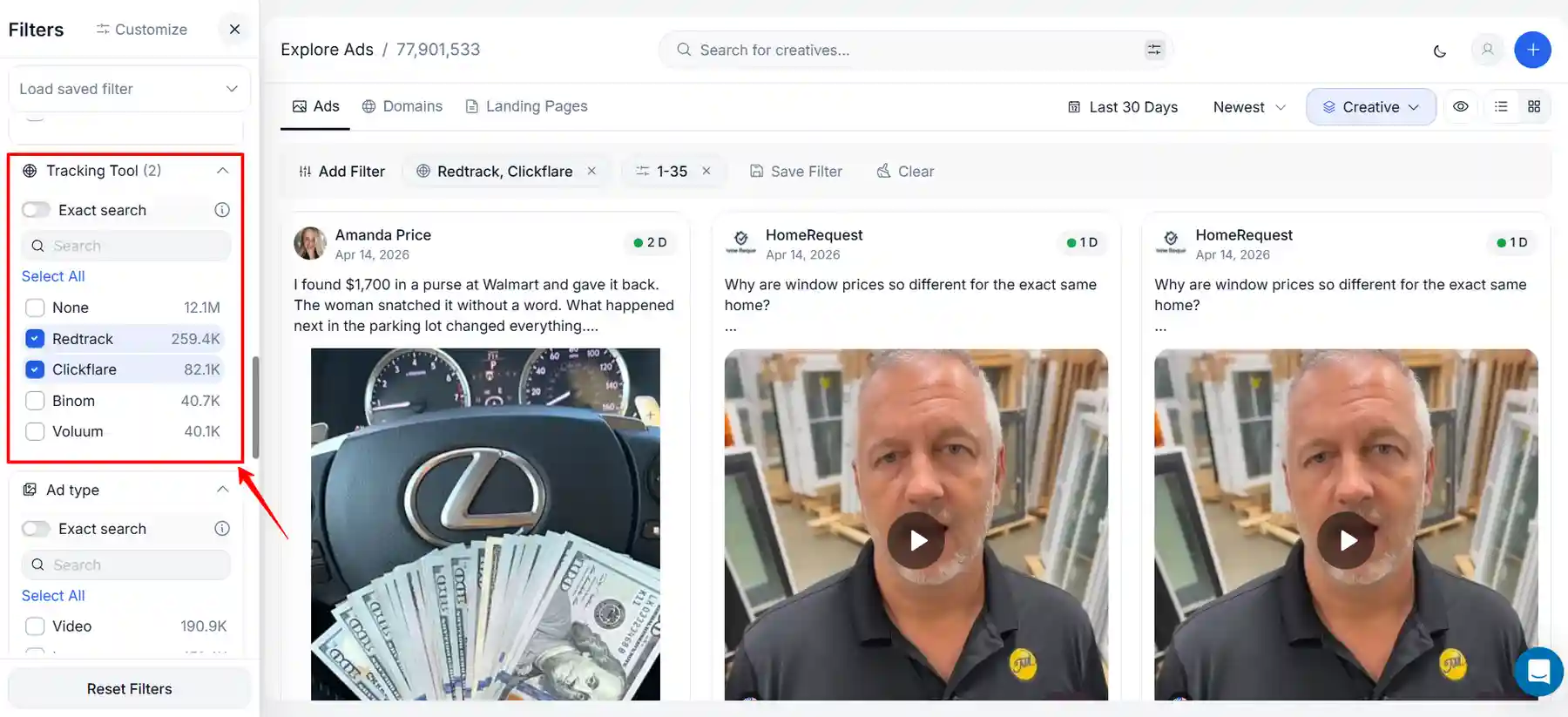
Placement-level reporting is where research and measurement met usefully during our test. Blocking three weak Taboola site IDs on a keto campaign moved it from negative to break-even inside four days, and both the intelligence and the block decision happened in the same tab.
| Measurement need | OpenAdLibrary | AdPlexity |
|---|---|---|
| Click and conversion tracking | Included | Third-party tracker required |
| Free monthly event allowance | 50,000 events | Not applicable |
| S2S postbacks and pixels | Supported | Not applicable |
| Placement-level profit reporting | Built in | Not applicable |
| Cross-network campaign cockpit | Spend, CPA, CTR and status side by side | Not applicable |
| Automated IF/THEN rules | Visual canvas plus AI rule assistant | Not applicable |
| Own tracking domain | Supported on both tiers | Not applicable |
A caveat in fairness to AdPlexity: dedicated trackers like Voluum, Binom and RedTrack remain more mature on multi-user permissions, deep integrations and reporting depth.
Anyone already paying for one loses little by keeping it. Anyone not yet paying for one gets a functional tracker at no extra cost, which changes the maths for newer buyers considerably.
Winner: OpenAdLibrary. Bundled tracking with placement-level profit data and automation rules removes a separate £60–£120 monthly line that AdPlexity users still have to fund.
API Access And AI Agent Integration
2026 changed this section entirely. Programmatic access is no longer a developer nicety.
Ad research increasingly happens through agents rather than through browsing, and tooling has split sharply along that line.
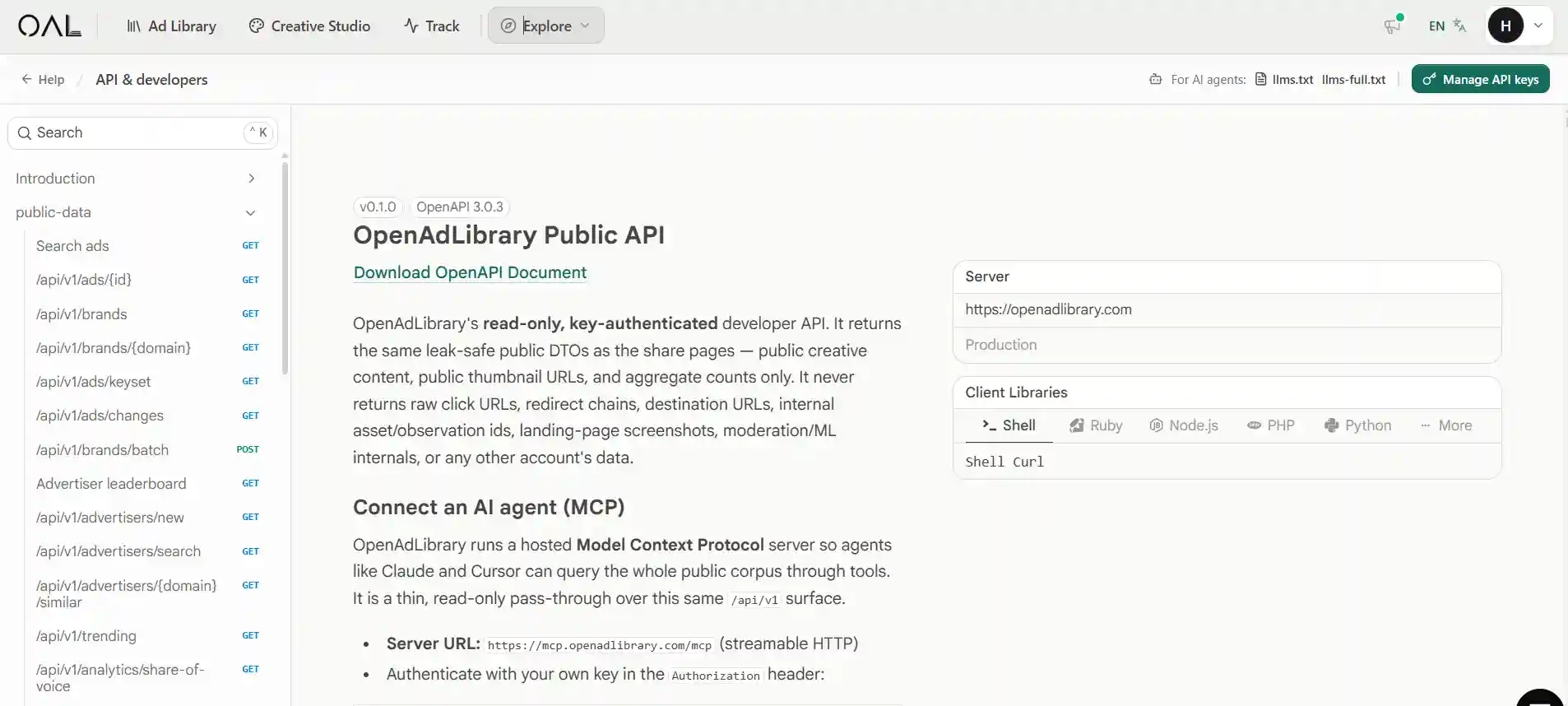
OpenAdLibrary ships a documented REST API at /api/v1 with per-user keys, plus a hosted MCP server carrying more than forty tools such as search_ads, get_creative and get_landing_page. Point Claude or ChatGPT at it and questions like “which solar advertisers scaled on Taboola this week” get answered against live catalogue data, with per-key isolation and only leak-safe public fields exposed.
We wired a weekly competitor brief through that MCP server during testing. Roughly ninety minutes of manual checking every Monday collapsed into a scheduled prompt, and output quality was good enough to hand to a client without editing.
AdPlexity keeps programmatic access limited. For a team living inside a browser interface this changes nothing, and its interface is perfectly capable. For agencies building automated monitoring or feeding intelligence into internal reporting, that absence is a real constraint.
Practical uses we actually built
Winner: OpenAdLibrary. A public REST API plus a hosted MCP server with forty-plus agent tools is a category of capability AdPlexity has not shipped.
Data Freshness And Ad Capture Methodology
OpenAdLibrary refreshes hourly and documents its collection method in full, which is unusual enough to be worth reading.
Public surfaces get loaded through geo-matched infrastructure and rendered in a real browser, served units get detected, creatives get downloaded, re-encoded and deduplicated, and placement location plus timestamp get recorded.
A no-live-click policy is the part that impressed us most. Redirect responses get followed directly rather than by clicking live third-party ads, so no paid click gets generated on a competitor's budget.
Clicking stays restricted to owned or test inventory, and captures are logged. Collection source is labelled per observation too: crawl, official API, or panel and extension contribution.
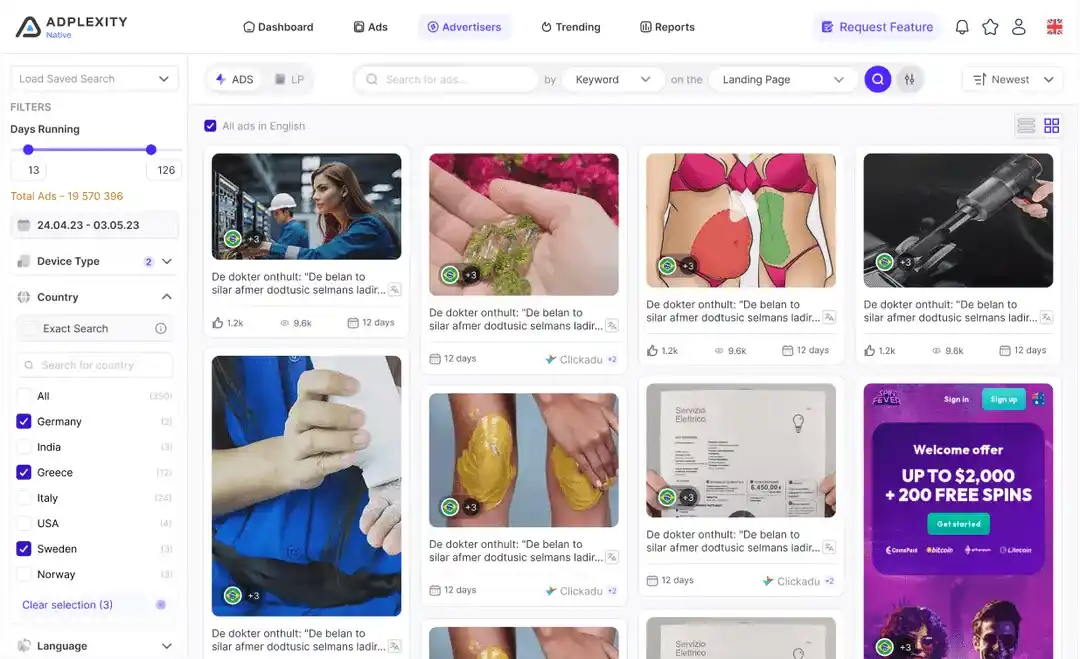
AdPlexity crawls continuously per module, and freshness on mainstream native and mobile inventory was good throughout our test.
Method documentation is thinner, making independent judgement harder, though nothing in our sampling suggested anything unusual. Carrier capture in particular clearly requires infrastructure most competitors have never attempted.
Freshness checks we ran through
Winner: OpenAdLibrary. Hourly refresh, a published capture policy and a documented no-live-click rule give buyers something concrete to audit rather than a promise.
Pricing Plans, Trials And Refund Terms
Cost structure separates these two more than any feature does. Figures below are list prices on monthly billing.
OpenAdLibrary plan pricing
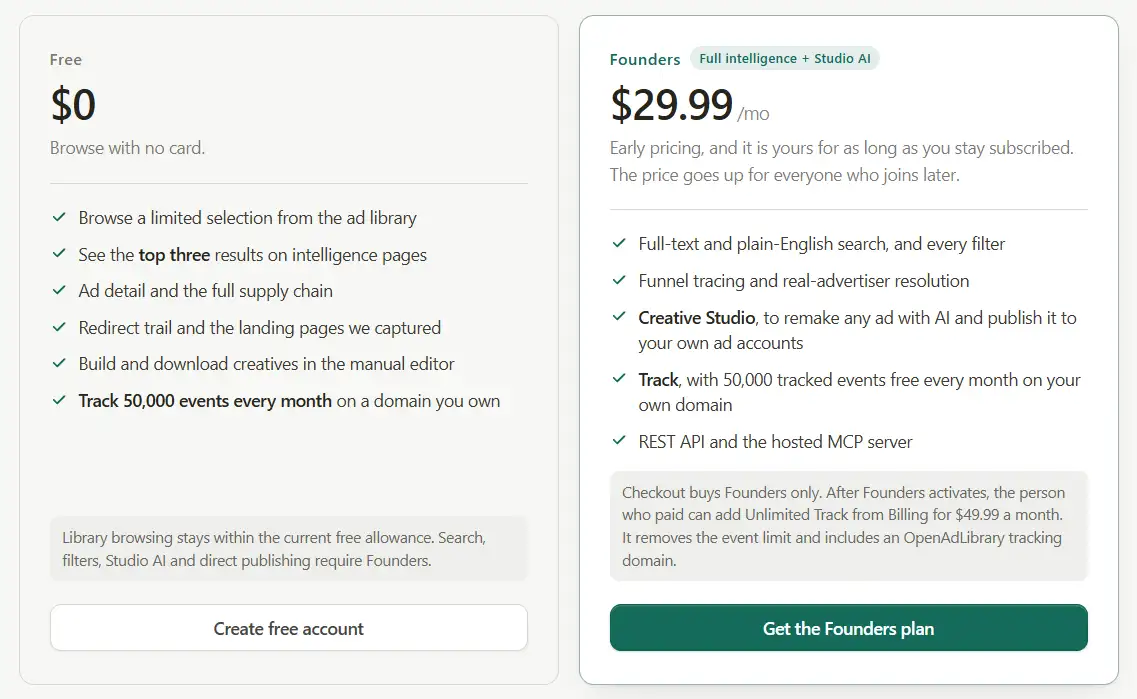
AdPlexity plan pricing
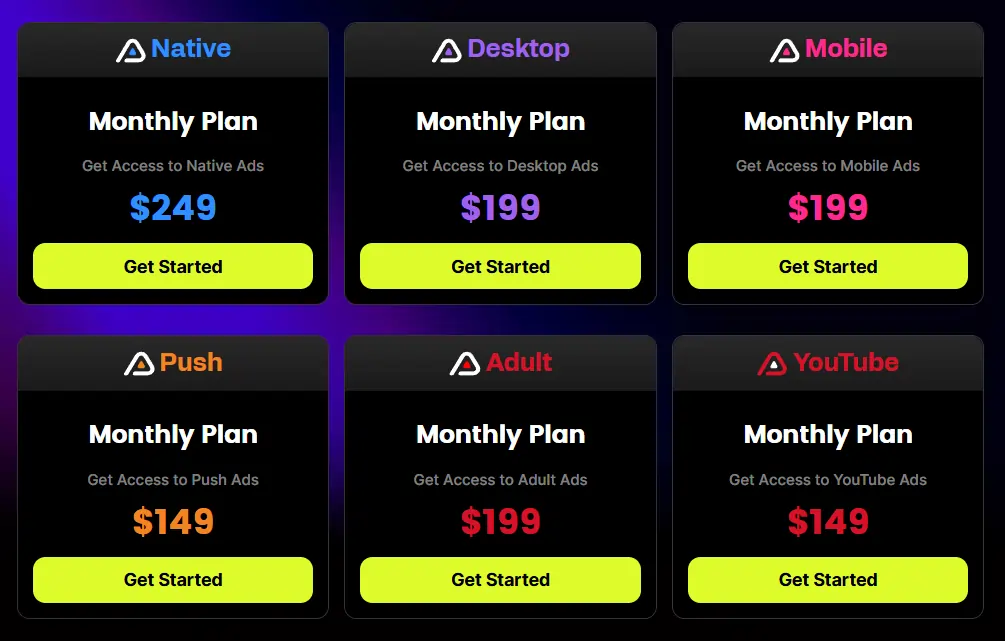
Two structural differences matter more than the headline gap. Modules carry no bundle discount, so covering three traffic types means three full subscriptions. And a 24-hour refund window sits among the tightest in this category, which puts unusual weight on that demo call.
Winner: OpenAdLibrary. A working free tier, one $29.99 subscription covering research plus creative plus tracking, and no lock-in beats per-module premium pricing with no trial and a one-day refund window.
Real Cost Maths For Media Buyers
Feature tables are useful. Bank balances are more useful. Four realistic setups, priced honestly.
| Setup | OpenAdLibrary | AdPlexity | Monthly difference |
|---|---|---|---|
| Native research only | $29.99 | $249 | $219 to OpenAdLibrary |
| Native research plus tracking | $29.99 | $249 + ~$99 tracker = $348 | $318 to OpenAdLibrary |
| Native plus mobile pop plus push | Native only, other formats unavailable | $597 | Not comparable, AdPlexity is the only option |
| Native, tracking and Meta signals | $29.99 | $249 + $99 + $99 = $447 | $417 to OpenAdLibrary |
Across a year, that native-plus-tracking setup differs by roughly $3,816. For a solo affiliate the figure represents a testing budget. For an agency carrying five seats it becomes a hire.
Two honest qualifiers sit alongside those sums. Annual billing narrows AdPlexity's gap by about a fifth, and publicly circulating lifetime coupon codes narrow it further still. And one carrier-level find on mobile pop can repay $199 within days, which no native-only catalogue replicates at any price.
Winner: OpenAdLibrary. On native buying, the cost gap is large enough to fund actual media rather than tooling, and a bundled tracker removes a second invoice entirely.
Interface Speed, Onboarding And Human Support
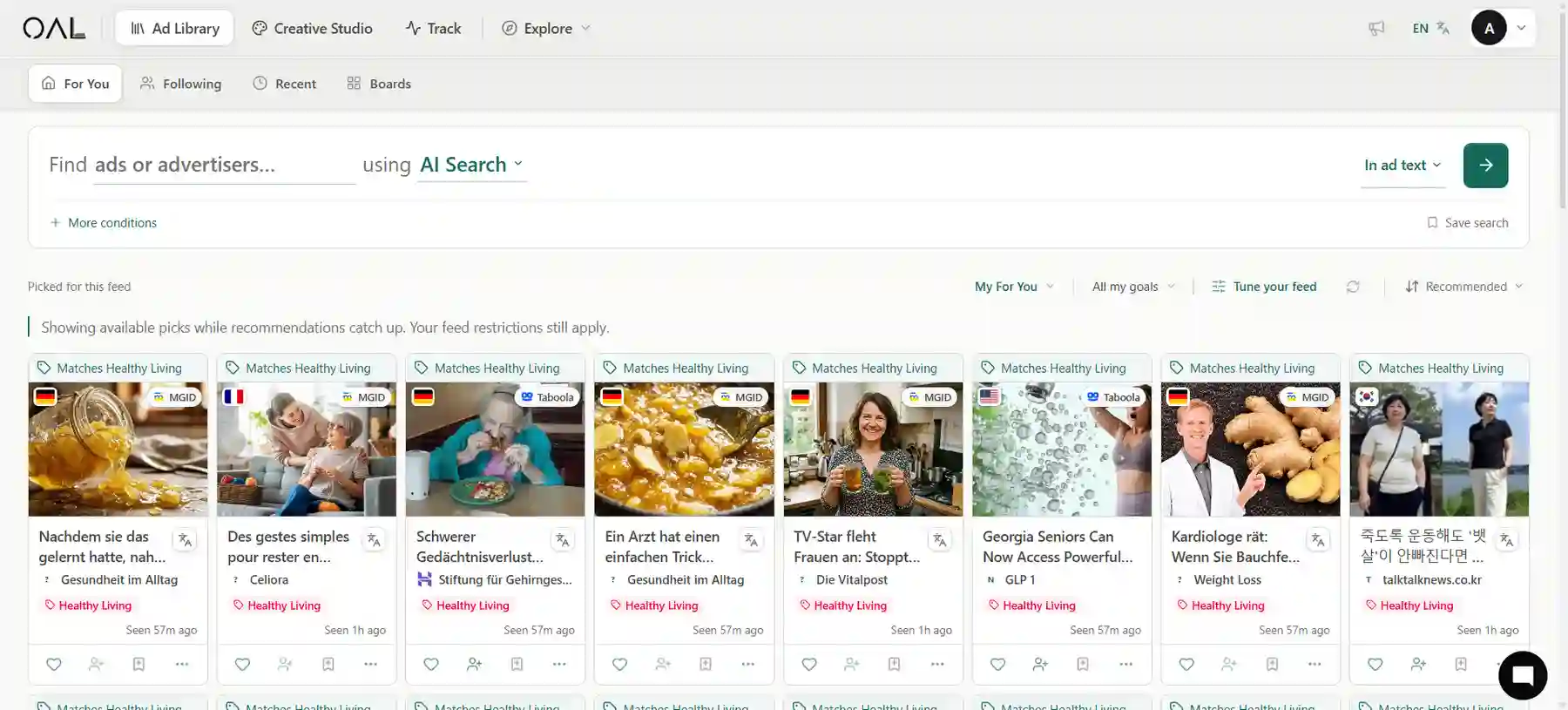
OpenAdLibrary feels modern and quick. Filters apply without page reloads, a ⌘K command palette reaches most places directly, and three products share one navigation bar so switching between research, creative and tracking never breaks concentration.
Plain-English querying flattens the learning curve considerably for anyone new to native buying.
Support is documentation-led: a help centre, API and MCP docs, a published capture policy, an ad-tech glossary and email contact. Perfectly adequate for self-sufficient buyers, and noticeably thinner for anyone wanting a person on a call.
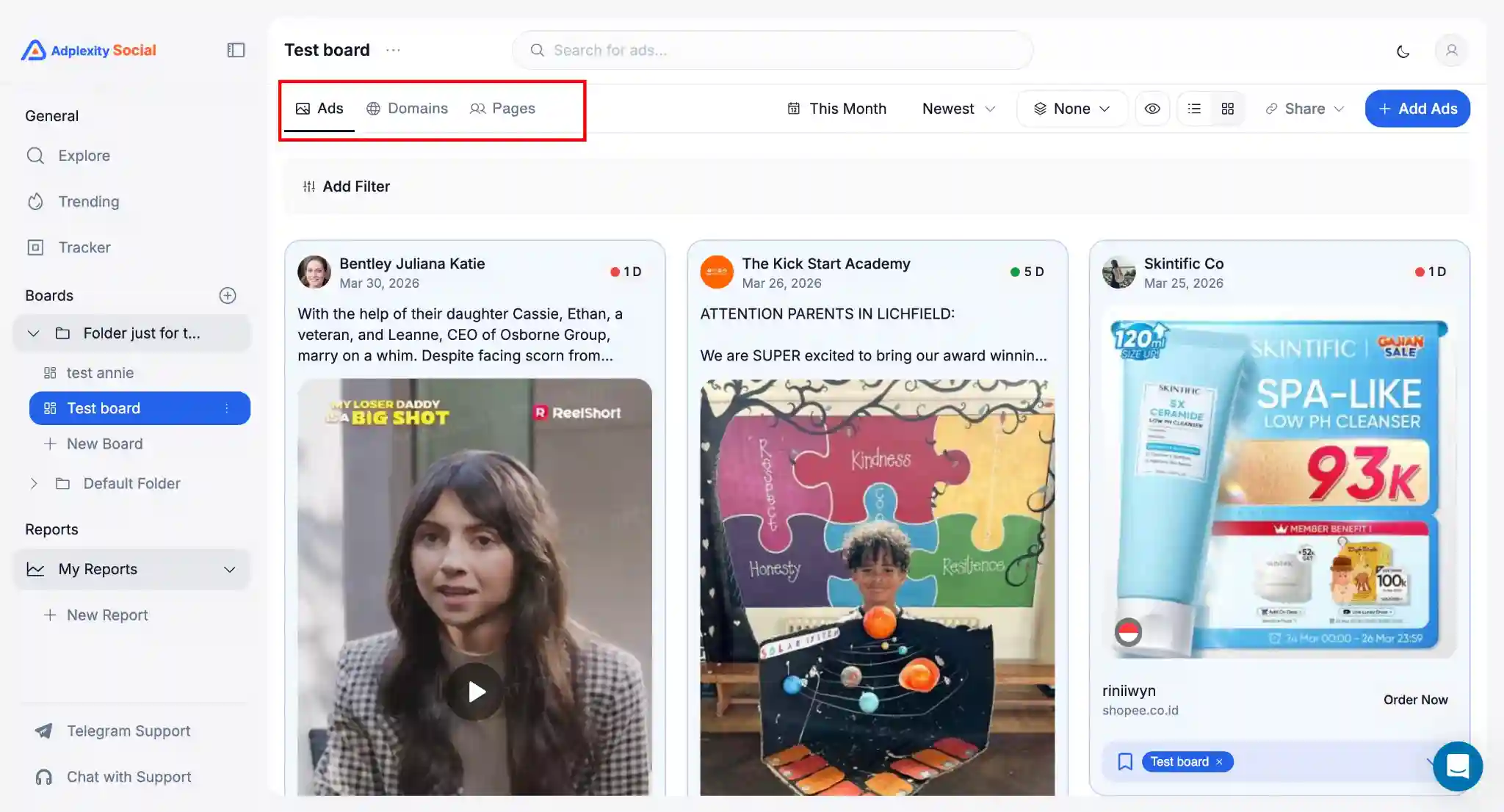
AdPlexity inverts that. Its interface carries more legacy density, and mastering advanced filter combinations genuinely takes a week or two. What arrives in exchange is human help: 24/7 chat, one-to-one onboarding sessions, personalised guidance per vertical, and account management on larger plans. Agencies onboarding junior buyers will feel that value immediately.
Friction points we hit on each side
Winner: AdPlexity. Round-the-clock chat, onboarding calls and named account contacts outweigh a faster interface when a team needs answers from a human within the hour.
Where Both Platforms Genuinely Fall Short
OpenAdLibrary limitations
AdPlexity limitations
Both share one limitation nobody can fix. Cloaked funnels stay cloaked, and the most profitable operators cloak deliberately. Any spy tool shows what networks serve to crawlers, never the full picture.
Who Should Choose Which Ad Spy
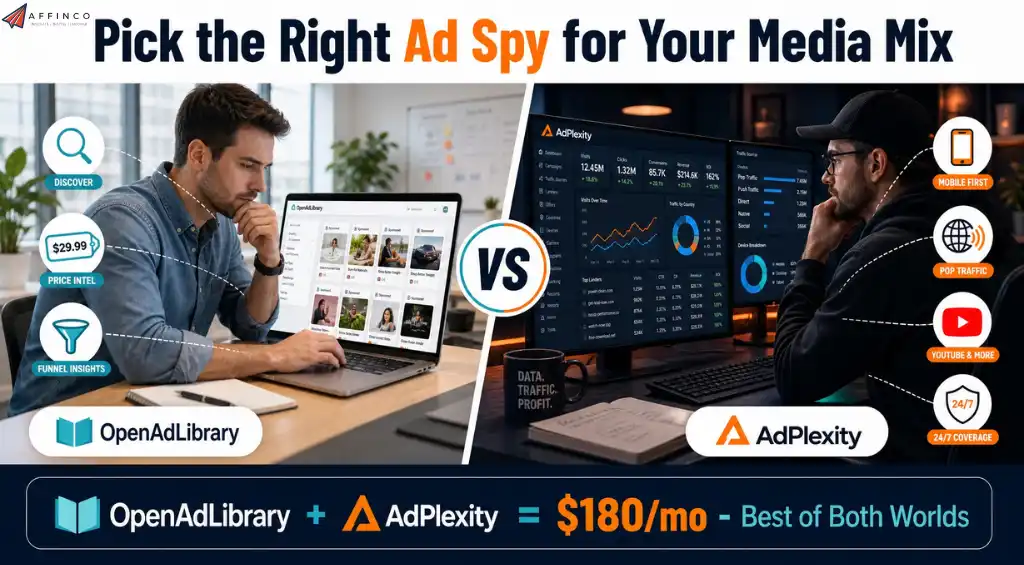
Neither platform fits every buyer. The media mix decides almost everything here.
Choose OpenAdLibrary when
Choose AdPlexity when
Plenty of buyers simply pay for both, and that combination made sense during our own testing. Native research, creative production and tracking through OpenAdLibrary at $29.99, plus one AdPlexity module covering whichever non-native format carries real budget. Total spend lands near $180 monthly with almost no coverage gap remaining.
FAQs About OpenAdLibrary And AdPlexity
Can OpenAdLibrary replace an AdPlexity Native subscription outright?
For native buying, yes in most cases. Fifty networks against seven, hop-by-hop funnel tracing on every creative, hourly refresh and 100+ locales cover the same research job at $29.99 rather than $249. Anyone dependent on placement-level drill-down into single publisher slots, or on complete .zip lander packages, will still miss those two specific capabilities.
Does either platform expose carrier-level mobile targeting data?
Only AdPlexity. Its mobile module surfaces 120+ carriers and its push module 90+, with a connection-type filter separating WiFi from carrier traffic so hidden campaigns become visible. OpenAdLibrary indexes no mobile pop, in-app or push inventory at all, so carrier data sits outside its remit entirely.
How does redirect chain tracing differ between these two tools?
OpenAdLibrary presents numbered hops with every domain labelled by role, then resolves the brand behind the click domain while filtering out ad-tech intermediaries so a tracking vendor never gets mislabelled as the advertiser. AdPlexity shows an LP redirect chain plus outgoing lander URLs on its native and mobile modules, and names the affiliate network and tracker as filterable values, which speeds up offer sourcing.
Is there a free trial or refund window on either platform?
OpenAdLibrary runs a permanent free tier with no card required, covering limited catalogue browsing, ad detail and supply chain, redirect trails, manual creative editing and 50,000 tracked events monthly. AdPlexity offers no trial and a 24-hour refund window, though a one-to-one demo call is available before purchase.
Which tool handles cloaked landing pages more reliably?
Neither defeats a properly configured cloaker, and both record the chain only as far as the block point. Cloaking is a deliberate defence used by high-spending affiliates, so any vendor promising full visibility past it deserves suspicion. Both platforms capture what networks actually serve to crawlers.
Do either of them cover Meta, Instagram or TikTok advertising?
OpenAdLibrary surfaces Meta and Instagram signals inside brand profiles, shown beside native activity with the date each channel started, which flags cross-channel expansion. AdPlexity keeps Meta in a separate product at $99 monthly, offering creative-hash grouping, lander indexing and tech-stack filters. Neither covers TikTok inventory.
What does the hosted MCP server actually let an agency do?
It exposes the catalogue to AI agents through more than forty tools, alongside a REST API with per-user keys. Practical uses include scheduled competitor briefs, threshold alerts when a tracked brand scales placements, client-ready charts generated from live queries, and bulk longevity exports into an internal profit model. AdPlexity's programmatic access remains limited by comparison.
Are the bundled tracking features good enough to drop a paid tracker?
For solo affiliates and smaller teams, generally yes. Campaigns, offers, landers, flows, placements, S2S postbacks, pixels, conversion corrections and automation rules all work on a domain you own, with 50,000 events free monthly. Larger operations needing multi-user permissions, deep integrations or heavy reporting depth will still prefer a dedicated tracker alongside it.
Which platform surfaces long-lived winning creatives faster?
Both sort by longevity, and both confirm the same pattern: creatives alive past 60 days are almost always profitable. OpenAdLibrary adds minimum-placement and last-seen filters plus a retained archive of dead creatives with pull-down dates, which helps seasonal research. AdPlexity adds most-traffic sorting, useful for spotting aggressive scaling rather than steady profitability.
How is search-arbitrage intelligence handled on each platform?
Both treat it as a first-class use case. OpenAdLibrary carries a dedicated search-arbitrage filter inside its catalogue, letting arbitrage creatives be isolated from standard native placements. AdPlexity surfaces trending search-arbitrage keywords alongside lander domains, tracker domains and offer domains, which helps spot verticals before saturation arrives.
Is Brand Protection clone scanning available on both tools?
No, only OpenAdLibrary offers it. Register your own landers and the catalogue gets scanned for close copies, each returned with a similarity score and a first-seen date. AdPlexity has no equivalent, which matters for anyone whose funnels get copied regularly.
Final Ratings And AFFiNCO Recommendation
Scores reflect our own testing across live campaigns, filters, captures, invoices and support responses.
| Category | OpenAdLibrary | AdPlexity |
|---|---|---|
| Native network coverage | 4.9 | 4.0 |
| Funnel tracing and advertiser resolution | 4.8 | 4.4 |
| Search and filter depth | 4.7 | 4.4 |
| Traffic format breadth | 3.6 | 4.9 |
| Lander capture and download | 4.3 | 4.8 |
| Creative production and publishing | 4.8 | 1.5 |
| Campaign tracking included | 4.6 | 1.5 |
| API and agent integration | 4.9 | 2.2 |
| Data freshness and method transparency | 4.8 | 4.2 |
| Pricing and value retained | 4.9 | 3.4 |
| Interface, onboarding and support | 4.3 | 4.6 |
| Overall | 4.6 / 5 | 4.3 / 5 |
Our recommendation: OpenAdLibrary takes the win for native and search-arbitrage buyers, which describes most performance clients we work with at AFFiNCO. Fifty networks in one catalogue, funnel tracing on every creative, AI creative production, direct publishing, a bundled tracker and programmatic access at $29.99 monthly is a value gap too wide to argue against on native traffic alone.
AdPlexity earns its 4.3 honestly, and we would not remove it from a mature media-buying stack. Carrier-level capture across 120+ carriers, dedicated adult and YouTube modules, complete offline lander packages and 24/7 human support are real capabilities that no native-only catalogue answers.
Anyone buying pop, in-app or push traffic should treat AdPlexity as the default and add OpenAdLibrary beside it for native breadth.
Our own setup after testing looks like this: OpenAdLibrary as the daily research, creative and measurement seat, plus one AdPlexity module wherever non-native budget actually sits. Roughly $180 monthly, with very little left uncovered.

Ali
Ali is a digital marketing expert with 7+ years of experience in SEO-optimized blogging. Skilled in reviewing SaaS tools, social media marketing, and email campaigns, we craft content that ranks well and engages audiences. Known for providing genuine information, Ali is a reliable source for businesses seeking to boost their online presence effectively.